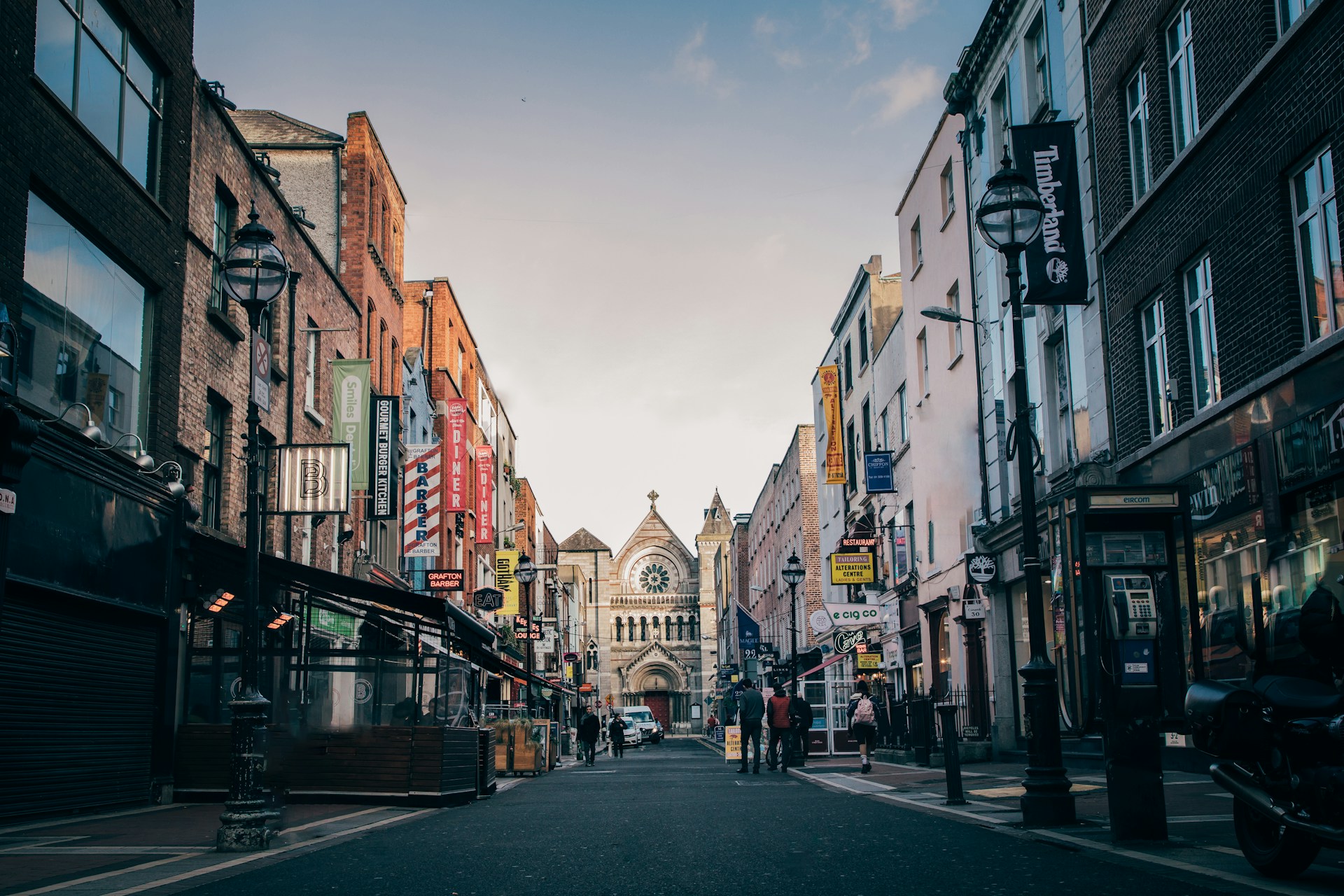
Written from Dublin after eight consecutive March 17ths on the ground, with shorter mornings kept in Armagh, Downpatrick and Dingle
At 10:47 on a wet March 17 in Dublin, the brass section of a school band from Limerick is warming up on the north side of Parnell Square, and an American family in matching green hats is standing on the wrong side of the barrier without knowing it yet. The parade will pass on the far side of the road for the next ninety minutes, and by the time they realise, the crowd behind them will be five deep and moving. This piece exists so that you are not that family. The day you have flown across an ocean for is longer, quieter, and more interesting than any of the packaged versions of it suggest, and knowing the real shape of it before you land is the difference between an anecdote and a memory.
What Americans Tend To Get Wrong About March Seventeenth
The first thing worth understanding is that St Patrick's Day, as it is kept in the United States, is a genuinely American holiday, and the version you grew up with in Boston or Chicago is not the version that will meet you at Dublin Airport. No river here is dyed green. Most adults wear nothing more than a small sprig of shamrock on a lapel. The abbreviation is Paddy, never Patty, and using the wrong one in a Kildare Street pub will produce a small, tolerant silence you will feel across the bar. None of this is delivered with hostility. It is the good humour of a country that has watched its own diaspora invent a parallel holiday, and has decided, on balance, to be flattered.
The second thing worth understanding is a single line about a single street. Temple Bar is at its least revealing on March 17. See it on another day. We spend the night of the 17th east of the Liffey, in the Georgian streets around St Stephen's Green, and the section below on where to stay explains why. The recommendation is not meant to talk you out of Temple Bar. It is meant to move the visit to the 16th or the 18th, when the district is still itself and you are not standing in the rain to reach the door.
The Real Shape Of The Day, In Four Windows
The mistake is treating March 17 as one long celebration to be got through. The best version of the day is a sequence of carefully chosen moments, each with its own pace, and the hours between them are as much part of the day as the hours inside them. Once you see the day that way, the planning becomes simpler and the memory becomes larger.
There are four windows worth naming, and the version we have learned to prefer treats each of them differently. The morning window, from breakfast until roughly 11:00, is the honest one. The city is fresh, the barriers are up but the crowds are still thin, and a walk from your hotel toward St Patrick's Cathedral is one of the quietest hours you will spend in the city all week. The parade window opens at noon along a route that in recent years has begun at Parnell Square, crossed O'Connell Bridge, and finished on Kevin Street after passing Christ Church. Confirm the current official route before you travel, because barriers, accessible viewing areas and grandstand placements do change year to year.
The third window, from roughly 2:00 to 5:00, is the one most guides do not describe and the one we build the whole day around. This is the retreat window, and it is where the difference between a chaotic March 17 and a memorable one is actually made. The parade has finished, the city centre is being reset, the streetlights are not yet on, and every serious plan for the evening is made in this window. A long lunch, a room at your hotel, a walk in the Iveagh Gardens if the sky permits, a bath, a nap, a chapter of a book. The fourth window opens at dusk, when many Dublin residents arrive at the pubs and hotel bars they have booked, and the evening becomes something small and warm and rehearsed. Respect the third window, and the fourth window will be the one you talk about at home.
The Biggest Mistake
The single most common mistake we watch American visitors make on March 17 is trying to fit the whole of Dublin into it. The parade, then Temple Bar, then the Guinness Storehouse, then Trinity College, then live music somewhere, then lunch, then dinner, then two or three pubs on the way home. On any other day of the year that itinerary is ambitious but possible. On March 17 it is neither.
The city does not move efficiently enough on the day to support it. Streets close, taxis vanish for hours, the pavements around the parade route stay dense until mid-afternoon, and every serious venue is either booked or queueing at the door. What looks on paper like a full Dublin day becomes, in practice, four hours of walking between things you never quite get inside.
The advice is simple. Choose two or three anchor moments and let the rest of the day breathe. A cathedral hour and the parade. Or the parade and a long lunch. Or a smaller parade outside the city and a slow evening back in town. See Things To Do In Dublin on the 16th or the 18th, when the city is itself again, and keep the 17th narrow.
Where To Stay, Depending On The Day You Want
Your hotel is the single most consequential decision you will make about this trip, because on this one day it becomes an operational base as much as a bed. We recommend five, all within walking distance of the parade route and none inside Temple Bar. The Shelbourne is the best full-service retreat beside St Stephen's Green: a room high above the crowd, a lobby that becomes a private world in the middle of the afternoon, and No. 27 Bar for the quiet drink before dinner. The Merrion, across the Green on Upper Merrion Street, is the quietest luxury base in the city on March 17 and puts you inside walking distance of Merrion Square, the National Gallery for the retreat window, and Restaurant Patrick Guilbaud for dinner. The Westbury, just off Grafton Street, is the best choice for shortest central access and the easiest reset between parade and evening.
The Wilder Townhouse, on the quieter Adelaide Road, is the intimate Georgian alternative for a first Dublin trip where you want character without a full drawing-room hotel. The Dean, on Harcourt Street, is our pick for nightlife-oriented couples in their thirties who want a walk-out door onto the evening, with one honest caveat: the building is livelier and louder than the other four, and it is not the room to book if you plan to be asleep by ten. Every one of these hotels can often assist with a car back to the door after 11:00 pm and can often help you hold a restaurant reservation, but nothing is guaranteed on the busiest evening of the Dublin year. Ask early, ask specifically, and treat any help you receive as generosity rather than a booked service.
The Parade And The Cathedral Hour
The parade is not the best hour of the day. It is a good hour, worth doing once, and we can tell you where we have watched it well. Three corners have worked for us. Parnell Square East at O'Connell Street, arrived at by 11:15, gives the parade at its most composed, before the bands loosen and the crowd thickens. The east side of Dame Street opposite City Hall, arrived at by 11:30, gives the middle of the run with a wider pavement and better sightlines for a shorter guest. The Kevin Street finish, arrived at by 12:45, gives a quieter close and a short walk to lunch on Camden Street. If your group includes children under ten, take Parnell Square and leave when the crowd shifts. Confirm the current official route before travel: sections and barriers can move year to year.
On paid grandstand seating, our position is more nuanced than the internet's. Most able-bodied visitors do not need it. Official tickets can be worth the money for older travelers, anyone with mobility considerations, families with small children, or a group that simply needs a guaranteed seat for two hours. The move we increasingly recommend to friends is to skip the Dublin parade entirely for a smaller one. Skerries, a short drive north, is the best small parade within reach of Dublin and finishes on a harbour rather than a road. The Dingle parade in Kerry begins at dawn and is the earliest in Ireland, and if your itinerary can absorb the drive south the night before, it becomes the single most memorable morning of the trip.
The one hour on March 17 that we would consider putting ahead of the parade for a first-time visitor is time spent inside St Patrick's Cathedral. The cathedral is Church of Ireland, not Roman Catholic, and it often hosts special worship, music, or commemorative events around March 17. Formats and times vary by year, and the schedule for 2027 will not be published until closer to the date, so any plan you make around the cathedral should begin with the current official service schedule rather than with our recollection of a previous year. Respectful visitors are generally welcome at public services. Arrive fifteen minutes early, sit toward the rear on the north side, and stay quiet. Coat and tie are not required. A clean jacket and a folded programme are the whole of the code.
The parade is a public gift. A cathedral service is what the city does for itself.
The choir is one of the oldest in Europe, the building is the largest cathedral in Ireland, and the acoustics on a wet March morning will do something to you that the parade will not. If the timing does not suit, walk the nave and the choir stalls between services instead. The cathedral rewards the visit either way, and it will give you the quiet foundation the rest of the day is built on.
Lunch, Dinner, And The Hour Between
Dublin's serious dining rooms may open on March 17, often with altered hours and exceptional demand. Treat every restaurant here as an example of the tier we book rather than a guaranteed seat, and check each calendar as soon as their March books open. For lunch after the parade, we have kept happy tables at Etto on Merrion Row for pasta and a small carafe of wine, at Delahunt on Camden Street for a room that reads like the inside of a novel, and in the dining room of the hotel where we were staying. Between lunch and dinner, walk the Iveagh Gardens if the rain has paused, take a coffee at Bewley's if it has not.
For dinner, the three names we return to are Chapter One on Parnell Square, Mr Fox around the corner, and Patrick Guilbaud in the Merrion. Book as soon as reservations open, and understand that a concierge cannot promise a table where none is available. If the top tier is full, Pichet on Trinity Street and Uno Mas on Aungier Street have historically been the strongest second calls. The point of dinner on March 17 is not the food. It is that you are inside, warm, and not standing in a queue while the rain comes down at 8:00 pm.
What March Weather Feels Like, And St Patrick's Day With Children
Dublin in mid-March is rarely cold in the way New England is cold, but it catches American visitors out. You will spend far more time standing still than walking, and standing still is what makes the day cold. Wind combined with light rain is the default, and the temperature drops the moment you stop moving. Waterproof footwear matters more than a heavy coat. A dry base layer to change into before dinner matters more than a stylish one. Umbrellas are awkward in dense crowds and often unusable in the wind that funnels down O'Connell Street; a rain jacket with a proper hood is the better choice. Warm gloves matter more than green clothing. Dress for a still hour on a windy street rather than for a photograph. Our Ireland packing list covers the specifics.
With children, the day is entirely possible and often the warmest hour of the trip, and the calmer you plan it the calmer it plays. Choose viewing points with an easy exit route behind you, not corners hemmed in on three sides. Identify the nearest public toilets before the parade begins. Avoid the densest sections, which tend to be around O'Connell Bridge and directly outside the GPO. Agree a meeting point with older children in case anyone gets separated, and take a photograph of what each child is wearing that morning. Consider ear protection for younger children when the pipe bands pass. Leave before the crowd compresses at the end. If central Dublin feels like too much, a smaller local parade in Skerries or Malahide is usually the better call.
What To Book, When To Book It, And The Week Around March 17
The rough booking timeline we hand to friends looks like this. Six to nine months ahead, book the hotel: rates and availability on the nights of the 16th, 17th and 18th tighten faster than any other week of the Dublin spring. When restaurant books open for March, book dinner: Chapter One, Mr Fox and Patrick Guilbaud release windows vary, so check each restaurant's own site and reserve the day they open. As festival schedules are published, book any grandstand seating or ticketed events you need. Two weeks ahead, confirm the current cathedral schedule, transport arrangements and city-centre road closures. Forty-eight hours ahead, check the weather, reread the parade route and confirm restaurant hours in writing. Where 2027 specifics are not yet published at the time of reading, treat this as scaffolding and confirm each item against the current source.
The days on either side of March 17 are the ones we defend most strongly. If the 17th falls on a Sunday or a Tuesday, fly in on the previous Friday and out on the following Sunday, and treat the day itself as the anchor of a week rather than the whole trip. The days before belong to the country. Armagh, the ecclesiastical capital of Ireland and the seat of both Catholic and Church of Ireland primates, is a serious morning. Downpatrick, where tradition places the saint's grave, is a short drive from Belfast and a quieter alternative to any parade. Dingle, as noted above, is the earliest parade in the country. Our seven-day first trip spine is the itinerary we adapt for this date, When To Come, Month By Month explains why March rewards the days around it, and the Wicklow Edit gives you the softer day in the mountains most travelers need on the 18th.
The surprise is that March 17 is rarely the day you remember most. The city is quiet again by breakfast on the 18th, the country is entering the softest part of the year, and the light on the Wicklow hills or the Kerry coast in the third week of March is the light nobody photographs and everybody remembers. Book the hotel, keep the cathedral hour, book the dinner, watch the parade for the hour that suits you, and then give the country two days on the other side. The rain will be soft, the fields will already be greener than any river anyone dyed, and the trip you flew for will begin, quietly, on the morning the last of the barriers come down. If you want a hand shaping those two days, the concierge letter is where we usually start.
Questions we get asked
- Is Temple Bar worth it on St Patrick's Day?
- Temple Bar is at its least revealing on March 17. See it on another day. Visit on the 16th or the 18th if you want the district, and spend the night of the 17th east of St Stephen's Green.
- Should I book a parade viewing package?
- Most able-bodied visitors do not need one. The free corners we name in the essay give a strong view. Official grandstand seating can be worth the money for older travelers, anyone with mobility needs, families with small children, or a group that wants a guaranteed seat and sightline for two hours.
- What do people in Dublin actually do on March 17?
- There is no single pattern. Many Dublin families avoid the city centre entirely and spend the day at home, at a local parade, or with family. Others attend a morning service, watch some of the parade, keep the middle of the afternoon quietly, and gather at a booked table and a familiar pub from dusk. The version we have learned to prefer is closer to the second.
- Is it Paddy or Patty?
- Paddy. It comes from Padraig, the Irish for Patrick. Patty is short for Patricia. Using Patty is not offensive, but it will be quietly noted, and any local who corrects you is doing you a small kindness.
- Is one day enough, or should we build a week?
- Build a week. March 17 is a strong anchor day, and the two days on either side are the ones you will remember. Arrive on the Friday before, keep the 17th in Dublin, and drive to Wicklow or Kerry on the 18th and 19th while the country is at its quietest.
- Do good restaurants open on March 17?
- Often, yes, but hours and availability vary and demand is exceptional. Check each restaurant's current calendar as soon as their March books open and reserve the day they release. Do not assume any hotel concierge can secure a table where none is available.
How we checked this
Further reading from the Notebook