Written from Dublin after seven Irish Halloweens with children in tow, with longer nights kept in Meath, Derry and north Mayo
At ten to six on October 31, on a terraced street in Dublin 6, the light has already gone and a boy of about seven is standing at a door in a bedsheet, waiting. Not for sweets. To be asked for his party piece. He sings four lines of a school song, badly, and is handed a bar of chocolate and a two euro coin. Two doors down an American family is walking the same street in costumes that cost more than the flights, wondering why nobody is out yet, why the noise is coming from back gardens rather than sidewalks, and why the whole thing is over by seven. We made every one of those mistakes in our first year here, with two children and a bag of American candy nobody wanted. Halloween is not something Ireland imported from you. It is the older thing, coming home, and the night has a shape no American version of it prepares you for.
What Americans Get Wrong About Halloween In Ireland
You are not bringing Halloween to Ireland. Ireland sent it to you. What survives here is the parent of the holiday you know rather than a copy of it, and the two have grown apart in ways that decide whether your week works.
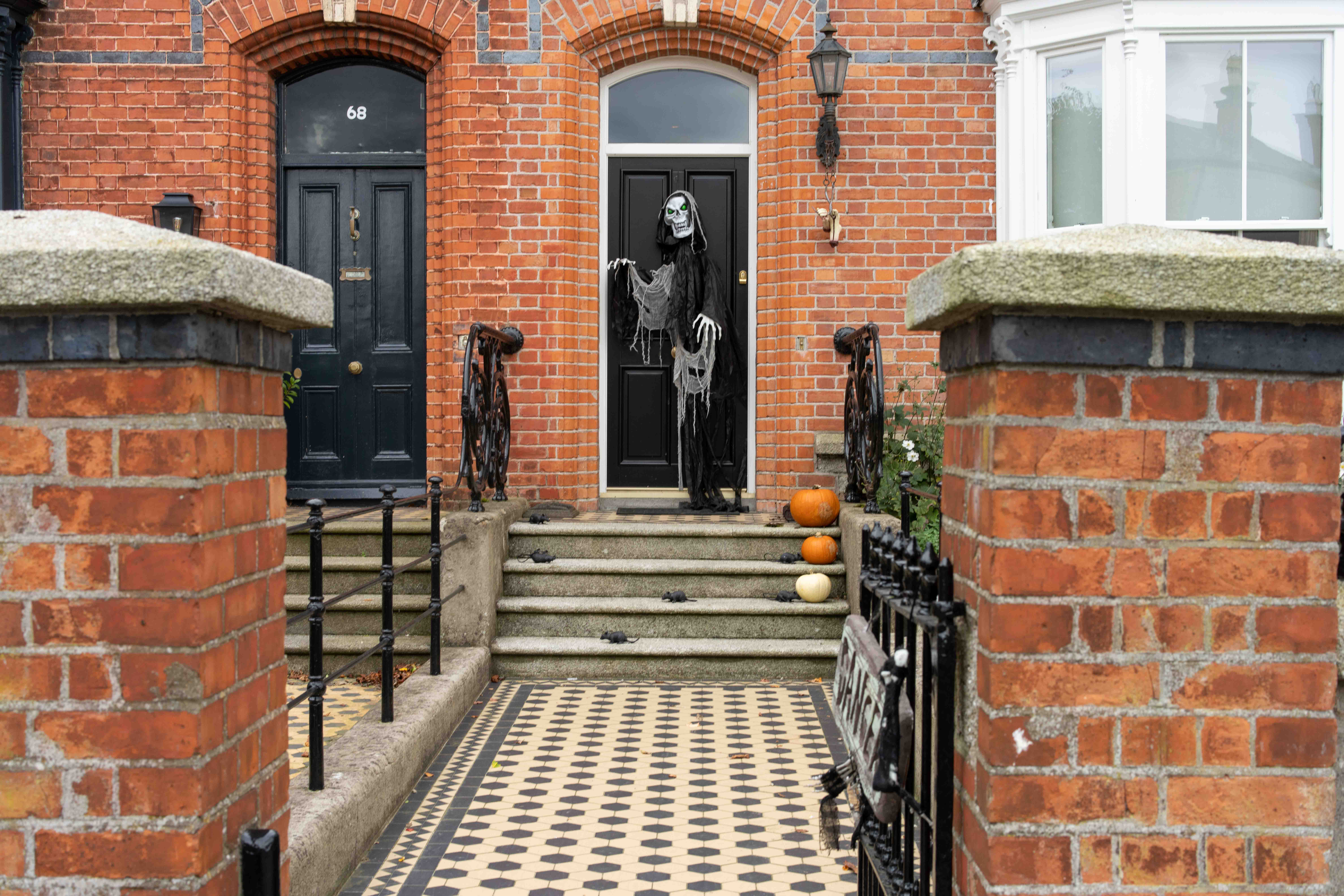
The practical differences arrive fast. Trick or treating happens, but it is ninety minutes of early evening, neighbourhood scale rather than street after street, and a child is often expected to sing, tell a joke or recite something before anything is handed over. Front doors here do not sit behind long lawns, so the decoration is smaller and closer to the glass. Fireworks are restricted in the Republic and licensed in the North, so a Dublin suburb is scattered and unofficial while Derry is properly programmed. Bonfires still burn unofficially in places. We keep our own children away from them.
The last difference is the one we like best. This is not only a children's night. Adults keep it too, quietly, and the week carries a seasonal weight that has nothing to do with costumes. The clocks have just gone back, the bright half of the year has closed, and the country feels like it is shutting a door behind itself.
Samhain, And Where The Night Actually Comes From
Be precise here, because the internet is not. Early Irish literature records Samhain as the hinge of the year, the end of harvest and the opening of winter, with assemblies and fires held at it. Later folk practice, well documented across nineteenth and twentieth century Ireland, preserved the rest of what you would recognise: disguise, house visiting in exchange for a performance, divination games, food left out, an extra place at the table. Scholars argue over how much of the medieval material is record and how much is monastic literary shaping. The direction of travel is not disputed. Irish and Scottish emigrants carried these customs to North America in the nineteenth century, where they grew into the holiday your children think is theirs.
The physical centre of it is the Hill of Ward at Athboy in County Meath, Tlachtga in Irish, named in the early sources as a Samhain assembly place. Excavation there has revealed a large multi-ditched ceremonial enclosure and evidence of burning, which is about as close as archaeology gets to agreeing with a manuscript. In person it is a field on a hill twenty minutes off the M3, with a view over several counties, no visitor centre and nothing to buy. We take people there in daylight and in silence and it does more work than any attraction within fifty miles. Bring boots.
Then the detail your children will remember for years. The lantern was a turnip. Not the small purple thing an American calls a turnip, but a swede: dense, pale, roughly the weight of a bowling ball. You do not carve it so much as excavate it, gouging flesh out with a knife and a spoon for the better part of an hour while an adult swears quietly. It smells like scorched vegetable once the candle is in, somewhere between roasting and burning hair, and the light comes through the walls in a dull amber rather than the clean glow of a pumpkin. The faces are worse. Small eyes, a torn mouth, a thing carved by someone who genuinely wanted to frighten something off the road.
Get one from any Irish supermarket in late October and give your child the knife under supervision. Somewhere in that hour they work it out themselves: the pumpkin at home is the immigrant version, adopted in America because pumpkins were plentiful, softer and far easier to cut. There is an original Irish turnip lantern in the National Museum of Ireland's Country Life collection at Turlough Park in Mayo. If your route goes near Castlebar, build an hour around it.
If You Have Children, Start Here
Before the detail, the decision. Ages four to seven: Dublin daytime programming, a short neighbourhood evening on the 31st, nothing after seven. Ages eight to eleven: Meath, the Hill of Ward and Púca if it is running, history in the morning and doorsteps at dusk. Ages twelve and up: Derry or the Bram Stoker Festival, later nights, treated like travelling adults.
A five year old wants daylight, animals, a short trail and a costume that fits over a coat. Their good hours are the afternoon, and accepting that early makes the week work. Do not take them to Derry on parade night, do not take them near a bonfire, and do not schedule anything after dinner.
Eight to eleven is the sweet spot, and it is not close. Old enough for the history, young enough to still want the sweets, so the Hill of Ward in the morning and the doorsteps in the evening connect themselves without any help from you. This is the age we put in Meath, or in a country house with a torchlit walk and a turnip on the kitchen table.
A teenager needs a reason to be here that is not a costume. Derry and Bram Stoker are both unapologetically for older people, and both work. Give them a night walk, a ghost story told somewhere it plausibly happened, one late evening in a city. The mistake we watch American families make is programming the week down to the youngest child. Split the days. One parent takes the small one to the trail, the other takes the older one into the dark.
Dublin With Children, Hour By Hour
Dublin spreads Halloween across the whole midterm week rather than saving it for the night, and the daytime programme is where the value sits. Dublin Zoo runs a Halloween trail through the week. The National Museum and the National Gallery both put on family programming that is free and well made. Malahide Castle and Farmleigh run outdoor trails in daylight that suit ages four to nine better than anything after dark. Book the ticketed ones the week the programmes publish, usually late September, because Irish families are booking them too.
The 31st itself, hour by hour, is how we run it. Costumes on by half four while it is still bright. Out on foot by half five, when the first children appear and the light goes. Doorsteps until seven, no later, since the streets empty quickly after that. Then an early dinner booked two weeks in advance. The walk back through the Georgian streets around Merrion Square with a lantern lit is the part they photograph.
If you are in a hotel you have nowhere obvious to knock, so ask the front desk a fortnight out what they run for children. Most Dublin hotels run something and advertise it poorly. For over twelves, the Bram Stoker Festival is the reason to be in the city at the end of October. Stoker was a Dubliner, born in Clontarf, and the city programmes night walks, readings, installations and street theatre around him. Some of it is free and outdoors, the good ticketed events go within days, and the programme is rebuilt every year.
Derry Or Meath, Decided
Choose Derry if spectacle is the point. The walled city stages one of the largest Halloween celebrations in Europe, and the phrase that matters is civic commitment: tens of thousands in costume, a parade, fireworks over the Foyle, an entire population treating dressing up as a duty. Every adult should see it once. The costs are crowd density in medieval streets after dark, fireworks that are loud and close, three hours from Dublin, and accommodation gone by summer.
Choose Meath if the origin story is the point. The Boyne Valley is thirty five minutes from Dublin Airport, the towns are small enough to walk, and the Púca Festival, which has run in recent years across Meath and Louth, is the only large Halloween event in the country that treats the history as the subject rather than the decoration. Fire ceremonies, music, food, the Hill of Ward a short drive from all of it, and you can be back in a Dublin bed the same night.
Choose neither if your children are under six. At that age the drive costs more than the event returns, and the version we would book for you is the quiet one below. If you do take small children to Derry, do the daytime programme, be inside before the parade sets off, and watch the fireworks from a window. Between the two, for a family, we send people to Meath. Derry is the better night out. Meath is the better trip.
The Quiet Version, Which Is The One We Keep
There is a third Halloween here that no programme lists, and it is the one we protect. A country house an hour or two from any city, a fire lit in the hall by four, children out on a torchlit walk around the grounds before dinner while the wind moves in the trees, a turnip lantern on a stone step, adults sitting up too late afterwards in a room that has held people doing exactly this for two hundred years. No queue, no wristband, no parade route.
It also solves the problems the festivals create. The evening runs on your children's clock rather than a city's. The dark is genuinely dark, which in Ireland means stars and no sound, and that frightens and delights a nine year old far more efficiently than a haunted house. And there is somewhere warm forty seconds away at all times, which is the single logistical fact that decides whether a small child enjoys an Irish outdoor night.
If you want a day out attached to it, Wells House in Wexford, Bunratty in Clare and Emerald Park in Meath all run family programming at the scale of an afternoon. But the walk around the grounds with head torches, arranged by a hotel that knows its own woods, costs nothing, and it is what your children describe when someone asks what Ireland was like.
Where To Stay For The Midterm Week
First, the arithmetic nobody warns you about. The last week of October is Irish school midterm. Family rooms and interconnecting rooms go to Irish families first, hotels with pools sell out earliest, and rates in the good country houses sit closer to summer than to November. Book four to six months out for this one week. The rest of your Irish calendar is soft by comparison.
In Dublin we would stay east of the Liffey and walk. The Westbury is the one we book with young children, because you can leave and return four times in a day without it being an expedition, and that is exactly how the 31st goes. The Shelbourne earns it for the Green across the road and a doorman who will find you a taxi in the rain at six on the busiest evening of the year. The Merrion suits older children who will use the drawing rooms, and it is the calmest room to come back to after a night walk.
In the country the grounds are the reason, not the crest. Adare Manor has the parkland and the staffing to organise a torchlit walk for eight children at short notice, which is not a given anywhere else. Sheen Falls Lodge sits on a river gorge in Kerry with woodland walks that work after dark and are short enough for small legs. Dromoland Castle is the one for a wide age range, because a teenager can shoot or ride while the small one does the woods. For this week we would leave famous properties without real grounds off the list. On Halloween you are paying for what is outside the building.
What October Feels Like, And The Week We Would Book
Dark by around half five, and by five once the clocks go back on the last Sunday of the month, so anything outdoors happens before three. Temperatures sit around eight to twelve degrees Celsius, high forties to low fifties Fahrenheit, and the wind takes more out of a child than the number suggests. Pack for standing still outdoors rather than walking: hooded waterproof coat, waterproof boots for every child, thermal layers under the costume rather than over it, a head torch each, and reflective tape on dark costumes, because Irish footpaths end without warning and a driver at six on the 31st cannot see a child in black. Leave the elaborate costume at home. It will not fit over a coat.
The week we would book, in order. Three nights Dublin, arriving the weekend before: daytime trails and museums, the 31st on foot in a neighbourhood or through the hotel, an early table booked a fortnight out. Two nights in Meath: the Hill of Ward in daylight, Púca if it is running, a turnip carved badly on a kitchen table. Two nights in a country house with grounds and a fire from November 1, when the country empties and the rates fall away. Give your family the quiet half at the end. That is the half they will talk about.
The booking order is fixed. Rooms four to six months out. Ticketed festival events six weeks out, when programmes publish, because the good ones go inside a fortnight and the rest is free. Hotel children's programme and the dinner table two weeks out. What we would not book: a coach tour of anything on the 31st, a late dinner with children outdoors since three, or a bonfire event advertised by anyone other than a local council.
Your children arrive believing Halloween is a pumpkin, a costume shop and a plastic bucket. They will leave having stood on a wet hill in Meath where the fires were lit before anyone crossed an ocean, having watched a candle burn inside a vegetable that took an hour and their father's patience to hollow out, and having sung for their sweets on a Dublin doorstep because a stranger asked them to. None of it is a themed event. It is what the night was before it emigrated, kept going by people who never stopped. You will go home with a holiday you thought you knew and find it has quietly changed shape. Book the rooms first. Everything else here can be decided later.
Questions we get asked
- Did Halloween start in Ireland?
- In substance, yes. Halloween descends from Samhain, the Irish festival marking the end of harvest and the opening of winter, recorded in early Irish literature and preserved in Irish folk practice into the twentieth century. Irish and Scottish emigrants carried the customs to North America in the nineteenth century, where they became the holiday Americans know.
- Was the first jack o' lantern a pumpkin or a turnip?
- A turnip, specifically the large swede. Irish lanterns were hollowed out and lit with a coal or candle stub. The pumpkin is the American substitution, adopted because pumpkins were plentiful and far easier to carve. An original Irish turnip lantern is held in the National Museum of Ireland's Country Life collection at Turlough Park in Mayo.
- Is Halloween a good time to visit Ireland with children?
- It is one of the two best weeks in the Irish year for a family, alongside midsummer. The whole country programmes for children during school midterm, the origin story is here, and rates collapse from November 1. The trade is short daylight and reliable rain, so plan outdoors before three.
- Is October 31 a public holiday in Ireland?
- No. The nearest public holiday is the October bank holiday on the last Monday of the month, which usually falls just before Halloween and starts the school midterm week. Shops, restaurants and attractions all operate normally on the 31st.
- Can visiting children trick or treat in Ireland?
- Yes, and they are welcome, but it runs from roughly half five to seven, it is neighbourhood scale, and children are often asked to sing, tell a joke or recite something before anything is handed over. Teach your child one short party piece before you fly.
- Should we stay in Dublin or outside it for Halloween?
- Both, in that order. Dublin has the daytime programme and the easiest version of the 31st itself. Then move out to Meath or a country house from November 1, when the crowds go home and the rates halve. Three nights in the city and three or four outside it is the shape we book.
- Is Derry Halloween suitable for young children?
- The daytime programme is. The night of the parade is not, in our view, for children under about ten, because crowd density inside the walled city is real and the fireworks are loud and close. Do the daylight events and watch the fireworks from a hotel window.
How we checked this
Further reading from the Notebook
- St Patrick's Day in Ireland, honestly
- When to come, month by month
- Dublin with kids
- The family hotels we would book
- Country house hotels for the quiet version
- Where to stay in Dublin
- The Ireland packing list, seriously
- What Americans get wrong about being Irish American
- The first Ireland trip, seven days honestly