
Written from Dublin, and from country houses in Clare, Kerry and Laois, across Novembers, Januarys and Februarys spent here rather than visited
Half nine on a January morning in a country-house breakfast room in Clare, and it is only barely light outside. Rain is going sideways past the window in bands. At the next table an American couple have a printed Ring of Kerry itinerary beside the coffee, and they keep looking at it and then at the window. Nobody from the hotel suggests they leave. By eleven they have quietly abandoned three stops. At one the sky opens for about forty minutes and they walk the wood at the end of the drive, come back with wet hair, and have a long lunch. At four, with the light gone, they are by the fire looking pleased with themselves. The day got better the moment they stopped trying to complete it. That is the whole argument of this piece. Americans arrive in winter expecting a cheaper version of summer. It is not that. The country behaves differently, and you have to as well.
Should You Come To Ireland In Winter?
Yes, if what you want from Ireland is rooms, tables, cities, landscape without a queue in front of it, and days you are allowed to change at eleven in the morning. Yes if you would rather have four nights in a house you could not get into in June than eight nights of driving. Yes if you like museums, galleries, restaurants, racing, theatre, a bar with a fire and people in it who live locally. Yes if the point of the trip is the trip and not the photographs.
No, if you want daylight. Between November and February you get roughly seven and a half to nine and a half hours of it, and the useful outdoor part is shorter than that. No if you are covering long distances, because winter driving here is slower and more tiring than the map suggests. No if you have a list of outdoor attractions with fixed hours, because plenty of them run reduced winter schedules or close for the season. No if your trip depends on ferries to islands, which cancel in weather without apology. And no if a wet day reads to you as a lost day, because you will get wet days.
The honest line is this. Winter is not a discount on summer, it is a different product with a different shape. The travellers who love it are the ones who came for the interiors as much as the coast. The ones who leave disappointed are the ones who tried to run a July itinerary in February and blamed the weather when it did not fit.
Light And Wind Decide The Day, Not Temperature
Americans brace for cold and get something else. Ireland in winter is mild and wet. Daytime highs sit around 42 to 48 Fahrenheit through most of the season, nights near freezing, and snow at sea level is uncommon and short-lived when it happens. If you are packing for a New England January you are packing wrong. The thing that actually shortens a day here is wind coming off the Atlantic with rain in it, and the thing that shapes the whole trip is light.
Work in these rough numbers. Around the shortest days in late December, Dublin gets about seven and a half hours of daylight, with sunrise close to half eight and darkness closing in by four. November and February are more generous, closer to nine or ten hours, and February improves noticeably week by week. Add fifteen to twenty minutes of later sunrise and later sunset on the west coast, which sits further west inside the same time zone. Overcast skies subtract more usable light than the tables admit.
So the winter day has a fixed skeleton. Breakfast at half eight or nine, still dim in deep winter. Out of the hotel by ten. Your real outdoor window is roughly half ten to half two, three at a stretch in February. By three the light is going. From four onward the day is interior: town, museum, bar, bath, dinner, fire. Once you accept that, the planning rule writes itself. One meaningful outdoor objective per day. Not four. A headland, a wood, a beach, a town walked properly, one house or abbey. Then let the rest of the day be indoors and long.
Weather here moves through rather than settles. Forecasts describe a whole day in a way that a whole day rarely obeys, so a morning of rain regularly gives you a bright, hard-lit hour at noon. Two rules. Never cancel a day on the eight o'clock forecast, because the sky will change three times before lunch. And never drive two hours into an orange or red wind warning because an itinerary told you to. People who live here do not read the forecast for permission. They read it for a window, and go when it opens.
November, December, January Or February
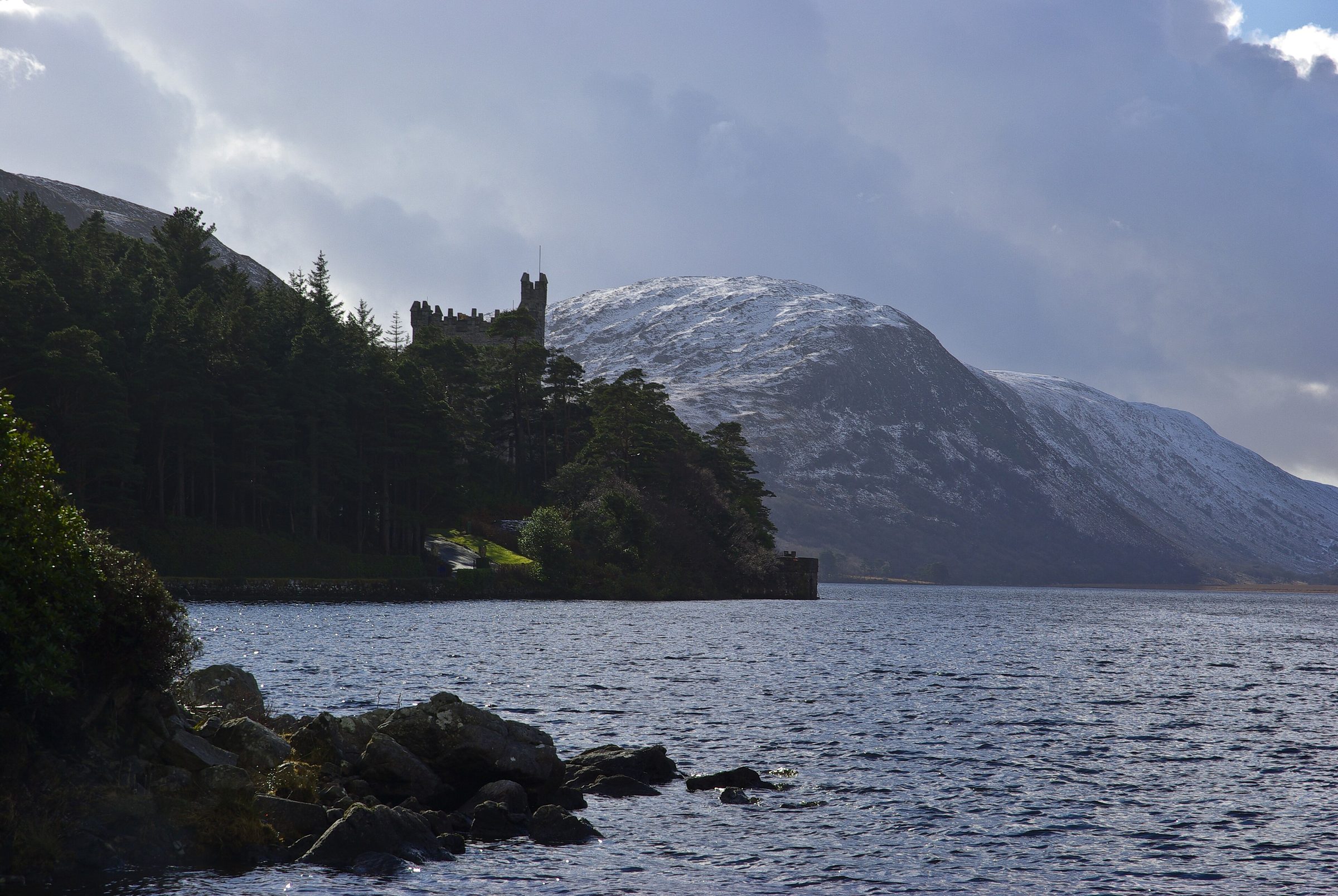
These are four different trips, and the difference between them matters more than the difference between two counties. November is the value month nobody talks about. Rates are soft, almost everything is still open, the countryside still has colour in it into the first week or two, and the cities are working normally. It is dark and often wet, and it has none of the December warmth to compensate. Come in November if you want a hotel-led, city-and-one-country-house trip at a price that will surprise you. Skip it if you need any sense of occasion.
December splits into three. The first three weeks are among the most sociable of the year here, particularly in Dublin, and they are excellent for a short city-led stay. Then Christmas itself, which is a genuinely closed period and a separate subject we have written up on its own, and which requires booking most of a year ahead. Then the week between Christmas and New Year, quiet on the roads, full in the good hotels, and priced accordingly. December is the one month where value and calm are not on offer at the same time.
January is the misunderstood one, and it is our editorial pick for a certain traveller. Rates fall off a cliff after the first week. Roads are empty. Restaurants that need six weeks of notice in July will take you on Thursday. Country houses feel like they belong to you. Nobody is performing hospitality at anybody. Against that: the shortest-feeling days of the year, the most weather, and a real closure problem in small towns, some of which are properly asleep until February. Come in January if you are building the trip around two or three excellent bases and you have no checklist. Do not come in January if you want a touring holiday.
February is the underrated month and the safest winter recommendation we give. The light improves week by week and by the end of the month you have a materially longer day. Seasonal businesses start reopening through the second half. Value is still strong. The Atlantic is still fully in winter, and the Irish school midterm in the middle of the month fills family hotels and pools, which matters if you are travelling with children or trying to avoid them. If someone asks us for one winter month with no further information, we say late February.
Where Winter Works, And Where We Would Not Build A Trip
Dublin is the easiest winter destination in the country, and we say that as people who spend most of the year arguing for leaving it. Everything you came for is indoors and within walking distance: the National Gallery, the Museum of Archaeology, Kilmainham, Marsh's Library, the theatre, the restaurants, the bars. Distances are short, taxis are plentiful, and rain does not end the day, it just changes which door you go through. Three nights in Dublin in January is a straightforwardly good trip on its own.
Cork is the other city we would send people to, and in winter it may be the better food town of the two: the English Market, a serious restaurant scene at both ends of the price range, and countryside twenty minutes away in three directions. Galway works beautifully as a base and badly as a launch pad, because the enormous day loops people plan from it eat the entire daylight window. Clare and the Burren are quietly the strongest winter landscape in Ireland, because the limestone is at its best in low light and half of that coast can be seen in a short walk from the car, though service and attraction hours thin out considerably.
Kerry is excellent when you are based and difficult when you are touring. Pick one place, Kenmare or Killarney or a single house on the water, and work outward on short legs. Connemara is beautiful and fully exposed, and we would only send a traveller there in winter if they are genuinely comfortable abandoning a plan at breakfast. Donegal we are candid about. It is the most dramatic coast in the country and it is a long way from anywhere, on slow roads, with the shortest days in the state. It is a superb second or third Irish trip in winter and an ambitious first one.
Then the things we would not build a winter trip around at all. Anything ferry-dependent, because the Aran Islands and Skellig sailings are weather-governed and Skellig does not operate in winter. Any large Wild Atlantic Way loop. One-night stays anywhere, which cost you two half days. Day trips from Dublin to the Cliffs of Moher, which is six hours of driving in the dark around a forty-minute clifftop. Six-hour driving days generally. Remote self-catering for first-time visitors who are expecting hotel infrastructure to be nearby. And any plan whose entire value is the view from one exposed cliff, because in winter you are gambling the trip on one hour of visibility.
The Hotel Does Half The Work
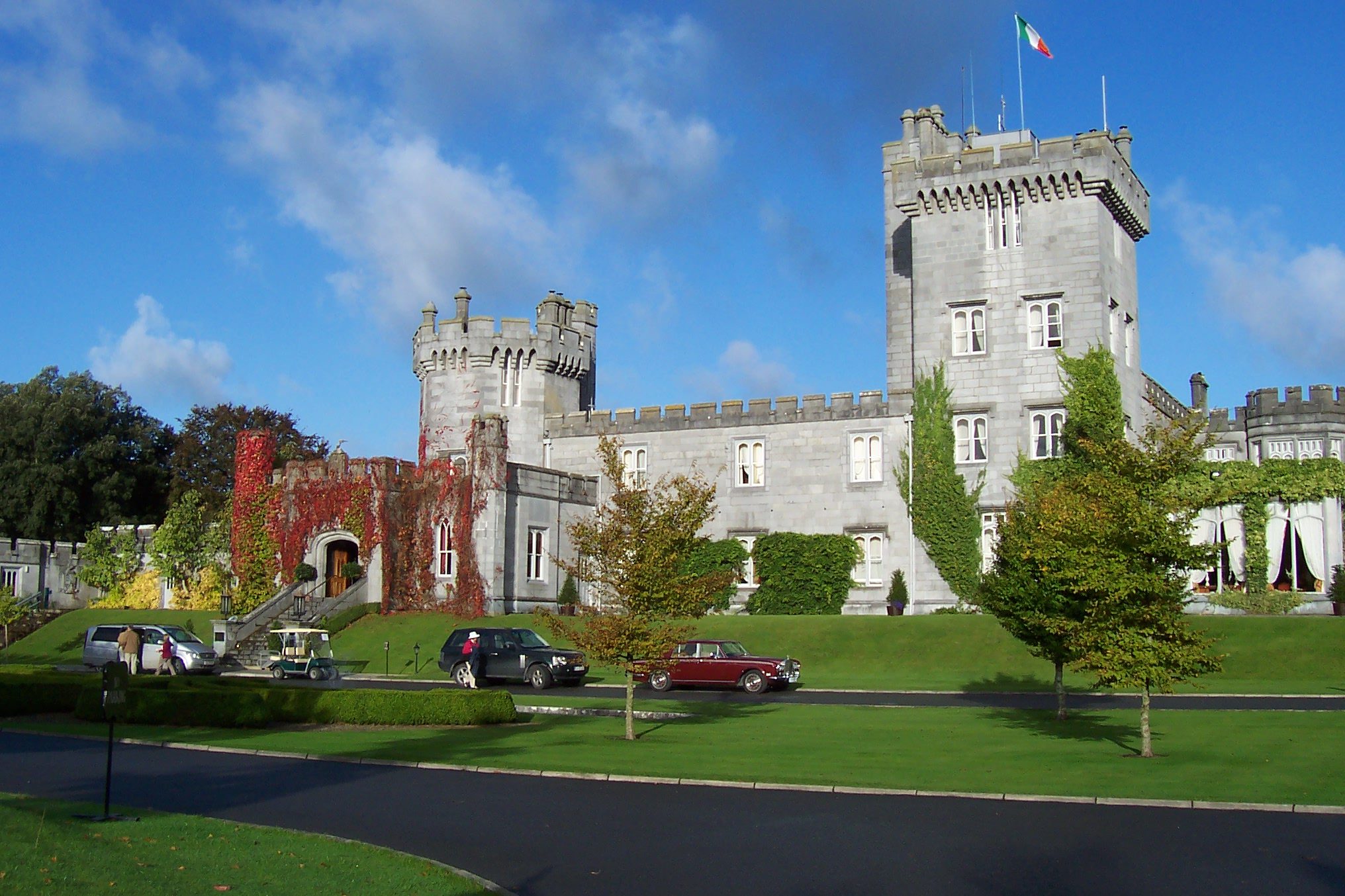
In July a hotel can be somewhere to sleep between things. In January it is where you will spend most of your waking hours, and it should be chosen on that basis. This is the single largest difference between a winter trip that works and one that does not, and it is why we tell people to spend the money they saved on the season upgrading the room rather than adding nights.
Our winter hotel test is specific. A fire and real common rooms you can sit in for three hours without buying something every twenty minutes. A restaurant open every night of your stay, not four nights out of seven. A bar that locals also use. Breakfast worth sitting in. A pool or spa if there are children or if there is any chance of two consecutive wet days. Grounds with a short walk that works in rain. Rooms with a chair, a lamp and a bath, because you will be in them at five in the afternoon. And staff who will rescue a cancelled day by ringing somebody, which is the thing that separates a good Irish hotel from a well-appointed one.
In Dublin we would use The Merrion for the drawing rooms, the fires and the art, which is a winter proposition rather than a summer one, and its spa on the wet afternoon. The Shelbourne for position, if you want to walk everywhere and be in the middle of the city's own winter. The Westbury for families who want space and a lift down into Grafton Street.
In the country, five we stand behind in this season. Ballyfin, which is the most complete wet-day house in Ireland and effectively a private club for the length of your stay. Sheen Falls Lodge in Kenmare, where the river, the fires and the town two minutes away solve the weather problem three different ways. Dromoland Castle, which has the indoor infrastructure and the pool that a family needs and sits near Shannon, so you can be in it ninety minutes after landing. Adare Manor, which runs at full strength in winter and has more indoor life than any comparable property here. Gregans Castle in the Burren for the landscape and the dinner, with the caveat that it closes for part of the winter, so check dates before anything else. Ballynahinch is the Connemara answer if you want the wild version and are prepared for the drive.
One caution that matters more than any recommendation. A number of Irish country houses and restaurants close for several weeks in January and early February. Operating dates change every year. Confirm directly with the property before you book flights, and do not accept a listing site's word for it.
Driving, Closures And What Winter Actually Costs
Halve your summer driving ambition. That is the whole rule. If a July itinerary schedules three hours of driving, plan ninety minutes in January. The roads are not dangerous so much as tiring: narrow, unlit, hedged to the edge, wet, with rural stretches where dipped headlights and standing water make forty miles feel like eighty. Add fog in the mountain passes and crosswind on exposed coast roads. Drive the difficult legs in daylight, be off the small roads by dark where you can, and if you are spending seriously on the trip, consider a car and driver for transfer days or the Dublin to Cork and Dublin to Galway trains, both of which are quick and civilised.
On closures, the useful distinction is this: winter gives you availability, but less inventory. In cities you will get tables you could not get in summer, but plenty of restaurants close Sunday and Monday, and many take one to three weeks off in January. In the countryside the choice can drop to your hotel and one pub that serves food, which is precisely why the hotel restaurant matters. Attractions run winter hours, some heritage sites shut entirely until spring, and last admission can be as early as three. Ring ahead the day before rather than trusting an out-of-date page.
On money, be clear about where the season actually helps. Room rates are where you feel it, and the effect is largest at the top: the suites and the country houses that are unreachable in June come into range, sometimes dramatically. Car hire is cheaper. Transatlantic fares are usually softer outside the holidays. What does not fall is Christmas and New Year, which is the most expensive week of the year here, the Irish February midterm at family properties, and any weekend with a big rugby international in Dublin, when the city prices like high summer.
The framing we would give an affluent reader is not that Ireland is cheap in winter. It is that winter is the only season in which the best rooms in the country are attainable, and the correct response is to trade nights for quality. Six nights in two extraordinary places beats ten nights in five ordinary ones, in any season, and in winter the arithmetic finally lets you do it.
Children, And The Day It Rains Sideways
Winter suits couples more easily than families, and we would rather say that plainly than pretend otherwise. It still works with children, but the hotel has to carry more of the load. Under six, keep outdoor bursts to forty minutes, choose a property with a pool, stay in or near Dublin, and do no driving day over ninety minutes. Seven to eleven is the sweet spot, provided the hotel has a pool, grounds, board games and food children will actually eat. Teenagers do better in cities: food, shops, a match at the Aviva or Croke Park, live music that starts early enough to attend.
Understand the school calendar. Irish schools take a midterm break in mid to late February and the last week of October, and family hotels and pools fill in both. Christmas is its own separate machine, booked six to nine months ahead. If you want a quiet property, travel in the weeks either side of those breaks.
Then the day that decides how you remember the trip: the one where it rains sideways from dawn. In Dublin, we would do the National Gallery or the Museum of Archaeology in the morning, a long lunch somewhere with tablecloths, an hour by the fire at the hotel, and dinner booked for half seven. In a country house, breakfast slowly, watch for the break in the weather and take the forty-minute walk when it comes, pool or spa in the afternoon, reading room until the bar opens, dinner in the house. In Galway or Cork, the market and a museum, lunch that lasts two hours, a bar in the afternoon where the fire is lit and the average age is over fifty, then dinner.
None of those are salvage operations. That is the point. A properly designed winter trip does not contain ruined days, it contains days that change shape, and the reason it works is that you never asked the day to deliver four things in the first place.
The Ireland Edit Winter Week
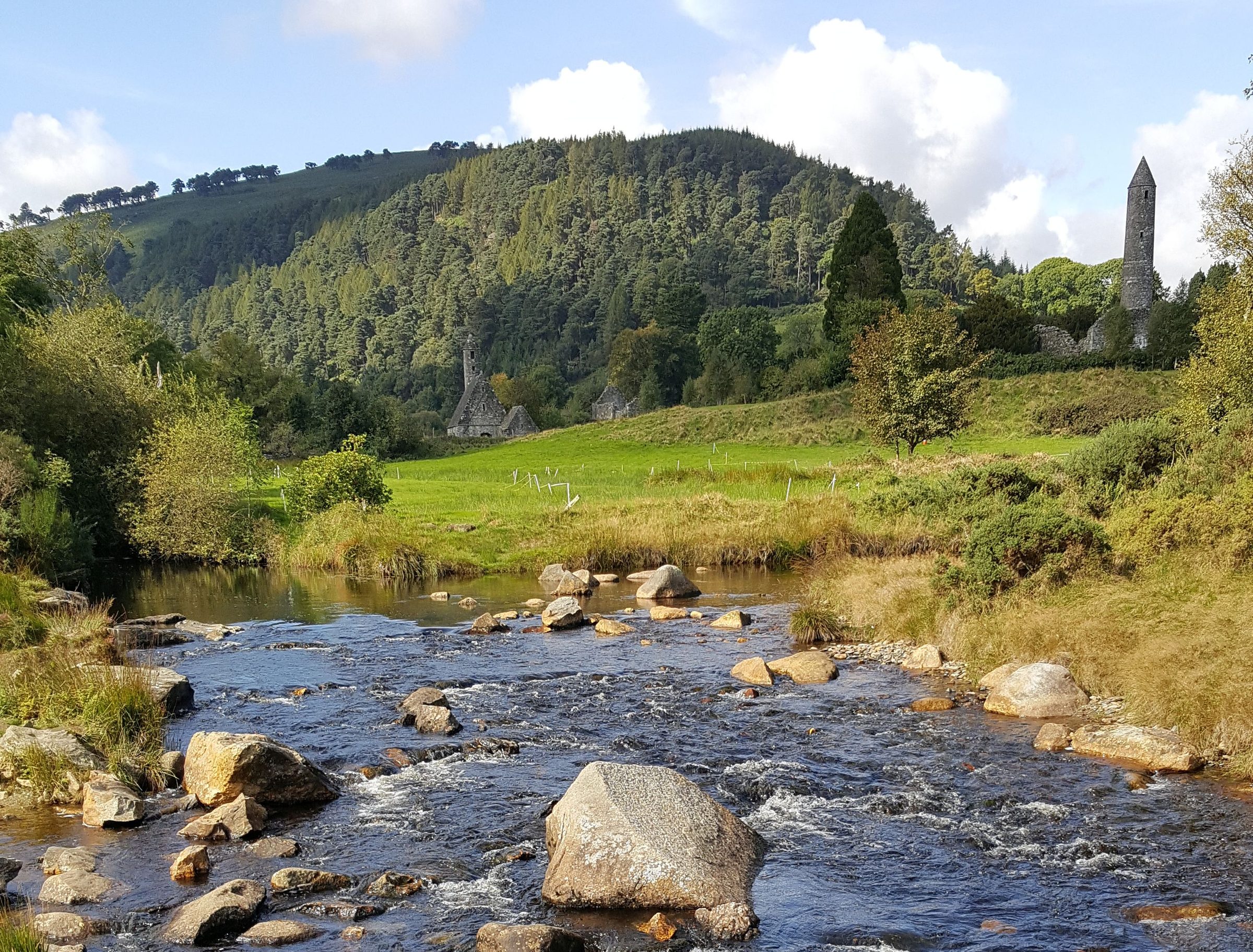
Eight nights, three hotels, and no touring loop. Nights one to three in Dublin. Arrive, sleep, and give the first day to the city on foot: the National Gallery, lunch, an hour in a bar in the afternoon, dinner booked. Second day, the Museum of Archaeology in the morning and Kilmainham or Marsh's Library after lunch, or a train to Howth and the cliff walk if the sky is behaving. Third day, Glendalough by car or driver with an early start, back by four.
Nights four to seven, one country house. Take the train or a driver west and settle: Sheen Falls in Kenmare if you want a town at the end of the drive, Ballyfin if you want the house to be the destination, Dromoland if there are children. Four nights in one place in winter is not lazy, it is the correct number, and it is what turns a hotel into a base. One outdoor objective per day, chosen at breakfast against the sky. Kenmare gives you Uragh Wood, the Beara road as far as the weather allows, and Killarney's lakes on the good morning. Ballyfin gives you the demesne, Emo Court and the Slieve Blooms.
Nights eight and nine if you have them, one more landscape rather than one more county: the Burren from Gregans or a Clare coastal base, with the pavement, Corcomroe and a short cliff walk on the clear morning, and Ballyvaughan or Ennis for lunch. Then Shannon or Dublin for the flight. Note what the trip does not contain. No island. No one-night stay. No Ring of Kerry and Dingle in the same day. No day trip from Dublin to the Cliffs of Moher. No cottage. No plan that assumes snow.
Come between November and February if you are willing to trade daylight for quieter roads, better rooms and a slower country. Spend three nights in Dublin, move to one great house, plan one outdoor objective per day and let the weather decide the rest. Do not attempt a summer itinerary in winter clothing. Ireland in winter works the moment you stop trying to travel it as though it were July, and for the traveller who wants the interior life of this country rather than a list of viewpoints, it is the better season.
Questions we get asked
- Is Ireland worth visiting in winter?
- Yes, if you build the trip around cities, hotels, food and one outdoor objective a day. You get quiet roads, tables you cannot get in summer, and rooms at the best properties in the country at rates that are otherwise out of reach. It is the wrong choice if you want long daylight, big touring distances or guaranteed coastal views.
- What is the best winter month to visit Ireland?
- Late February for most travellers, because the light is noticeably longer, seasonal businesses are reopening and value is still strong. January is the best month for hotel value and empty roads if you are happy to stay in two or three bases. November is quietly good value. December is excellent before the 20th and expensive after it.
- Does it snow in Ireland in winter?
- Rarely at sea level, and when it does it usually lasts a day or two. Winter here is mild and wet rather than cold, with daytime highs typically around 42 to 48 Fahrenheit. Higher ground gets occasional cover. Do not plan any part of a trip around snow.
- How many hours of daylight does Ireland get in December?
- About seven and a half hours around the shortest days, with sunrise close to half eight and darkness closing in by four in Dublin. The west coast runs roughly fifteen to twenty minutes later at both ends. November and February give you closer to nine or ten hours, and February improves week by week.
- Does Ireland shut down in winter?
- No, but inventory thins. Cities operate normally, while many rural restaurants close Sunday and Monday or take one to three weeks off in January, some heritage sites shut until spring, and attraction hours shorten with early last admission. Christmas Day itself is a genuine full closure in the Republic, including pubs and public transport.
- Is the Wild Atlantic Way worth driving in winter?
- In short sections from a fixed base, yes. As a long touring route, no. Daylight gives you roughly four usable outdoor hours, ferries to the islands are weather-governed, and coastal roads in Atlantic wind are slow. Pick one stretch, such as the Burren or the Kenmare and Beara side of Kerry, and stay put.
- Is Dublin good in winter?
- It is the easiest winter destination in Ireland. The galleries, museums, theatre, restaurants and bars are all indoors and within walking distance of each other, distances are short and taxis are plentiful, so rain changes which door you go through rather than ending the day. Three nights in Dublin in January is a good trip on its own.
- Is Ireland cheaper in January?
- Yes, particularly on rooms. After the first week of January, hotel rates fall sharply and the effect is largest at the top of the market, where country houses and suites that are unreachable in June come into range. Car hire is cheaper and transatlantic fares are usually softer. Christmas, New Year and the February school midterm are the exceptions.
- Is it safe to drive in Ireland in winter?
- Yes, with a reduced schedule. Roads are narrow, unlit and wet rather than icy, and the fatigue arrives sooner than Americans expect. Halve your summer driving ambition, keep difficult rural legs in daylight, avoid driving into orange or red wind warnings, and use trains or a driver for long transfers.
- What should I pack for Ireland in winter?
- A hooded waterproof shell, a warm mid-layer, genuinely waterproof shoes, wool socks, gloves, a small day bag, swimwear for the hotel pool, and smarter clothes for good hotels and restaurants. Layers beat a heavy expedition coat. An umbrella is close to useless in Atlantic wind, which is why the hood matters.
- Is Ireland good with children in winter?
- It works, but the hotel carries the trip. Choose a property with a pool, grounds and a restaurant open every night, keep driving days under ninety minutes and outdoor bursts short. Ages seven to eleven do best in the countryside, teenagers do better in cities. Winter suits couples more easily than families.
- Which Irish hotels are best in winter?
- In Dublin, The Merrion for its drawing rooms and fires, The Shelbourne for position and The Westbury for families. In the country, Ballyfin, Sheen Falls Lodge, Dromoland Castle and Adare Manor all run at full strength with fires, indoor space and a restaurant open nightly. Confirm winter opening dates directly, as some houses close for weeks in January.
How we checked this
Further reading from the Notebook
- When to come, month by month
- Christmas in Ireland, the family reference
- Halloween in Ireland, the other family week
- Five great Irish country houses
- The first Ireland trip, seven days honestly
- Where to stay in Dublin
- Country house hotels we trust with children
- The Ireland packing list, seriously
- Choosing a country house for Christmas and winter