Written from Dublin after Christmases kept here with children, and from country houses in Kerry, Laois and Clare between December 23 and the new year
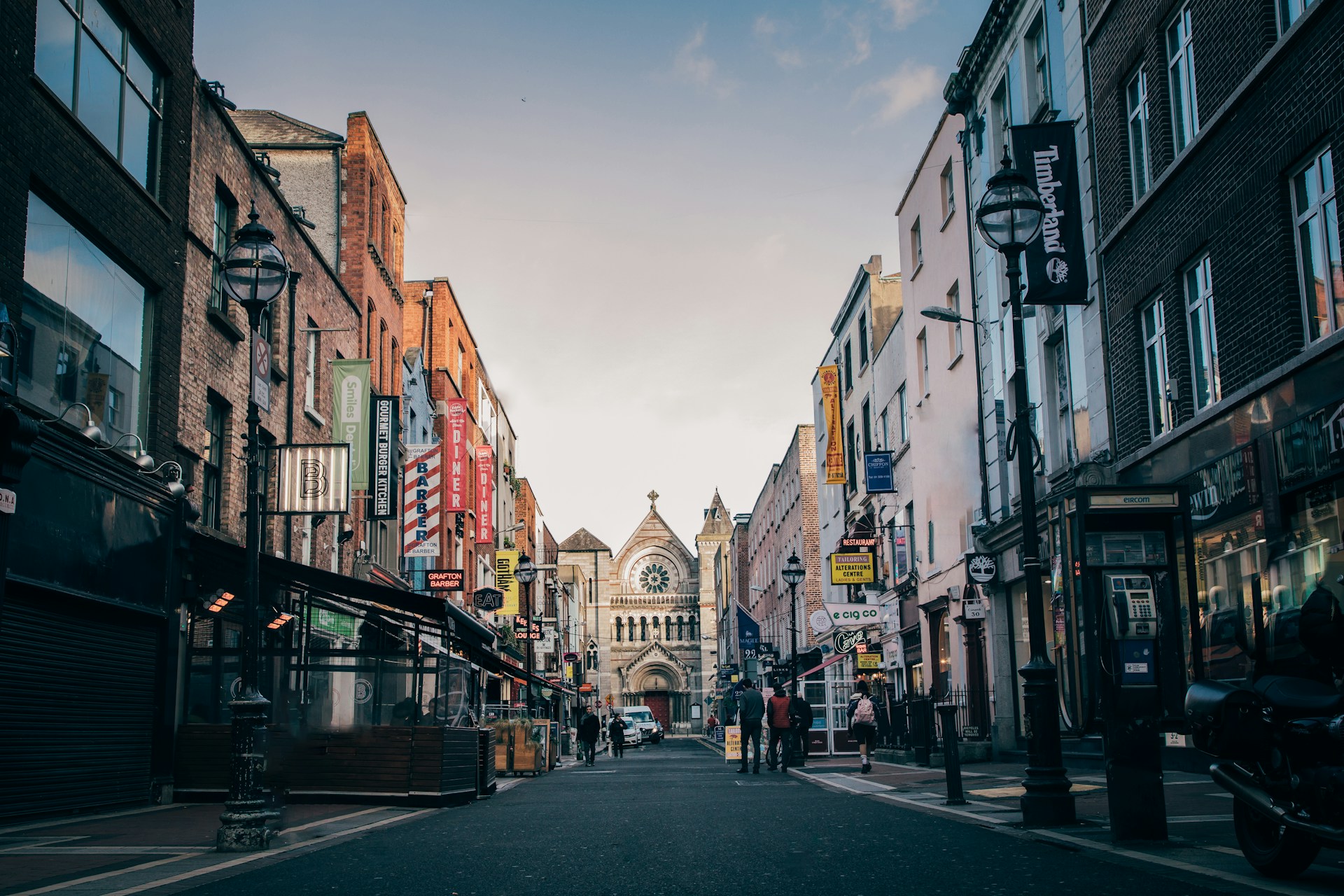
At half three on December 24 on a street in Dublin 6, the light is already going and every window has a lamp on behind it. The bags people are carrying come from a butcher and a bakery, not a department store. A man goes into a pub for one drink, coat still on, and will be home in forty minutes. The city is not building toward anything. It is emptying, deliberately, room by room. American families arrive here in December expecting Christmas to be somewhere out in public, and spend the first two days looking for it. It is not out there. It is inside houses, and the whole trick of an Irish Christmas is getting yourself into a room where it is happening and then staying put.
What Americans Get Wrong About Christmas In Ireland
Christmas in Ireland is not a bigger version of yours. It is a more domestic one. The American season expresses itself outward through display, programming and scale: the lights on the street, the show, the mall, the schedule. The Irish season turns inward toward the house, the table, the pub the night before, the walk on the day after. Nobody here is competing with you on spectacle. They are not trying.
The practical consequence catches visitors out. December 25 is not a quiet-ish day here, it is a genuinely closed day. Shops, pubs, buses, trains, most restaurants: closed. Pubs in the Republic are required by licensing law to shut on Christmas Day, which surprises Americans more than anything else we tell them. Public transport in Dublin does not run on the 25th and runs on a reduced service on the 26th. Decide in advance where you are eating and sleeping on Christmas Day, or the day will decide for you.
The second thing to reset is the calendar. St Stephen's Day, December 26, is a public holiday and carries real weight here: racing at Leopardstown, wren boys in Kerry, sea swims, family visits, the beginning of the sales, a country back out on its feet. Americans treat the 26th as an afterthought. Here it is half the point.
What The Season Actually Feels Like
Understand the light first, because it governs everything. Dublin gets around seven and a half hours of daylight in late December. Sunrise is close to half eight, dark is closing in by four. That is not a detail, it is the structure of your day. Anything outdoors happens between ten and three. Everything after that is interior: lamps, fires, tables, low rooms. Irish houses light up early and from the inside, and by five in the afternoon a residential street reads as a row of lit windows.
Temperature is mild and miserable rather than severe. Expect daytime highs around 42 to 48 Fahrenheit, nights near freezing, rain on more days than not, and wind that makes all of it feel colder than the number. Snow at sea level on Christmas Day is rare, and we would not plan a single hour of the trip around the possibility.
The rhythm has three movements. The week before Christmas is the loud part: offices out, pubs full by five, trains and airport arrivals halls emotional in a way that is genuinely worth witnessing, people coming home from London and Sydney and Boston. Then December 25 drops the country into silence. Then the soft week between Christmas and New Year, when nobody is quite working, the roads are quiet and the good hotels are full of families in jumpers doing nothing at all.
The Traditions Worth Understanding
The candle in the window is the one to explain to your children. On Christmas Eve a candle is lit and set in the front window, traditionally by the youngest child in the house, and left burning through the night. The old reading of it is shelter offered to the holy family with no room at the inn, and in the penal era it doubled as a sign to a travelling priest that this was a safe house. You still see it, electric now on many streets and open flame in others, and it is why an Irish road at nine on Christmas Eve looks the way it does.
The Forty Foot at Sandycove on Christmas morning is the other detail people repeat afterwards. Several hundred swimmers, many raising money for charity, going into the Irish Sea at roughly 50 Fahrenheit in front of a crowd on the rocks. Every coastal town has its own version. Take your children to watch rather than swim, go early, and treat the water seriously: open sea in winter carries real cold-shock risk.
Then St Stephen's Day and the wren. In parts of Kerry, above all Dingle, wren boys still go out on December 26 in straw hats and disguise with music, moving from house to house and pub to pub, a survival of a much older midwinter custom. It is not a performance staged for you and it does not run to a published schedule. If you are in Dingle on the 26th you will meet it in the street. If you are not, you will not.
Two more worth knowing. Nollaig na mBan, Women's Christmas, on January 6, when the season formally ends and the tradition, still alive in Cork and Kerry, is that women go out and the rest of the household clears the table. And the fact that Christmas Day here is not a driving day. People walk, after lunch, in the rain, in whatever they had on. That walk is the most Irish hour of the season.
With Children: Start Here
Before the detail, the decision, by age. Ages four to seven: Dublin for two or three nights, a Santa experience booked in early autumn, the zoo or Malahide, early dinners at half five, and Christmas itself somewhere with a fire and a pool. Do not schedule a second thing after lunch on any day.
Ages eight to eleven is the strongest age for this trip and the one we would choose. They can hold three nights of city, a train or a drive, and then four nights in a country house without needing to be entertained by anyone. Give them the candle to light on Christmas Eve, the Forty Foot to watch on the 25th if you are near the coast, and one long walk on the 26th. Children this age remember rooms and weather, not attractions.
Ages twelve and up: treat it as closer to an adult trip. Dublin gets better for them, not worse. Late afternoon walks, the National Gallery, a Christmas concert, a proper table somewhere, and the week before Christmas seen from a hotel bar with a coke in hand.
One rule across all ages. Whatever you book for Christmas Day itself, book children into a building with grounds, an indoor space they are allowed to roam and food they will eat. The day is fourteen hours long, nine of them dark, and you are not leaving.
Dublin Before Christmas, And Then December 24 To 26
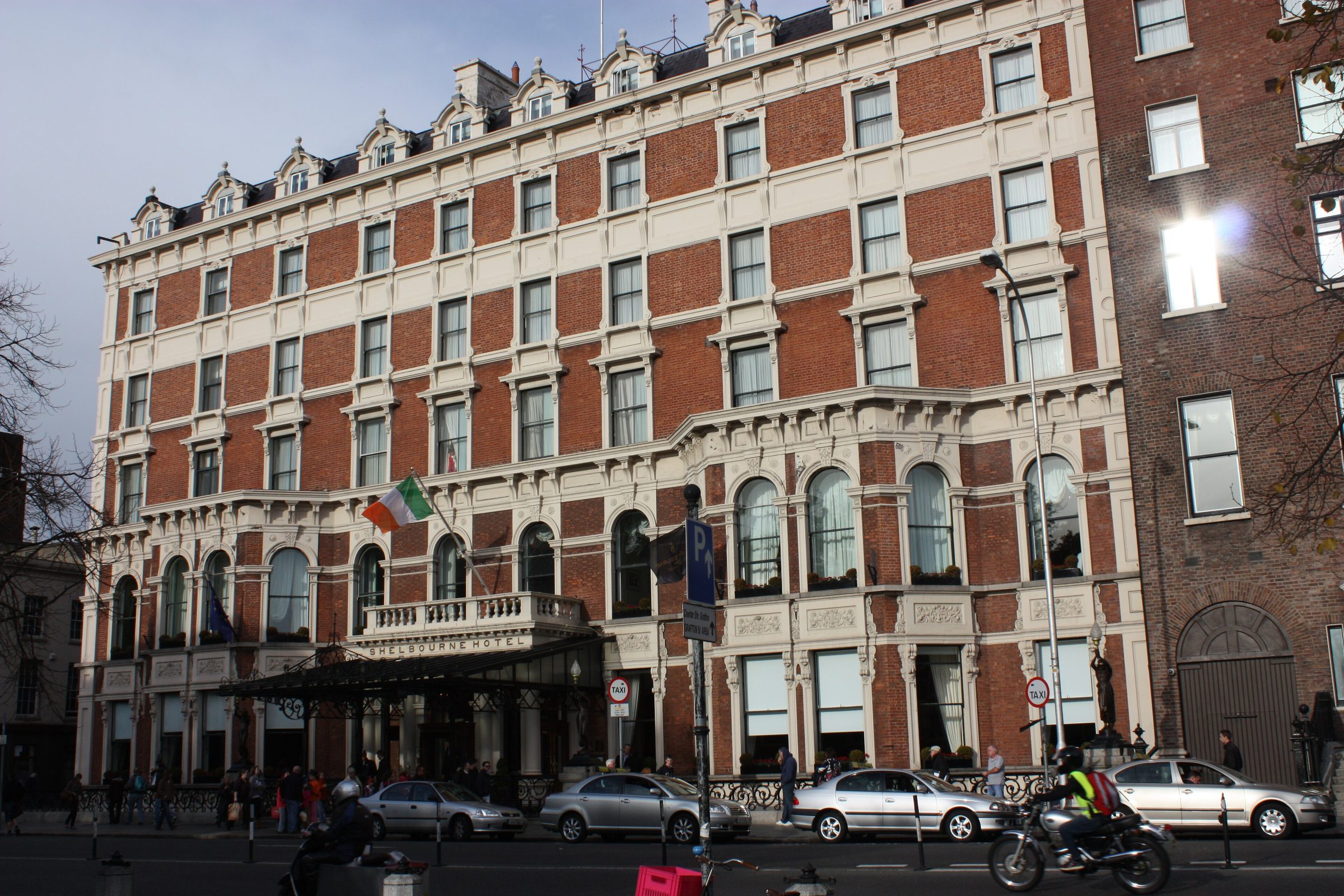
Dublin is worth three nights in December, and it is at its best from around the 19th to the 23rd. The pattern we use: mornings for the National Gallery, the National Museum on Kildare Street or a walk of the Georgian squares while there is light, Grafton Street and the Powerscourt Townhouse mid-afternoon, then indoors before five. The Brown Thomas windows are genuinely good and cost nothing. The city's outdoor market offering is thin by German or Alsatian standards, so put that hour into a concert, a pantomime, or afternoon tea at The Merrion or The Shelbourne instead.
Christmas Eve in Dublin is the thing to be there for. Shops shut early, usually by mid-afternoon, and the streets thin out fast. Pubs are full from lunchtime and everyone in them is going home afterwards. Walk between four and six while the windows are lighting up, then eat early, because kitchens close and staff are going home too.
Now the operational reality of December 25. Shops, pubs, most restaurants and all normal public transport are closed. Dublin Bus, Luas and Irish Rail do not run. Taxis operate at a premium and are scarce. Dublin Airport does operate, so flights are possible but ground transport is not something to improvise. What is open is hotels, for their residents, and churches. This is the single reason we tell American families to book a hotel with a real Christmas programme rather than an apartment: on December 25 your hotel is the entire infrastructure of your day.
December 26 restarts the country at half speed. Reduced buses and Luas, limited or no rail depending on the operator and year, many larger shops opening for the sales, racing at Leopardstown, hotel restaurants back to full service, and every coastal path in Ireland busy with families walking off lunch. By the 27th normal service has broadly resumed, though many independent restaurants stay shut until after New Year. Confirm the current year with each operator.
The Country-House Version, Which Is The One We Keep
Here is the argument of this whole piece. A good Irish country house at Christmas is not a luxury substitute for a home. It is a working reproduction of the architecture of an Irish Christmas: one fire, one long table, several rooms a child can vanish between, grounds to walk in bad weather, and no reason whatsoever to leave the property. That is what an Irish family Christmas is.
Judge these hotels on Christmas terms, not prestige. Are there interconnecting or family rooms, and how many. Is there a genuine multi-day Christmas programme, typically three or four nights with a set arrival on the 23rd or 24th, or is the hotel simply open. Are there indoor common rooms where children are welcome to be children, or only a lobby you are expected to cross quietly. Is there a pool or spa for the wet afternoon that will happen, and do the grounds hold a walk in the rain. Warm staff matter more here than any other week of the year, because on December 25 they are the only people you will meet.
The food is worth knowing in advance because it differs from yours. Christmas lunch here is turkey and ham together, both on the plate, with roast and mashed potatoes, stuffing, bread sauce, sprouts, and a boiled or steamed pudding set alight and served with brandy butter. Mince pies are small, sweet, spiced and contain no meat. Christmas cake is dense fruit under marzipan and icing. Crackers are pulled at the table and every adult wears the paper crown, which your children will find funnier than anything you planned. Hotel Christmas lunch is usually a fixed multi-course sitting at a set time, booked and paid for with the room, and it is worth it, because the alternative on that day does not exist.
The hour that justifies the trip is the one after that lunch. Everyone is still at the table. Nobody is checking a phone. Somebody suggests a walk and nobody moves for twenty minutes.
Where We Would Stay, And Which Version Is Worth The Trip
In Dublin, for the days before Christmas: The Merrion for families who want space, art on the walls, a pool and the best drawing rooms in the city to sit in when it rains. The Shelbourne for the Green on your doorstep and a lobby your children will remember. The Westbury for pure location, thirty seconds off Grafton Street, which matters enormously in a week of short daylight and long shopping bags. Ask for interconnecting rooms by name, not a rollaway.
In the country, for Christmas itself: Adare Manor for the fullest programme and the most confident handling of children, with grounds and indoor space that hold a family for four days. Dromoland Castle for the same instinct at a slightly softer register, and the easiest arrival from Shannon if you are flying in from the States close to the day. Sheen Falls Lodge for Kerry, water, woods and the walk on the 26th. Ballyfin for older teenagers, though it is not the address for a boisterous six year old. Confirm the current year's Christmas programme and minimum stay directly with each property, because these are republished annually and typically require three or four nights with a fixed arrival date.
Now the decision. Choose Dublin alone if you want restaurants, theatre, shopping and simple logistics, and you are travelling in the week before Christmas rather than across it. Choose a country house alone if you have five nights or fewer and you want the version we think is actually Irish. Choose both, in that order, if you have a week. Do not come for snow, public spectacle, or a Christmas-market itinerary.
And the dates matter more than the destination. Early December is a working month with lights up, low rates and little else. The week of the 19th to the 23rd is the loud, sociable, best-value version of Irish Christmas and the one we would send a first-time family to. December 23 to 27 is the real thing and the most expensive and most restricted, and it only works if you are booked into one property for the duration. The 27th to the 30th is the quiet gift: full service returning, half the rates, empty coast roads. New Year in Ireland is fine and no more than that.
The Ireland Edit Christmas Week
This is the trip we would take. Fly overnight and land on December 20 or 21. Three nights in Dublin: museums and squares in the light, Grafton Street and the windows in the afternoon, one concert or pantomime, one proper dinner, one afternoon tea. Move to the country on the 23rd, never the 24th or 25th, by train or driver rather than a rental car collected at the worst hour of the Irish year. Four nights in one country house across Christmas Day, with the candle in the window on the 24th, the whole of the 25th on the property, and the 26th given to a walk, the wren if you are in Kerry, or Leopardstown if you are near Dublin. Home on the 27th or, better, one last Dublin night while the city is quiet and the sales are on.
Book in this order. Six to nine months out: the country-house Christmas programme and your interconnecting rooms, because the good houses sell the 23rd to the 27th first and the family rooms go before anything else. Three to six months: flights, the Dublin hotel, and any restaurant you actually care about for the pre-Christmas week. Six to ten weeks: Santa experiences, pantomime and concert tickets, and the zoo. Two weeks: reconfirm the Christmas Day lunch sitting, your transfer on the 23rd, and what your hotel is doing on the 26th. Nothing else genuinely sells out.
What we would not do. We would not move hotels on the 24th, 25th or 26th. We would not assume a restaurant will open on Christmas Day, because it will not. We would not build the week around Christmas markets, or rent a car for a touring loop in seven hours of wet December daylight. We would not book a business hotel in a business district for Christmas. We would not schedule anything at all for the afternoon of the 25th.
Late on Christmas Day in a house in Kerry, the lunch things are still on the table and nobody has cleared them. The children went upstairs an hour ago and are somewhere on a landing with a board game and no adult supervision. Rain is coming at the windows in bursts. The fire has been built up twice. Everyone is still sitting down, still in the paper crowns, and the day has no more requirements. That is the thing you came for, and it cannot be added to an itinerary later. Book the house first.
Questions we get asked
- Is Ireland open on Christmas Day?
- Largely no. In the Republic, December 25 is a public holiday, shops and most restaurants close, and pubs are required by licensing law to shut for the day. Dublin Bus, Luas and Irish Rail do not operate. Hotels serve their own residents and churches hold services. Dublin Airport operates, but ground transport is scarce and expensive. Plan to spend the entire day where you are sleeping.
- Do restaurants open on Christmas Day in Ireland?
- Almost none independently. Christmas Day dining in Ireland effectively means a hotel restaurant serving residents, usually as a fixed multi-course lunch at a set sitting time that is booked and paid for in advance with the room. If you have not reserved it, you will not find a table on the day.
- Does it snow in Ireland at Christmas?
- Rarely at sea level. A typical Irish Christmas is around 42 to 48 Fahrenheit by day, damp, grey and windy, with rain far more likely than snow. Higher ground occasionally gets a covering. Do not plan any part of the trip around snow.
- Should we spend Christmas in Dublin or the Irish countryside?
- The countryside, if you are travelling across December 25 itself. A country house with a Christmas programme, grounds and family rooms reproduces the shape of an Irish Christmas and solves the closed-day problem entirely. Dublin is better in the week before Christmas, from roughly the 19th to the 23rd, when the city is at its most sociable.
- What happens on St Stephen's Day in Ireland?
- December 26 is a public holiday and a genuinely active day: racing at Leopardstown, wren boys in Dingle and parts of Kerry, charity sea swims, family visiting, the start of the sales in larger shops, and long walks everywhere. Public transport runs a reduced service and hotel restaurants return to normal.
- How far ahead should we book a Christmas hotel in Ireland?
- Six to nine months for a country-house Christmas programme, and earlier still if you need interconnecting or family rooms, which sell first. These programmes usually require a minimum stay of three or four nights with a fixed arrival date around December 23 or 24, so book the house before you book flights.
- Is Christmas a good time to visit Ireland with children?
- Yes, if you commit to one property across the holiday itself and accept short daylight. Children aged roughly eight to eleven get the most from it. The trade is around seven and a half hours of light, frequent rain, and a completely closed December 25, which is why the choice of hotel matters more than at any other time of year.
- What is the Irish tradition of the candle in the window?
- On Christmas Eve a candle is lit and placed in the front window, traditionally by the youngest child, and left burning overnight. It signals shelter for travellers with nowhere to stay, and historically marked a safe house for a priest during the penal era. It is still widely kept and is why Irish streets look the way they do on the night of December 24.
- What is the Forty Foot Christmas swim?
- A Christmas morning sea swim at Sandycove in south County Dublin, where hundreds of swimmers enter the Irish Sea at roughly 50 Fahrenheit, many raising money for charity. Coastal towns around Ireland hold their own versions. It is open sea in winter with real cold-shock risk, so most families are better off watching from the rocks.
- What is served for Christmas dinner in Ireland?
- Turkey and ham together on the same plate, with roast and mashed potatoes, stuffing, bread sauce and sprouts, followed by a steamed Christmas pudding with brandy butter. Mince pies contain no meat, and Christmas cake is dense fruit cake under marzipan and icing. Crackers are pulled at the table and the paper crowns are worn.
How we checked this
Further reading from the Notebook