Checked September 2026 against Old Head's published hole by hole guide and scorecard
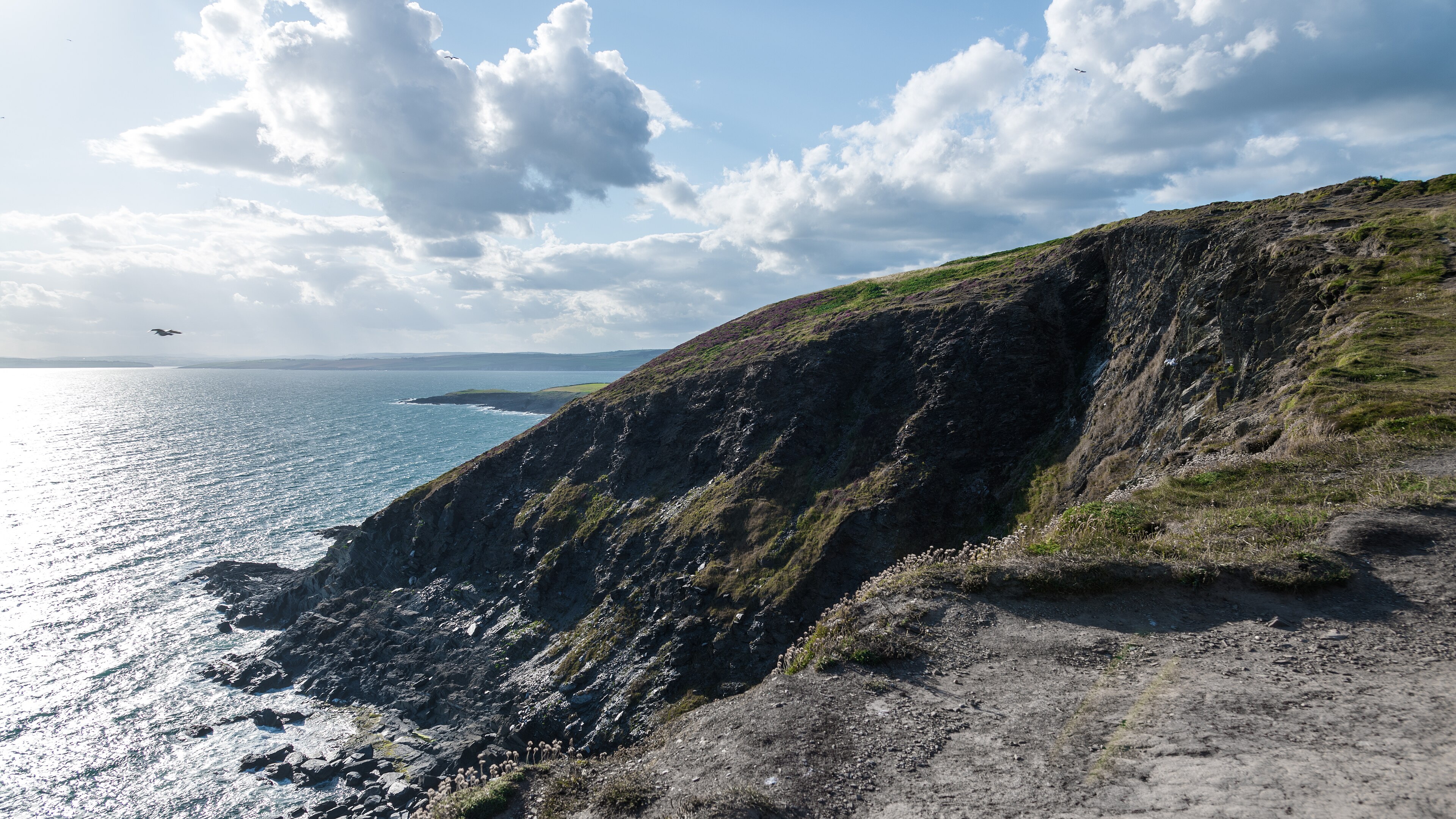
The first thing to understand about Old Head is that it is not a links, whatever the name on the gate says. A links is dune land behind a beach. This is a 220-acre diamond of clifftop farmland running two miles out into the Atlantic, almost an island, with sea caves underneath the fairways and the water three hundred feet below on both sides. The turf plays firm and the wind behaves exactly like links wind. Everything else about it, the elevation changes, the sightlines, the sheer theatre of the walk, belongs to a different category of golf course. That distinction matters on the card, because the strategy that works at Lahinch or Ballybunion will not entirely transfer here. What follows is the round hole by hole, using the club's own read on each hole alongside our own, and an honest answer to the question every visiting American asks us first: which tees should we actually play.
The Card, And Which Tees To Play
Old Head is a par 72 with an unusual shape to it: five par fives, five par threes, and eight par fours. Most championship courses give you four and four. The extra par five and the extra par three change the rhythm of the round, and they are the reason the course can feel both generous and brutal inside the same nine holes.
There are five published sets of tees and the club states a minimum of six tees per hole, so the set-up changes daily according to the weather. The scorecard runs Black at 7,150 yards, Blue at 6,912, White at 6,588, Yellow at 6,045 and Red at 5,494. Every one of them is par 72.
Our advice, and we give it to every American group we send here, is to play one set forward of the tees you would normally choose at home. Not because the course is unfair, but because a €550 round is not the place to spend four and a half hours grinding out bogeys into a headwind. The White tees at 6,588 yards are the most enjoyable golf on the property for a mid-handicapper on a normal Cork afternoon. If the wind is genuinely up, and it will be at some point, drop to the Yellow at 6,045 and you will still be tested.
The one group we would put on the Blue tees is a party of single-figure handicaps playing in calm conditions in June. The Black tees at 7,150 yards exist for tournaments and for the kind of golfer who already knows they want them.
The Opening Five: Getting Settled
The first is a 446-yard par four off the Black, 390 off the White. The club's own read is to drive down the left side for the best angle in, and to take enough club for an approach to an elevated green. That last instruction repeats through the round often enough to be a theme: at Old Head, greens sit above you more often than they sit level, and an under-clubbed approach is the commonest way visitors lose shots.
The second, 402 off the Black and 376 off the White, is stroke index ten but plays harder than that. The fairway is unforgiving and the tee shot wants the right side. The club's advice on the second shot is specific and worth following: aim at the right side of the green, because the ball will feed left on its own.
The third is the first par three, 178 yards off the Black down to 163 off the White. There is room to bail out right, and the club's own line is that only a brave player attacks a left-hand pin. Take the bail-out. A three here is a bonus, not an expectation.
The fourth is the hardest hole on the front nine by stroke index, a two on the card, and it plays 427 off the Black and only 415 off the White, which tells you the tees do not shorten this one much. Use the contours on the right to feed the ball back into the middle, and add at least one more club into another elevated green.
The fifth has an out-of-bounds wall down the left and a green with more shape in it than you can see from the fairway. The club's instruction is to target the centre of the green whatever the pin is doing. We would follow that literally.
Six To Nine: The First Real Scoring Chance
The sixth is the shortest of the five par fives, 554 off the Black and 536 off the White, and it is reachable in two. The catch is the same out-of-bounds wall running the whole length of the left side, and a two-tier green guarded by well-placed bunkers. This is the hole where a good player picks up a shot and a greedy one drops two.
The seventh is the intimidating par three of the front nine, 192 off the Black, 158 off the White, with very little margin. The bail-out area left leaves a chip to a green running away from you, which is the worst short-game shot in golf. If you are between clubs, take the longer one and aim at the middle.
The eighth is a par five that looks more straightforward than it plays, 542 off the Black and Blue alike, 531 off the White. Bunkers sit strategically and there is heavy rough only yards from the green, so the third shot deserves respect even after two good ones.
The ninth is the longest par four on the course: 455 off the Black, 431 off the White, stroke index six. Three bunkers on the left will catch an over-aggressive drive. Take enough club for the second shot. A five here is not a disaster and a four is worth talking about at dinner.
The Three Holes That Decide Your Score
If you want to know where the round is actually won and lost, it is the twelfth, the fourteenth and the seventeenth.
The twelfth is stroke index one and the club calls it one of the most intimidating holes in golf, which from a club's own marketing copy is unusually close to the truth. It is 564 yards off the Black, 537 off the White, and the fairway narrows on the approach to the green. Keep the drive down the right. This is a hole to play as a three-shot par five even if you can normally reach one in two, because the punishment for a wayward second is total.
The fourteenth is stroke index three and the easiest hole on the course to make a mess of. Three bunkers are placed to catch the drive, and even a good drive leaves a demanding approach. The percentage play is the left side of the green. It plays 452 off the Black and 411 off the White, so the forward tees do genuinely help here.
The seventeenth is the longest hole on the property and the one with the lighthouse in the sightline: 623 yards off the Black, 575 off the White, dropping to 464 off the Yellow and Red. Finding the fairway with both the drive and the second shot is the whole hole. The club's own note is that par is always a good score here, and we would go further. Make five your target and take six without complaint.
Ten To Eighteen: The Clifftop Stretch
The tenth is a risk-and-reward par five, 548 off the Black and 515 off the White, with a lot of trouble protecting the green. The eleventh is a 207-yard par three off the Black where club selection is everything, and a missed green will test the best short game you have.
The thirteenth is the most undulating green on the course and only 168 yards off the Black, 145 off the White. Getting the ball on the correct portion of the green matters more than hitting it close. Ask the caddie which shelf the pin is on before you pull a club.
The fifteenth is the shortest par four at 342 off the Black and 284 off the White, and it is drivable for a long hitter. The safe play is down the left, because a wayward shot right finds trouble. The sixteenth is a tight par three at 186 off the Black where the wind does most of the work and the popular left side is not always the rewarding one.
The eighteenth is a demanding finisher, 434 off the Black and 399 off the White, with out-of-bounds on the right. Find the fairway, then allow plenty of club, because the ball has to carry onto the front of the green. It is an honest ending to a round that has spent four hours trying to distract you.
Wind, Clubbing, And The Caddie
Old Head sits two miles out in open ocean with water on both sides, and the club sets the course up daily depending on the prevailing conditions. That is not a marketing line. The practical effect is that the same hole can be a five iron or a three wood on consecutive days, and the wind can be across you on the front nine and behind you on the back.
The one rule we would carry round with you is this: almost every mistake at Old Head is a club short. The greens sit high, the wind off the sea is heavier with moisture than it feels, and the club's own hole notes ask you to take more club on the first, the fourth and the eighteenth by name. Believe them.
The course is designed to be walked, and the club asks members and guests to walk it with a caddie. There are roughly one hundred and sixty professional caddies working the club through the season, which is one of the largest programmes in the country. If you take one thing from this chapter other than the tee advice, take a caddie. Not for the yardages, which you can get from a device, but for the read on which side of each green is safe and for the local history they will give you on the walk out to the lighthouse.
There are practice facilities: a warm-up range, a putting green and a short-game area. Use the range. The first tee at Old Head is not the place to find your swing.
Who Designed It, And Why That Matters
Old Head was not the work of one signature architect, which is unusual for a course of this profile. The club credits the late Ron Kirby, formerly of Jack Nicklaus's design office, the late Eddie Hackett, the Irish professional and architect behind much of the country's links golf, the late Dr Joe Carr, Ireland's most successful international amateur, the Australian architect and agronomist Paddy Merrigan, the professional Liam Higgins, and the building contractor Haulie O'Shea. The O'Connor brothers were the owners who made the project happen.
That committee origin shows on the ground, and we mean it as a compliment rather than a criticism. There is no single stylistic signature imposed on the land. The routing follows what the promontory offered, which is why nine holes sit along the cliff edge and why the par distribution is odd. A single architect with a reputation to protect would probably have built something more conventional and less memorable.
Questions we get asked
- What is the par and length of Old Head of Kinsale?
- Old Head is a par 72 from every set of tees. The published lengths are Black 7,150 yards, Blue 6,912, White 6,588, Yellow 6,045 and Red 5,494. The course comprises five par fives, five par threes and eight par fours.
- Which tees should visitors play at Old Head?
- We would play the White tees at 6,588 yards for most mid-handicap groups, and drop to the Yellow at 6,045 if the wind is up. The club sets the course up daily with a minimum of six tees per hole, so ask in the golf shop what is in play on your morning.
- What is the hardest hole at Old Head?
- The twelfth is stroke index one, a par five of 564 yards off the Black tees, and the club describes it as one of the most intimidating holes in golf. The fairway narrows on the approach, so keep the drive right and play it as a three-shot hole.
- Is Old Head a links course?
- No, not strictly. It is a clifftop course built on a 220-acre promontory running two miles into the Atlantic, with sea caves beneath the fairways and the ocean three hundred feet below. The turf and the wind play like links golf, but the elevation changes do not.
- Do you need a caddie at Old Head?
- The club is designed as a walking course and asks members and guests to walk it with a caddie. Roughly 160 professional caddies work the club through the season. Caddies are requested rather than guaranteed, so ask when you book the tee time.
How we checked this
Further reading from the Notebook