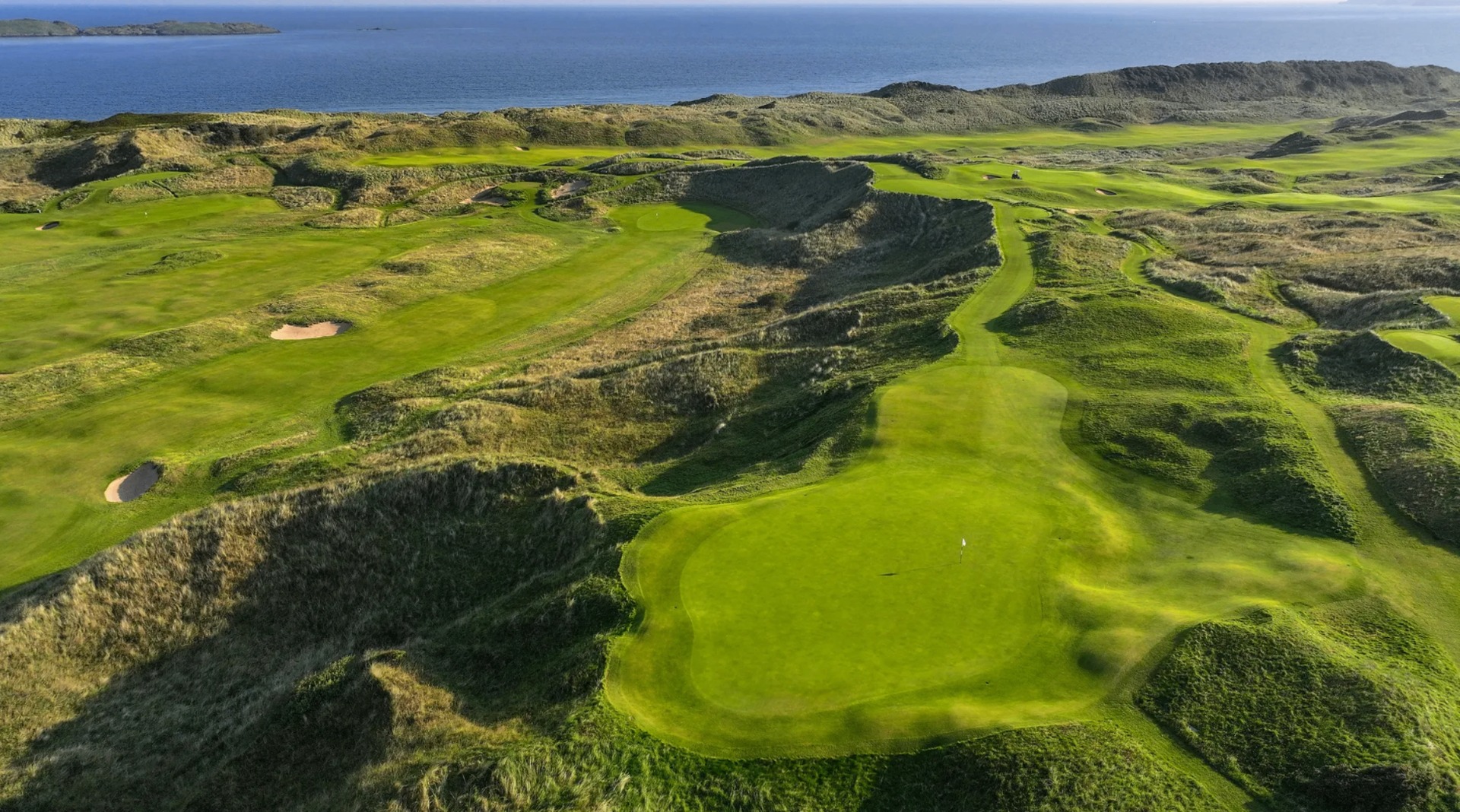
Played September 2025, two weeks after the Open returned to Dunluce
Royal Portrush is the round most American golfers now try to build a Northern Ireland trip around, and the round they most consistently underclub. It sits on a strip of Atlantic dune ground on the north Antrim coast, forty minutes from Belfast and ten minutes from the Giant's Causeway, and it has been played in some form since 1888. The Dunluce Links as you walk it today was substantially reshaped by Harry Colt in 1932, tweaked by Martin Ebert ahead of the 2019 Open Championship when two new holes were built into the dunes at the 7th and the 8th, and it holds together as the most complete championship links routing on the island. Shane Lowry won the 2019 Open here in a downpour and a crosswind, and the R&A brought the Open back to Portrush in 2025 because the course produced the truest test of the modern era. What that pedigree does to a visiting American is set an expectation of length. Portrush is not about length. It is about the tee shot, the ball flight, and the second shot into greens that fall away on every side. Here is what the course actually asks, hole by hole where it matters, and what we now do differently after many rounds on it.
The Course, In Championship Terms
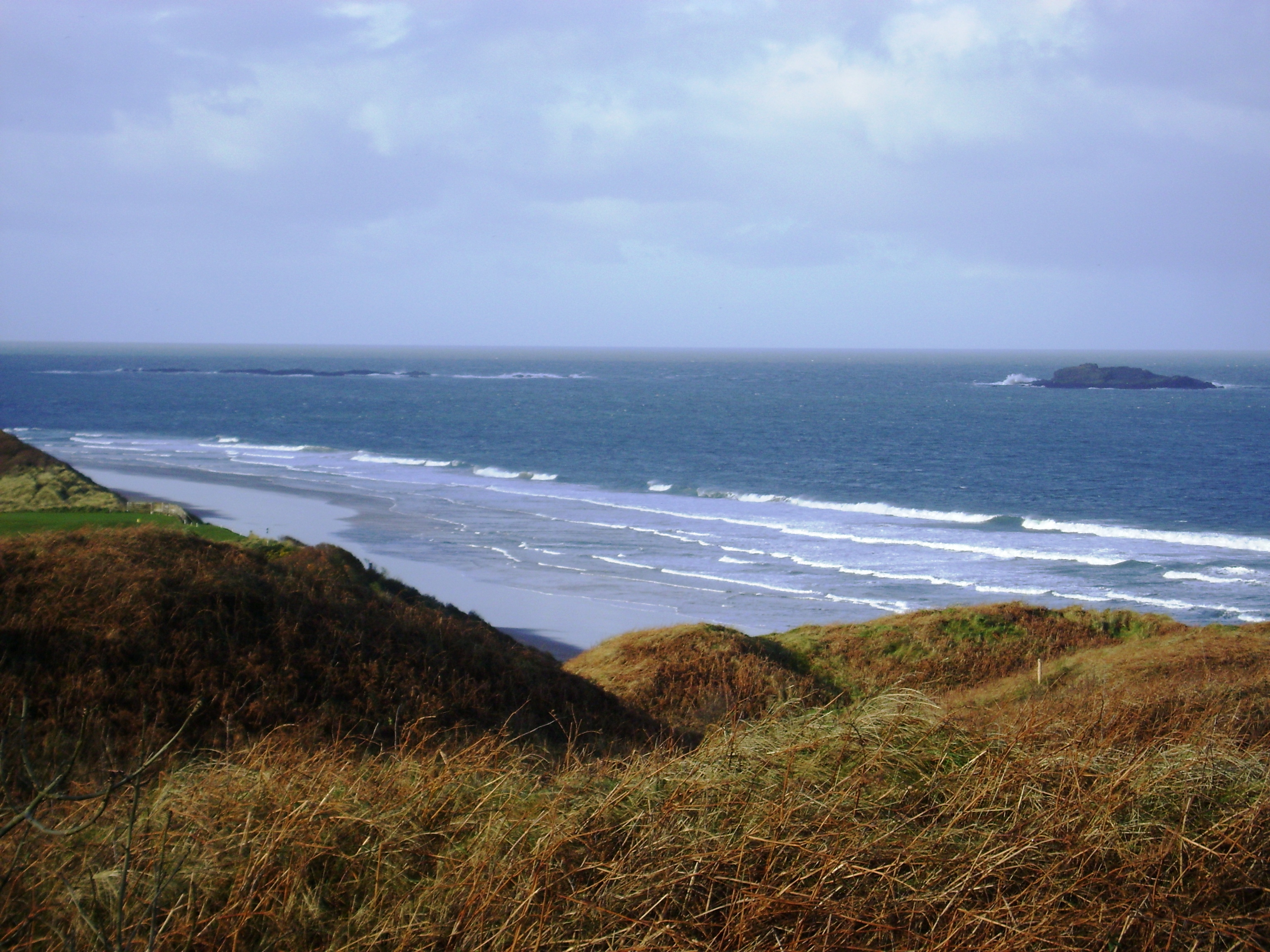
Royal Portrush is a members club with two courses cut into the same stretch of Antrim dune. The one that matters, the Dunluce, is a par 71 that played 7,344 yards from the Open tees in 2019 and plays a good deal shorter from the member tees a visiting American will actually score from. The town of Portrush sits at one end of the property, the White Rocks cliffs at the other, and the ruin of Dunluce Castle broken on the headland to the east. The Valley course tucked into the low ground below is a real links in its own right and worth a second-round day, but it is not the reason you flew to Belfast.
The Dunluce climbs, drops, climbs, and then holds a ridge for the run home. It opens on high ground beside the clubhouse, falls through the 2nd and 3rd, gathers itself in the dunes at the 4th and the new 7th and 8th, and then walks the top of the ridge from the 10th to the 17th with the Atlantic underneath your right shoulder. Two fairway bunkers on the whole property. Almost no water. The course fights you with tee-shot shape and with the way every green sheds a mishit, not with brute length. Portrush is not a resort. It is a walking club with a modest lounge and a caddie shed by the first tee, and every strategic decision the round asks of you is made before you swing.
The Colt Routing, And Why It Still Works
Harry Colt laid out the Dunluce in 1932 on ground the club had been playing on since the late nineteenth century, and what he built is arguably the finest routing in his catalogue. Colt used the natural ridges of the dune ground to give every hole a defined tee shot and a defined miss, and he set almost every green either on top of a shoulder or into the fold between two dunes so that the fall-off around the putting surface is the primary defence. There is no water on the Dunluce, only two fairway bunkers on the opening two holes, and yet the course produces a scoring average in championship conditions that beats most of the Open rota. It does that with ground contour and with wind, which is the definition of a great links.
The Martin Ebert work ahead of the 2019 Open replaced the old 17th and 18th, which sat on flat ground beside the clubhouse and never held up to championship play, with two new holes cut into the dunes at what is now the 7th and the 8th. The old routing finished on the flat. The new routing finishes on the ridge. That change is the reason Portrush now closes with three of the strongest finishing holes in Ireland. Do not walk this course thinking of it as a museum piece. What you are walking is a living championship links that has been sharpened deliberately, and the 7th and 8th are as strong as anything Colt originally built.
The Tee Shot At The 5th, White Rocks
The 5th at Portrush, known as White Rocks, is the first hole where the course truly opens up on you, and it is the tee shot that visiting Americans most consistently misread. It is a par four of 372 yards from the members tees, playing along the top of the cliffs with the beach and the Atlantic falling away to your right and a bank of dune to your left. The fairway is shaped like a shelf, wider than it looks from the tee but tilting rightward toward the sea, and the green sits on a promontory with a fall-off on three sides and the cliff immediately behind. It looks driveable on a still day. It is not.
The correct play at the 5th is a three-wood or a long iron aimed at the left half of the fairway, taking the cliff out of the tee shot entirely, and leaving a full wedge into a green that will not hold anything less than a full swing. The temptation with a following wind is to run driver at the green. Every American we have caddied for here has tried that shot in some form, and almost every one of them has watched their ball run through the back of the green onto the beach. Take the three-wood. Take the wedge. Take the par, and walk to the 6th tee with the round still intact.
The New Seventh And Eighth, Ebert In The Dunes
The 7th at Portrush, one of the two new holes Martin Ebert cut into the dunes for the 2019 Open, is a par five of 590 yards that plays through a corridor of the largest dune ridges on the property. The tee shot is blind over a marker post on a ridge, the second lay-up runs downhill into a valley, and the third shot climbs uphill to a green set on a plateau with a deep swale short and a bunker complex left. It is the biggest piece of ground on the course and it feels like it. What we tell every visiting foursome on the 7th tee is that this is a three-shot par five for everyone in the group, without exception. The reachable second only exists on a still day with a following wind, and the miss long-left off that shot is unrecoverable.
The 8th is the shorter and more dangerous of the two new holes, a par four of 430 yards that doglegs left through a saddle in the dunes to a green tucked into the base of a ridge. The tee shot needs to hold the right side of the fairway to open up the second, and the second needs to carry a mound short-right of the green that kicks anything mishit back into a false front. This is the hole where a caddie earns their money on the front nine, and it is the hole where an American playing without a caddie will most likely walk off with a double. Book the caddie. Ask them where to aim on the 8th tee. Trust the number they give you on the approach. That is the hole.
Calamity Corner, And The Wind Off The Atlantic
The 16th at Portrush is called Calamity Corner and it is the hole every visiting American has seen in photographs of the 2019 Open. It is a par three of 236 yards from the championship tees, and still a long iron from the member tees, playing across a deep ravine to a green set on a ridge with a fifty-foot drop on the right side into a valley the caddies call Bobby Locke's Hollow. There is no bail-out. The miss short-right is gone. The miss long is a downhill chip from grass the mower does not reach. The correct miss is the fat left side of the green, into what the caddies call the safe zone, and even from there the recovery is a genuine two-putt.
The wind at Calamity is almost always in your face and off the Atlantic on your right shoulder, and it does something to the ball that the yardage plate does not account for. A three-iron in still air becomes a two-iron in a fresh breeze becomes a hybrid in a genuine wind, and the club we hand a visiting American here is almost always one more than the number they want to hit. Take the club the caddie gives you. Aim at the left half of the green. Accept the two-putt. There is no version of this hole where the pin on the right is the right target for a visiting amateur, and the round is decided on the tee shot at 16, not on the fifteen-footer at the end of it.
Where The Round Is Won Or Lost
Four shots decide most rounds at Portrush, and only one of them is Calamity. The 1st is a par four of 416 yards with out-of-bounds tight down the right beside the road and a fairway bunker on the left at 240 yards. The strategic play is a three-wood at the left half of the fairway. It takes the road out of the swing. Every foursome we have brought here has lost a ball right off the 1st at least once, and it sets the front nine off in a way it does not need to. The 5th, covered above, is the second shot on the ledger: cliff right, cliff behind, cliff underneath. Discipline, not distance.
The third is the second shot at 14, Causeway, a 470-yard par four playing uphill into the prevailing wind to a green perched on a shoulder with a fall-off long. Trust one more club than the number, aim at front centre, and hold the flight up into the breeze. The fourth is the tee shot at 18, 473 yards back to the clubhouse with the wind now on your left shoulder. The fairway pinches at 260 between a ridge on the right and a run of pot bunkers on the left. Play a three-wood into the widest strip and leave yourself a full six or seven iron in. We have parred 18 here from 160 yards. We have never parred it from 90. Take the club that lets you make a full swing.
The Strategic Mistakes That Cost You Strokes
Portrush punishes ambition faster than any course in Ireland. The championship tees at the back are for the Open and the North of Ireland, not for a visiting foursome. Good American amateurs play the whites at 6,600. Anyone above a 12-handicap plays the yellows at 6,200. The extra tee you took in the pro shop because your driving stats support it will not survive the wind on 14 and 15, and the round is gone by the 8th. The other structural mistake, made before the round even begins, is skipping the caddie. The Portrush loopers walked this course through the 2019 and 2025 Opens, and they read the sea wind as it bends across the ridge. Book one on the tee sheet the same day you book the round.
Once you are on the ground, the discipline is ball flight. The Dunluce rewards a hold-up fade into every green on the run home from the 10th to the 17th, because the wind sits on the right shoulder for that stretch. A low draw runs through the back of every one of those greens. The fade an American thinks of as a miss is the correct shape here. Do not try to hit a draw into the wind at Portrush. And then Calamity. If there is one hole you leave a stroke on before you arrive, make it 16. The green gives up a bogey to a tee shot at the fat left side and a decent lag. It gives up doubles and triples to the tee shot chasing a right pin. Take bogey. Walk to 17. That is the actual birdie hole on the back, hidden behind Calamity in the scorecard.
Booking, Beds, And The Round Itself
Book Royal Portrush directly through the club office. Nine to twelve months out for a summer round on the Dunluce, four to six for the shoulder seasons. Green fees sit with Royal County Down and Ballybunion at the top of the Irish market. The best-value structure is a two-round day: Dunluce in the morning, the Valley course after lunch on the same green-fee arrangement, and you leave the property having walked thirty-six holes on Antrim dune ground. The caddie master takes separate bookings and cash. The clubhouse is a lounge, a terrace over 18, and a locker room. Nothing more, and the property does not need more.
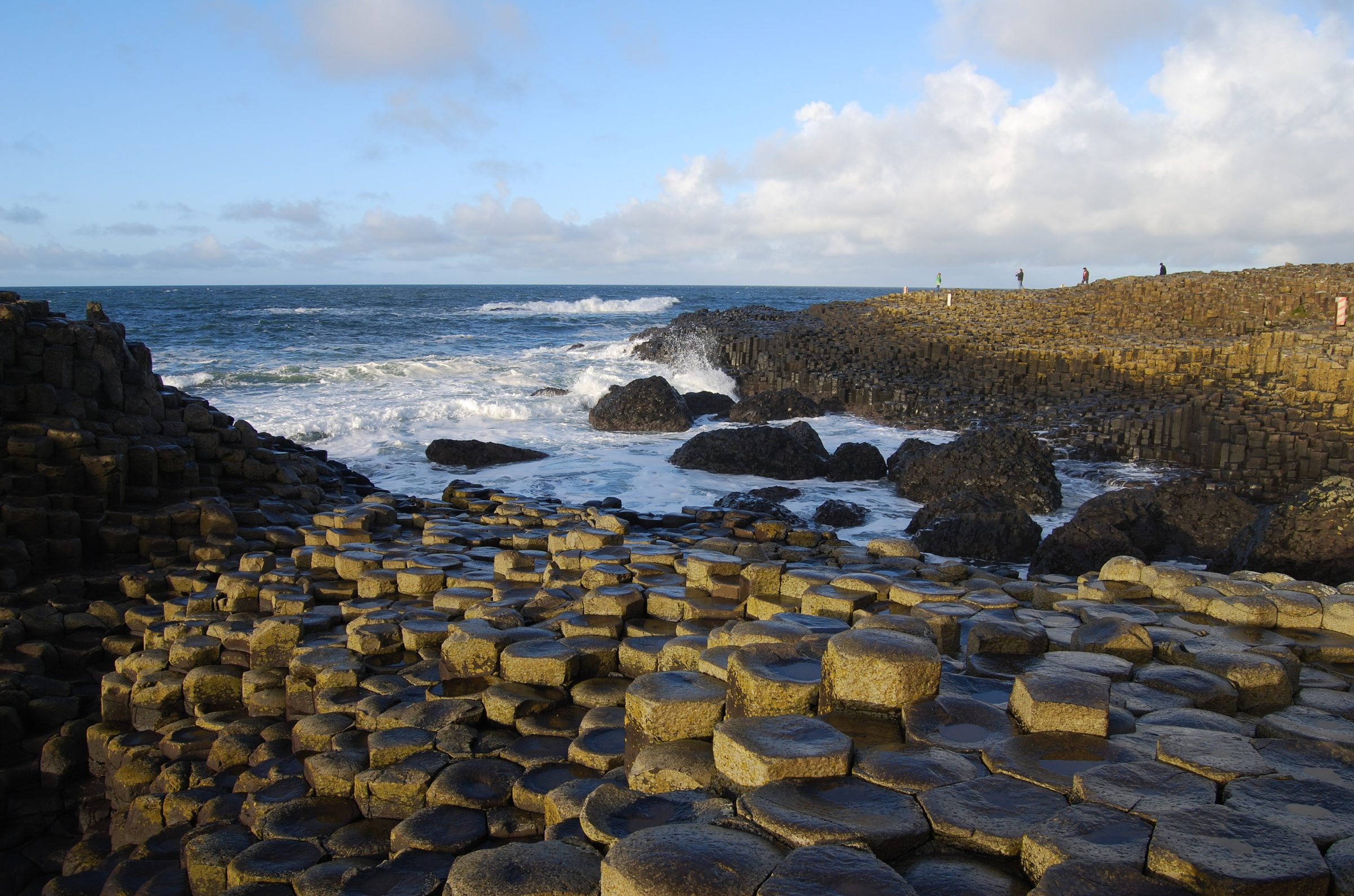
The trip built around this round has four fixed points. Our three-day itinerary around Royal County Down sequences Portrush alongside the Mourne coast in the order we would build for a first Northern Ireland trip. Our restaurant guide to Newcastle and the Slieve Donard is the closest thing we have to a Portrush dinner guide until the Antrim piece runs, and the Bushmills Inn ten minutes from the first tee is the honest post-round option in the village. For the southern golf run, how to play Ballybunion and how to play Lahinch are the companion essays. For where to sleep, our stay guide opens on Bushmills and the country houses further into Antrim. Book the round the month you plan the trip. Book the celebration dinner the week you book the round.
Where to stay for this round
The rooms that make the round possible
There is no hotel on the property. These are the three rooms we book for a round at Portrush.
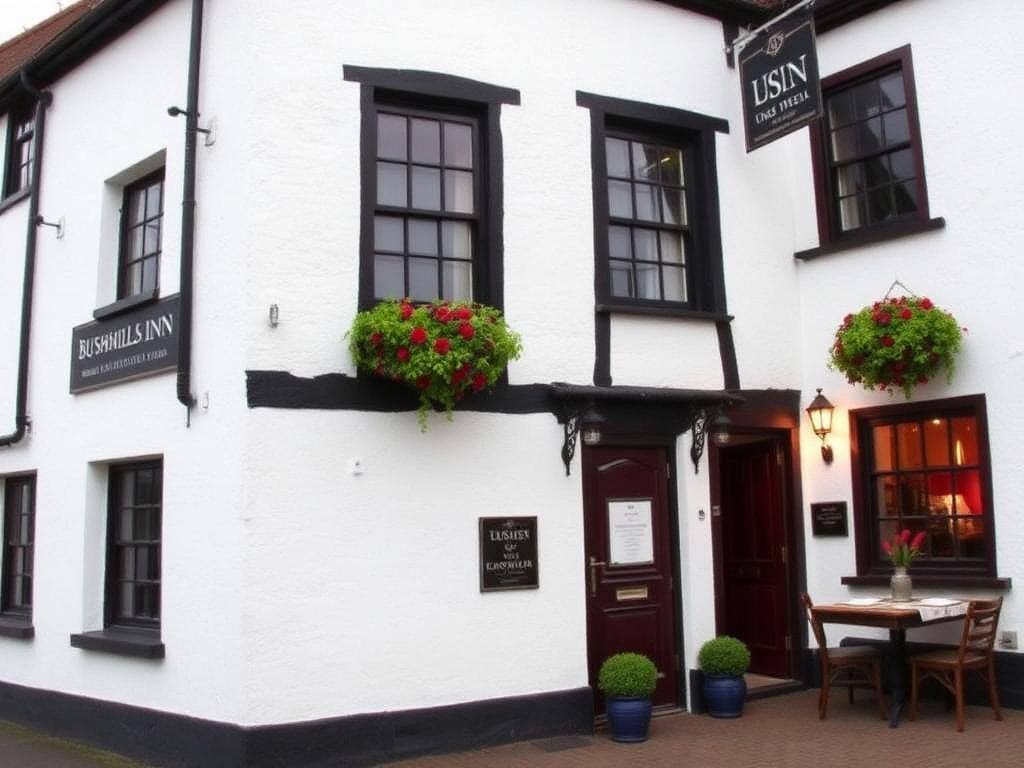
Bushmills, Co. Antrim
Bushmills Inn
A coaching inn beside the world's oldest licensed distillery, steps from the Giant's Causeway.
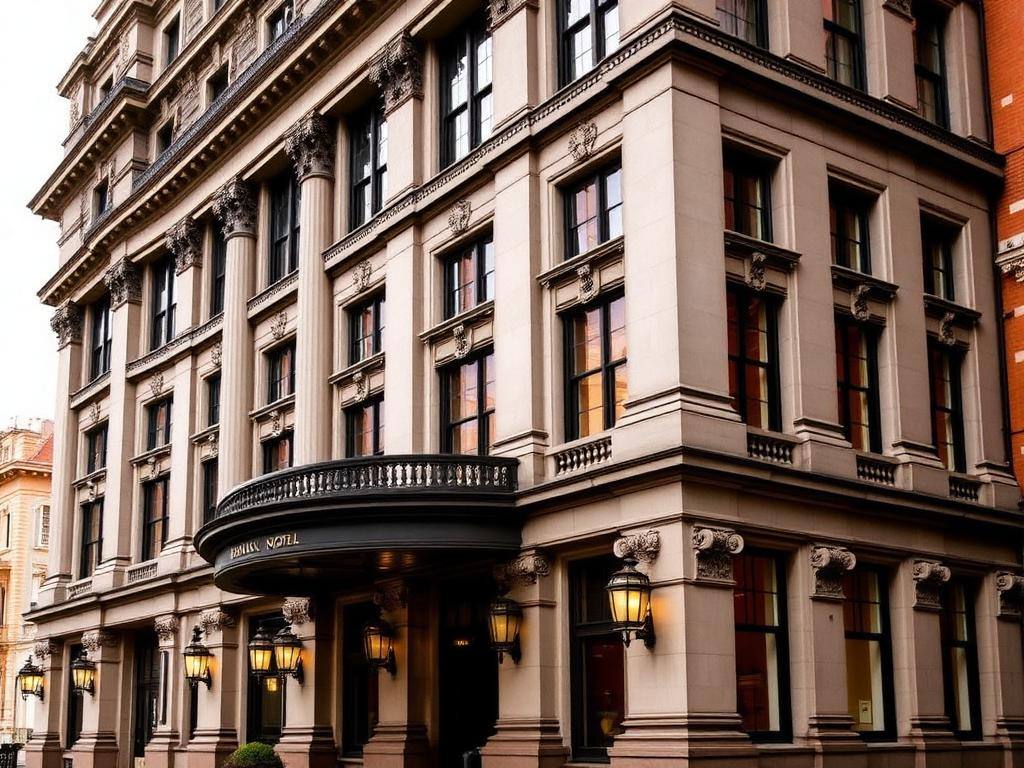
Belfast
The Merchant Hotel
Belfast's most lavish hotel in a former bank building. The Great Room restaurant is extraordinary.
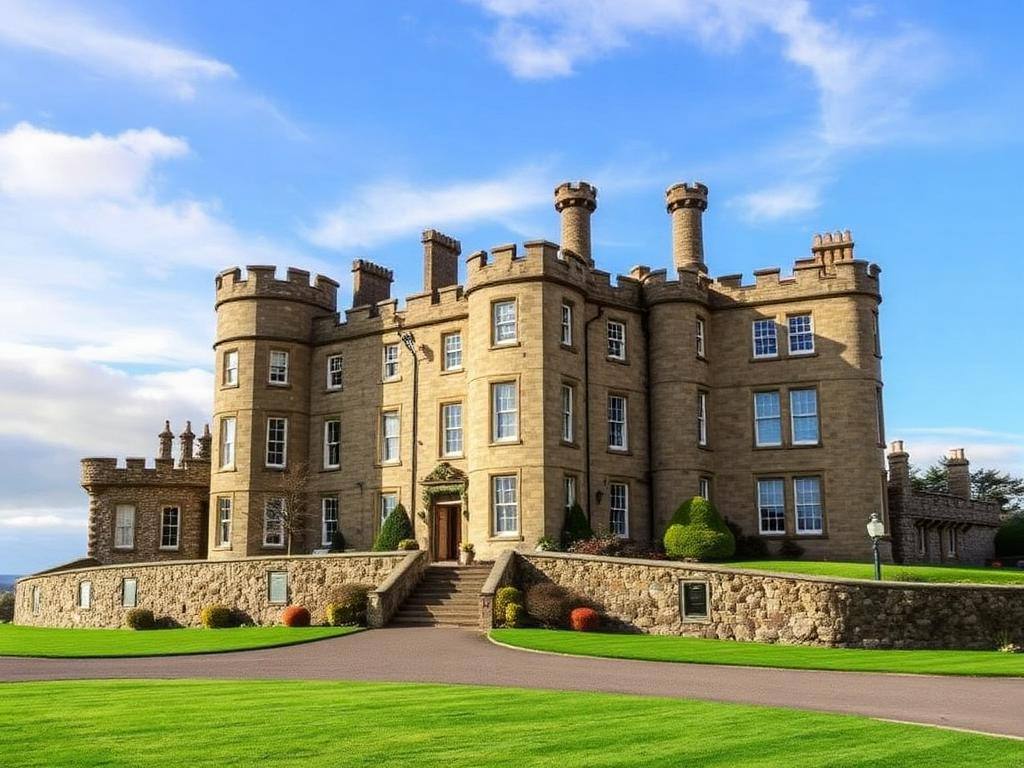
Ballygally, Co. Antrim
Ballygally Castle Hotel
A 17th-century Scottish Baronial castle on the Antrim Coast Road with its very own ghost room.


Booking through these links supports the Notebook at no cost to you.
Questions we get asked
- What is Calamity Corner really like?
- Longer than the yardage suggests and entirely mental. The chasm right of the green is the only thing anyone sees from the tee. Aim left, accept the up and down, and walk off with a four rather than a seven.
- How do the two newer holes change the Dunluce round?
- They give the closing stretch a proper build. The seventh and eighth replaced holes that never quite fitted, and the round now moves toward Calamity with more shape than it used to.
- Is Royal Portrush harder than Royal County Down?
- Less penal off the tee, more demanding around the greens. County Down punishes a bad drive immediately. Portrush lets you find the ball and then asks a harder second question.
- Should I play the Valley course as well?
- If you have a spare afternoon, yes. It shares the same dunes, costs a fraction of the Dunluce fee, and is a far better use of a second day than a repeat round for most visitors.
- Which tees should an American visitor play at Portrush?
- One set forward of the ones you think. The wind adds two clubs on the exposed holes, and the round is far more enjoyable when you are hitting mid irons into greens rather than defending with rescue clubs.
How we checked this
Further reading from the Notebook