A note from Deborah. Read her editorial perspective
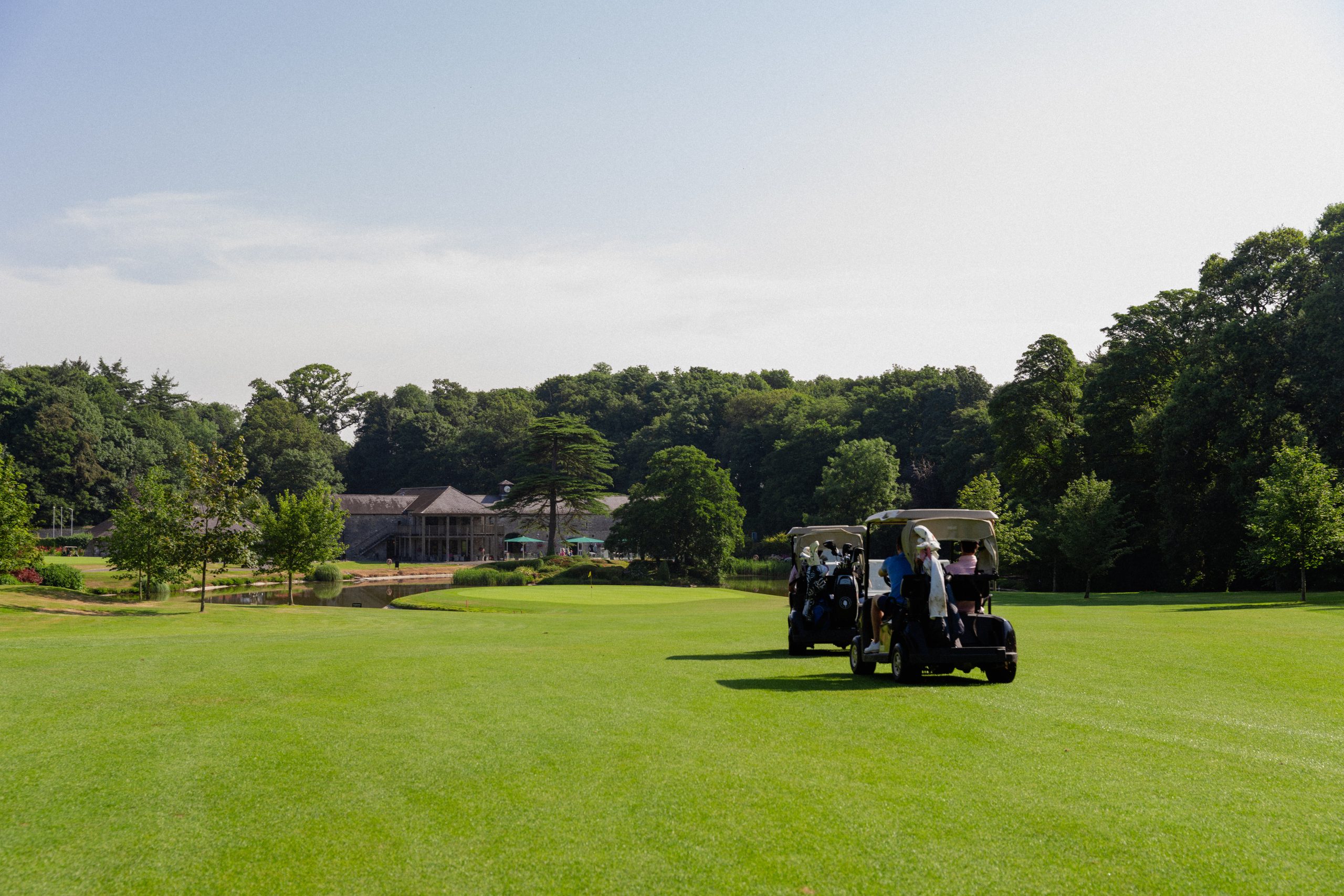
Fota Island Resort sits on an island in Cork Harbour, reached by a short causeway off the main Cork to Cobh road, and it is the golf we point to when a group wants a serious round without the drive that Kerry or Clare demand. The resort's own description is plain: a course built across the old nineteenth-century Fota estate, framed by ancient woodland and tranquil waterways, with twenty-seven championship holes in total. The main course, Deerpark, is a par 71 running to 7,075 yards, and it has hosted the Irish Open on three occasions, putting it in company with very few Irish clubs outside the recognised championship links. The second course, Barryscourt, is a nine-hole par 37 at 3,788 yards. Christy O'Connor Jr and Peter McEvoy designed the original layout, and the resort credits a later refinement to the golf architect Jeff Howes. We send groups here when Cork city, Kinsale or the harbour towns are the base and a full day's drive to the west coast is not what the itinerary needs.
Getting There And Arriving
Fota is close to Cork Airport, close enough that a group flying in can be on the practice ground within the hour, and closer still to Cork city and to Cobh, which makes it one of the easiest rounds in the country to add to a trip that was never built around golf in the first place.
We still treat arrival day as a rest day where we can. The estate itself, with Fota Wildlife Park next door and the old demesne woodland around the course, rewards a slow first afternoon more than a rushed tee time off a transatlantic flight.
If your group is staying in Cork city, the drive out to Fota is short enough to leave in the morning and be back in the city for a late lunch. That is the single biggest reason we keep returning to it for city-based itineraries: the course does not cost you the day the way a west coast round can.
The Deerpark Card, And What It Tells You
A par 71 at 7,075 yards from the back tees is a long card for a par 71, which usually means the par fours carry the weight rather than the par fives. Expect a round where your mid irons into greens matter more than your short game around them, at least from the tips.
This is parkland and estuary ground rather than dunes, so the course asks a different question than a links does. Trees frame the fairways rather than sand, and the resort's own language, mature woodland and tranquil waterways, is an accurate description of what you are actually navigating around rather than marketing shorthand.
As with any course that has hosted a European Tour event, the back tees are set up for a standard that most visiting groups do not need to play from. Step forward, let the course breathe, and you will see the same strategic lines the Irish Open field saw without needing their length to make sense of them.
Three Irish Opens, And What That History Means For A Visitor
The resort states that it has hosted the Irish Open on three occasions. That is a meaningful credential in Irish golf, and it tells you the conditioning and the set up are built to a professional standard rather than a resort standard that happens to look good in photographs.
It also means the course was designed to be watched as much as played. The sightlines around several greens, and the way the routing opens into wider viewing areas near the clubhouse end, reflect a layout built with a tournament gallery in mind, which is unusual for a resort course and worth noticing as you play rather than treating as incidental.
We would not build a trip around the Irish Open history alone. What it buys you in practice is a course that has been tested at the highest level and has stood up to it, which is a different and more useful guarantee than a glossy brochure line.
Barryscourt, The Second Course
Barryscourt is nine holes, par 37, at 3,788 yards, and we use it for exactly the situation it is built for: an afternoon when the group does not want to lose four hours, a warm-up round for golfers who are rusty on the first day of a trip, or a shorter outing for a mixed group where not everyone wants a full eighteen.
Nine holes at 3,788 yards plays short enough that a relaxed pace is realistic even late in the day, which makes it the better choice if your group has already had a long morning doing something else in Cork.
Treat Barryscourt as a genuine second course rather than a practice facility. The resort lists it alongside Deerpark as part of its twenty-seven championship holes, not as a pitch and putt, and it is worth a proper round on its own terms if your schedule allows a second day at the resort.
The Design, And Why It Plays The Way It Does
The resort credits Christy O'Connor Jr and Peter McEvoy as the original designers, with a later refinement by the golf architect Jeff Howes. O'Connor's other work in Ireland leans toward courses that reward accuracy over raw power, and Fota follows that pattern: the fairways are generous enough to find, but the approach shots are where the course asks real questions.
The resort's description that every fairway follows the natural contours of the island landscape is consistent with what you feel on the ground. This is not a course carved against the land. It moves with the estate's existing woodland and water rather than fighting it, and the holes nearest the harbour side carry a different character, more open and more exposed to wind, than the holes further in under the tree cover.
We read the Howes refinement as the reason the course still hosts significant golf decades after its original build. A course designed once and never revisited tends to show its age against modern equipment. Fota has been kept current, and it plays like a course that has been maintained with that intention rather than left to drift.
Green Fees, Groups, And What Is Not Published
Fota Island publishes a group golf rate of from 95 euro per person for parties booking through its group golf programme, which includes outings tailored around the resort's wider amenities, among them The Clubhouse for dining and the resort's spa. That published figure is a group rate and the resort does not state an individual visitor green fee on the pages we checked.
If your group is not booking as a formal outing, or if you are a couple or a single golfer rather than a full group, contact the resort directly for the current individual rate before you plan a budget around the group figure. We would not assume the per-person group price applies to a smaller booking, because the two are priced through different channels and the resort does not say otherwise.
The resort also does not publish a caddie programme or a handicap requirement for visitors on the pages we reviewed. If either matters to your group, ask when you book rather than assuming either exists or does not.
The Estate, Beyond The Golf
Fota Island sits on the same island as Fota Wildlife Park and the Fota House and Gardens estate, and a non-golfing member of your party has a genuine full day available here rather than a wait at the clubhouse. We have sent spouses and children to the wildlife park while a group plays Deerpark, and the logistics work cleanly because everything sits within a few minutes of the course.
The resort itself, along with its sister property The Kingsley in Cork city, offers the kind of après-golf options, a clubhouse meal, the spa, an overnight stay, that make Fota a complete day rather than just a tee time. We would build at least a half day around the estate even for a group that is primarily here to play.
How To Fold It Into A Cork Trip
Fota pairs naturally with a Cork city base. Play Deerpark in the morning, keep the afternoon for the city or for Cobh, and use Barryscourt on a second day if your group wants more golf without another long outing.
For a wider Cork golf week, Fota is the course we schedule closest to the airport, either as the first round after landing once the jet lag has settled, or as the last round before a flight home. It is the one course in the region that does not ask you to build your whole day around the drive.
Questions we get asked
- What is the par and length of Fota Island's Deerpark Course?
- The resort describes Deerpark as a par 71 course playing 7,075 yards from the back tees.
- Who designed the Fota Island golf courses?
- Christy O'Connor Jr and Peter McEvoy designed the original layout, with a later refinement credited to the golf architect Jeff Howes.
- Has Fota Island hosted the Irish Open?
- Yes. The resort states it has hosted the Irish Open on three occasions.
- What is the Barryscourt Course at Fota Island?
- Barryscourt is the resort's second course, nine holes, par 37, playing 3,788 yards.
- What are the green fees at Fota Island?
- The resort publishes group green fees from 95 euro per person for its group golf programme. It does not publish an individual visitor green fee, so contact the resort directly if you are not booking as a group.
- Does Fota Island offer caddies?
- The resort does not publish a caddie programme on the pages we reviewed. Ask directly when you book if this matters to your group.
- Is there a handicap requirement to play at Fota Island?
- The resort does not publish a handicap requirement for visitors on the pages we checked.
How we checked this
Further reading from the Notebook