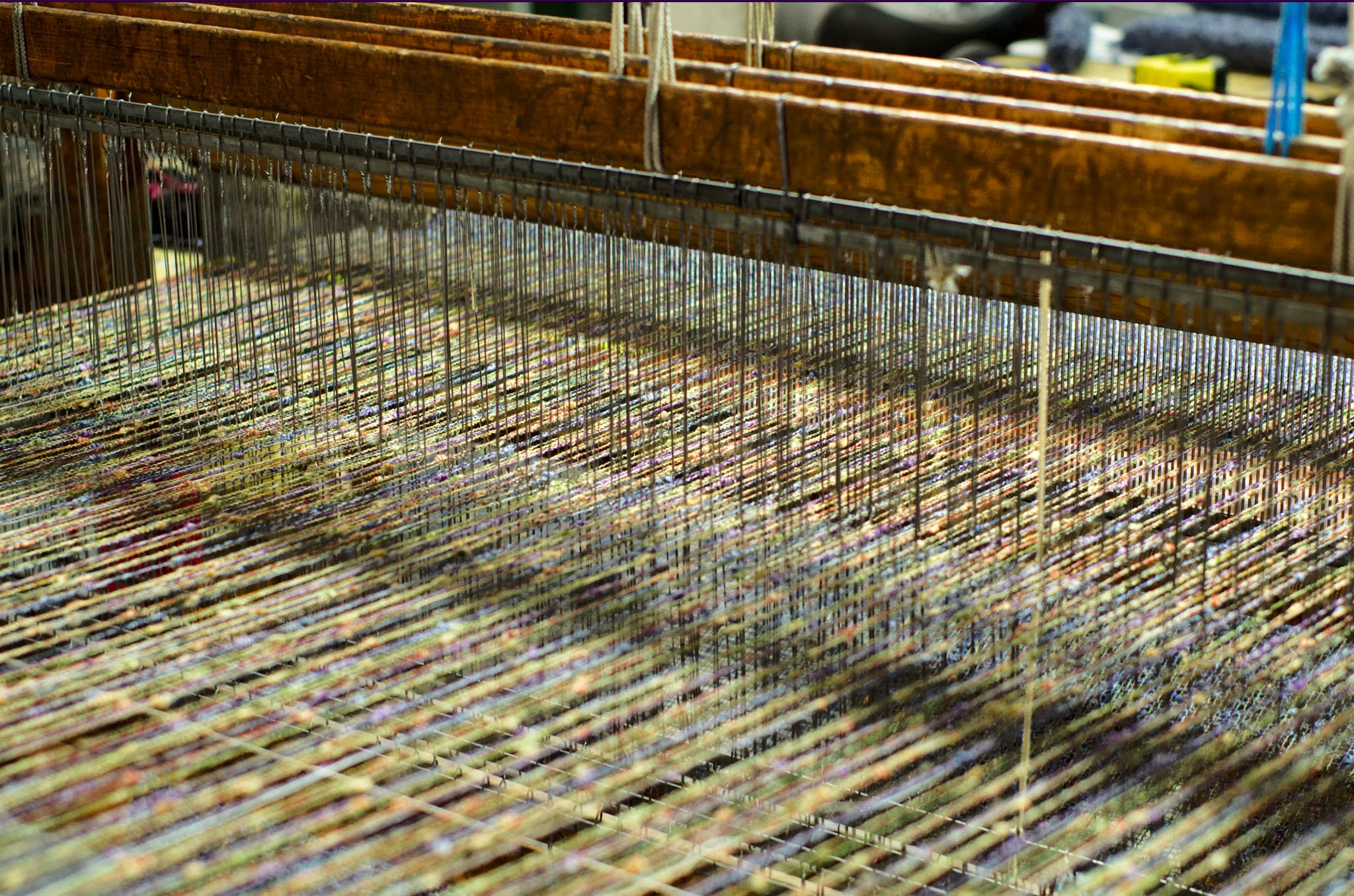
The whitewashed mill on the banks of the Avoca has been weaving since 1723, which makes it the oldest working woollen mill in Ireland. It began as a co-operative where local farmers ground their corn and wove their wool, and the river still runs past the door. The throws on the beds of half the hotels we recommend began here.
The mill's history is the county's in miniature. A flying shuttle loom arrived in the eighteenth century and the weavers, fearing for their livelihoods, burned looms in protest; the same design of loom still weaves the heavy throws today. Through the 1800s the mill clothed the mining families of the valley in three colours only: white, grey and red. Colour, the thing Avoca is now known for, arrived late and from an unexpected quarter.
It came with three sisters. Emily, Winifred and Veronica Wynne inherited the mill in the 1920s and introduced the vivid palette that turned a local utility into an export. Avoca tweed went to Elsa Schiaparelli in Italy; letters kept in the mill's small museum record cloth for a waistcoat for King George VI and baby blankets for the children of Queen Elizabeth II. When the mill faced closure in 1974, Donald Pratt, the solicitor engaged to handle the sale, bought it himself, and with his wife Hilary set about bringing it back.
Today the mill is the working heart of a much larger business, with shops and cafés across Ireland, but the weaving never left the village. All of the throwing and much of the design still happens inside the whitewashed walls, and the weavers at the looms include families who can point to their own people in the old photographs on the walls. The mill tours, running from March to the end of October, take you onto the floor itself, and at eight euro for an adult it is the best value hour in Wicklow.
How to do it: Avoca village sits in the valley between Rathdrum and Arklow, an easy pairing with Glendalough to the north or the gardens at Mount Usher. Take the late morning tour, lunch in the mill café, and walk the Red Kite loop above the valley afterwards if the day is dry. Buy the throw in the mill shop rather than the airport; the choice is wider, and the one you want is probably still on the loom.
One honest note. Avoca the mill and Avoca the brand are now different scales of thing, and the village mill is the part worth your time. Go for the looms, the museum letters and the weavers, not for a polished visitor centre. Tours are seasonal, roughly March through October, so outside those months the shop and café remain but the floor is a working factory again, and you will need to take the weaving on faith.