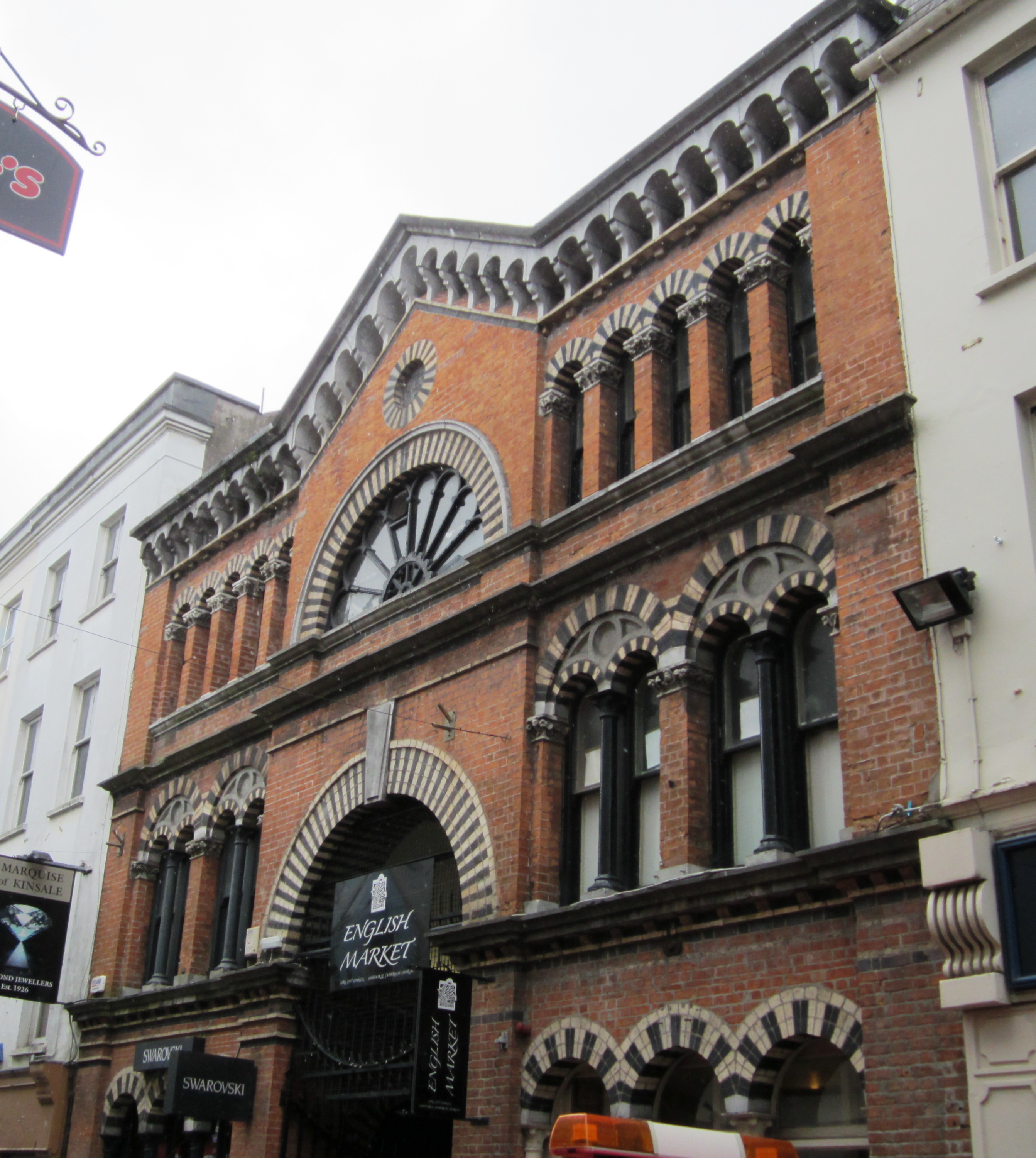
Photograph: Klabauter2 / Wikimedia Commons, CC BY-SA 3.0
Editorial Review
The English Market
The Atmosphere
“Two hundred years old and still a working food market rather than a food court.”
The English Market has traded in the middle of Cork since 1788, and it has resisted becoming a tourist attraction in the way most European market halls have. Butchers still sell tripe and drisheen, the fishmongers still shout the price of hake, and the cheese counters carry the farmhouse cheeses that rebuilt Irish food in the 1980s. The Farmgate café on the balcony cooks what the stalls below are selling that morning, which makes it the single best-value lunch in the country. An hour here explains Cork better than any guided tour of the city.
The long version
Two hundred and forty years of Cork arguing about the price of fish, under one iron roof.
You hear it before you see it. Come in off Princes Street on a Thursday morning and the sound arrives first: trolleys on tile, a butcher calling an order across two stalls, the flat slap of a fish being turned on ice. The light is high and grey, dropped through the roof lanterns onto the fountain in the middle, and everything under it is wet and shining. Nobody is performing. The woman ahead of you is buying a half pound of drisheen because she always buys a half pound of drisheen.
This is the part of Cork that never agreed to become a photograph. It has burned, flooded, closed and reopened, and it still keeps the same job it was given in 1788: feeding a city that takes food more seriously than it will ever admit to you.
“It is a market that Cork actually shops in. That is rare now, and it is the whole reason the produce is better here.”
What is actually on the counters
Start at the fish. Cork is a port and the counters show it: hake and haddock landed at Union Hall and Castletownbere, whole turbot when the weather has been kind, crab claws in season, and mackerel so fresh it is still stiff. Ask what came in that morning rather than what is cheapest. The answer is usually the same thing.
Then the meat, which is where the market gets stranger and better. Tripe and drisheen still sell here, and they sell because people eat them, not because a guidebook mentioned them. Spiced beef appears from November and is the single most Cork thing you can carry home.
The cheese counters are the quiet argument for the whole place. Gubbeen, Durrus, Milleens, Coolea: the farmhouse cheeses that rebuilt Irish food in the 1980s were made by a handful of people, most of them within two hours of this room, and this is where they were first taken seriously.
The hour that matters
Before noon on a weekday. That is the whole trick. The market is at full working pace, the stalls are still complete, and the people around you are shopping rather than browsing. By two o'clock on a Saturday it is a crowd moving through a corridor, and you learn nothing.
Go up the stairs to the Farmgate afterwards. The café on the balcony cooks what the stalls below sold that morning, which is an unusual kind of honesty, and you eat looking straight down into the hall. Order the tripe and drisheen if you are brave, the fish of the day if you are sensible. Either way it will cost less than lunch anywhere else you would consider.
Why we send Americans here first
Cork does not open itself to visitors the way Galway does. It is a proud, slightly closed city, and an hour in this room does more to explain it than a walking tour of the whole peninsula. You see what people eat, what they pay, what they refuse to stop eating, and how loudly they talk to a man they have bought sausages from for thirty years.
It also gives you the map for the rest of a Cork trip. The cheeses point west to Durrus and Schull, the smoked salmon points to Timoleague, and the beef points to Ballymaloe, twenty five minutes east, where Myrtle Allen made the same argument on a plate.
What we would not pretend
It is not a lunch destination in itself, and it is closed on Sundays. If you are in Cork for one night only and that night is a Saturday night, you will arrive to shutters on Sunday morning and be disappointed. Plan the market as a weekday morning, not a weekend fallback.
How we would use it
A weekday morning in Cork city, an hour in the hall, lunch upstairs at the Farmgate, then the drive east to Ballymaloe or west toward Kinsale. It is the correct first stop of a Cork day, not the last.
Rooms Worth Requesting
What it actually feels like.
Go before noon on a weekday, buy cheese from the counter downstairs, then eat upstairs at the Farmgate looking down over the stalls.
Why we recommend it
A space that justifies the journey.
It is a market that Cork actually shops in. That is rare now, and it is why the produce is better here than in any comparable hall in Ireland or Britain.