
Played October 2025, on the Old Course in a Kerry crosswind
Ballybunion is the round most American golfers travel to Ireland to play, and the round they most consistently misread on the front nine. It sits on a strip of Atlantic dune ground on the north Kerry coast, an hour north of Killarney and forty minutes south of the Shannon airport, and it has been played in some form since 1893. The Old course as you walk it today was substantially reshaped by Tom Simpson in 1936, tweaked in the years since by the club and by Trent Jones during the Cashen build in 1984, and it holds together as one of the great routings anywhere on the coast. Tom Watson famously called it the finest links in the world and returned to prepare for four of his Open Championships on it. What that praise does to a visiting American is set an expectation the front nine will not meet. The front is not the Old course. The Old course begins at the 6th, opens up at the 11th, and reveals itself on the run home from the 15th. Here is what the course actually asks, hole by hole where it matters, and what we now do differently after many rounds on it.
Ballybunion, And Why It Stays With You
Ballybunion has two courses on one long stretch of Atlantic ground. The Old, the one everyone means, is a par 71 that runs a little under 6,800 yards from the back tees, and rather less from the member tees a visitor should actually use. It sits between the village and the ocean, with the Cashen estuary at its northern edge and a working parish graveyard immediately right of the first tee. The Cashen, the Trent Jones second course finished in 1984, is a real round and a fine second-day option. But you did not cross the Atlantic for the Cashen.
The Old opens in unremarkable ground, works out toward the sea across the 6th and 7th, and only arrives at what you came for at the 11th. From there to the 17th it walks the top of the Atlantic cliffs, the ocean directly below on the left, the greens and tees perched on ridges that look out to the mouth of the Shannon. The wind is almost always up. The greens are firm and canted. The course defends itself with position rather than length. Ballybunion is not a resort. It is a walking club with a modest lounge, a caddie shed, and a stretch of ground that stays with anyone who has played it well or badly, on a bright day or in a driving rain.
The First Tee, And Why The Graveyard Is There
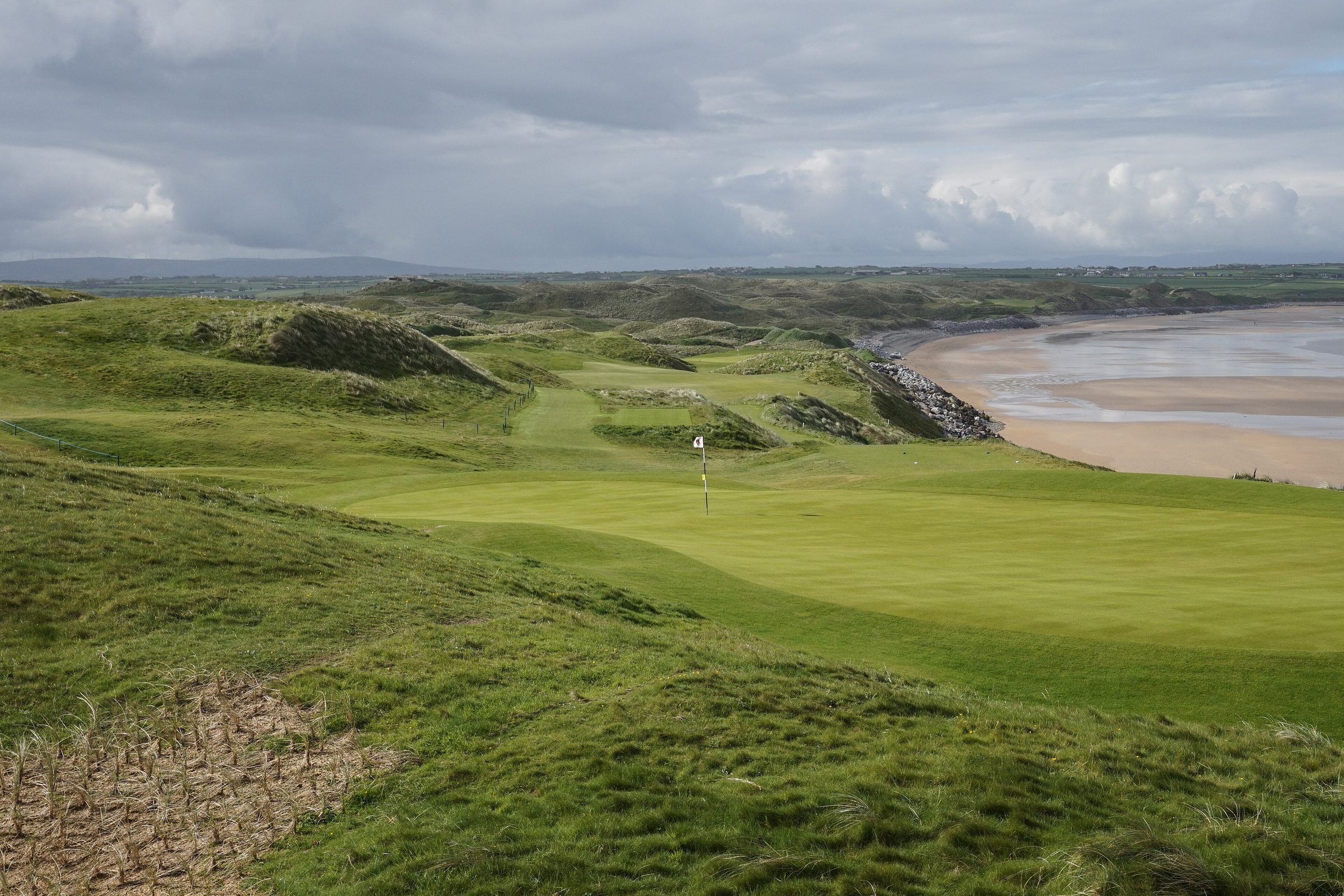
The first tee at Ballybunion runs directly alongside a working parish graveyard, and the fence between the tee and the graves sits perhaps ten yards from where the ball is teed up. Visitors read this as a joke. It is not a joke. The graveyard has been there longer than the golf course, and the tee was routed around it in 1893 because there was nowhere else to put it. The right miss on the opening drive is out of bounds into the graves, and every visiting American we have brought here has stood on that tee and hit their worst drive of the day.
The correct play on the first is a three-wood or a hybrid, aimed at the left half of the fairway, taking the graveyard entirely out of the shot. This is not the moment to try to establish a driver rhythm. The opening drive at Ballybunion is a nerves shot, not a distance shot, and the fairway is wide enough at 220 yards that a hybrid finds it every time. Save the driver for the 2nd, which is a genuine par four and the first hole where the tee shot rewards a full swing. If you take one thing from this piece and nothing else, take this. Do not hit driver at the graveyard.
The Simpson Front Nine, And Why It Is A Slow Start
The front nine at Ballybunion is the older, quieter half. Tom Simpson reshaped it in 1936, moving several tees and remodelling the greens, and much of what you play across the first five holes sits on ground that was open fairway before he arrived. The routing goes inland from the sea, works around the clubhouse, and only turns toward the dunes at the 6th. What that means for a visiting American is that the first hour of the round feels like a warm-up on a good but unremarkable Irish links. The temptation is to grind for pars and to feel that the trip has not delivered yet. The correct temperament is patience.
The 6th is the first hole where the course begins to show its hand, a par four of 396 yards playing across a shallow valley to a green tucked between two dunes. The 7th, at 434 yards, is a heroic par four along the ridge with the sea now visible on the left and the wind coming in over the shoulder. From the 6th tee onward, every hole has something the front five did not have. Play the first five as a walking warm-up. Take pars where they come, accept the bogeys, and be on the 6th tee with a full bag of confidence and a caddie who now knows your swing. The Simpson front is not the disappointment it looks like on the card. It is a runway.
The 11th, The Hole You Came For
The 11th at Ballybunion is the hole every visiting American has seen in photographs and every visiting American has a picture of themselves standing on. It is a par four of 473 yards from the back tees, playing along the top of the Atlantic cliffs with the ocean immediately on the left and a spine of dune on the right. The tee shot is downhill from an elevated tee, the fairway falls left toward the sea, and the second shot plays uphill to a green that sits on a saddle between two more dunes. Herbert Warren Wind, writing in the New Yorker in 1971, said this was the finest hole he had ever seen. He was not wrong.
The correct play on the 11th is not the hero line down the left. The correct play is a driver aimed at the right centre of the fairway, taking the cliff out of the tee shot entirely, and accepting a longer second shot from the safe side. The second shot plays a full club longer than the yardage because it is uphill and into a wind that funnels up the cliff face, and the miss is short and right into the dune, not long and left off the cliff. Every American we have caddied for here has tried to hit driver at the left edge of the fairway on this hole. Every one of them has lost that ball. Play the right side. Take the extra club on the approach. Walk off with a par or a bogey, and take the picture.
The Cliff Holes, And The Wind Off The Shannon
From the 11th green to the 17th tee, the Old course sits directly on top of the Atlantic cliffs, and the wind here does something it does nowhere else on the round. It comes in off the mouth of the Shannon estuary, funnels up the cliff face, and lands on the greens from a different direction than it hits the tees. A caddie who has looped this stretch a thousand times will tell you the wind on the 15th green is often the opposite of the wind on the 15th tee, because the estuary bends the airflow around the headland. The yardage plate assumes a single wind. There is no single wind on this stretch.
The 15th is a par three of 216 yards from the back tees, playing directly along the cliff to a green that sits on a promontory with the sea on the left and a fall-off long and right. It is one of the great par threes in the world and it produces more doubles than any other hole on the card. Take the club the caddie gives you. Aim at the safest part of the green, which is almost always the front right, and accept a two-putt. The 16th, Windy Gap, is a 509-yard par five that continues along the ridge, and the 17th, Devils Elbow, is a 398-yard par four. Both reward a fade off the tee and a hold-up second into the wind. Do not try to hit a draw on this stretch. The wind punishes the low draw on every one of these holes, and the fade that visiting Americans think of as their miss is actually the correct shape.
The Moments That Decide The Round
Four moments decide most rounds at Ballybunion, and only one of them is on the cliffs. The first is the opening drive, discussed above, over the graveyard. The second is the tee shot at 7, a Simpson par four where the fairway pinches at 240 between two dune ridges. The line is the right shoulder of the left dune, and Simpson chose that line ninety years ago. Miss right and the ball is gone. Miss left and you will find it, and the ridge will block the shot in. The third is the uphill second at 11, into a wind that funnels up the cliff face and does not appear on the yardage plate. One more club than the number, aimed at the right half of the green, and the picture is worth the par.
The fourth is the drive at 18, a 382-yard par four back toward the clubhouse with the wind now on your right shoulder. The fairway is wide but bunkered left, and with the round in your hands the driver looks obvious. It is not. Three-wood to the middle of the fairway, full wedge into a green below the practice putt and below the terrace, and the second lands with spin. We have birdied 18 from 110 yards. We have not birdied it from 40. Ballybunion rewards the shot you can commit to fully, not the shot you can reach with something less. That is the whole Old course in one instruction.
The Moment Most Trips Slip
The Old course is patient. The mistakes are always human. The championship tees are for the Irish PGA and the club championship, not for a visitor. Good American amateurs belong on the whites at 6,400. Anyone above a 12 plays the yellows at 6,000. Every year we watch scratch players from home push a tee too far and lose the round on the 11th tee, not the 11th green. The other structural mistake is a caddie you did not book. The Ballybunion loopers read the estuary wind as it bends around the headland, and they know what the greens will accept on a wet Wednesday versus a dry Saturday. They are not optional on this course.
The rest is temperament. The greens on the cliff stretch are small, firm, and canted toward the sea. A twelve-footer from above the hole on the 15th or the 17th is a real three-putt risk. The correct miss on every approach on the back nine is short, below the pin, uphill. That is not the American parkland instinct, which is to fly the ball at the flag and stop it. And then there is the 11th. It gives up a par to a right-side drive and an uphill second to the fat of the green. It gives up doubles and triples to anyone who lets the photograph decide their tee shot. Take the par. Walk to the 12th, which is the birdie hole hidden behind the drama of 11. The Old rewards the golfer who is patient with it. It stays with the one who tried to force it.
The Practical Round: Booking, Beds, Dinner
Book Ballybunion through the club office. Six to nine months out for a summer round on the Old, three to four for the shoulder seasons. Green fees sit on the level of Portmarnock and Royal County Down, and the two-round day that adds the Cashen is the best value on the property. The caddie master takes separate bookings. Take a caddie, regardless of handicap, because the estuary wind is the whole examination on the cliff stretch and no visitor is going to read it correctly alone. The clubhouse is a modest lounge, a terrace over 18, and enough space to sit with a pint after the round. You will walk, not cart, and you will finish the day carrying the ground in your legs the way the ground intends.
The trip built around this round has three anchors. Our restaurant guide to Ballybunion and north Kerry covers where the seafood in the village is honest, when to drive south to Tralee instead, and which pub is worth the evening after the round. Our seven-day southern golf itinerary routes Ballybunion alongside Lahinch and Waterville for a first trip. Our stay guide opens on the Listowel Arms an easy drive inland and moves south to Sheen Falls Lodge in Kenmare for the wider Kerry leg. Book the round in the same week you set the trip dates. Book the celebration dinner the week you book the round. The Old will not forget you were here.
Where to stay for this round
The rooms that make the round possible
Nobody stays in Ballybunion the town. Sleep in Kenmare or on the Manor estate, and drive in for the round.
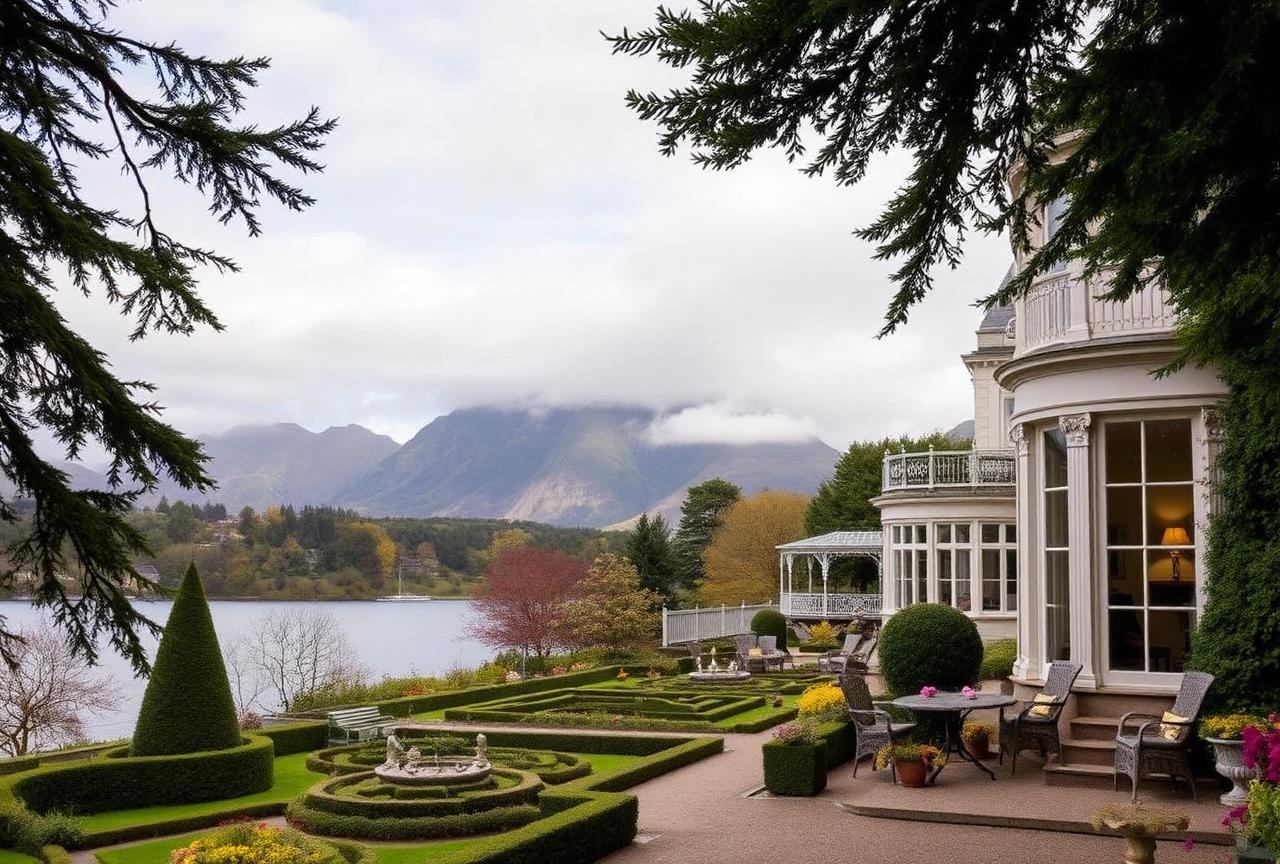
Kenmare, Co. Kerry
Park Hotel Kenmare
A Relais & Châteaux property overlooking Kenmare Bay. Refined, personal, and quintessentially Kerry.
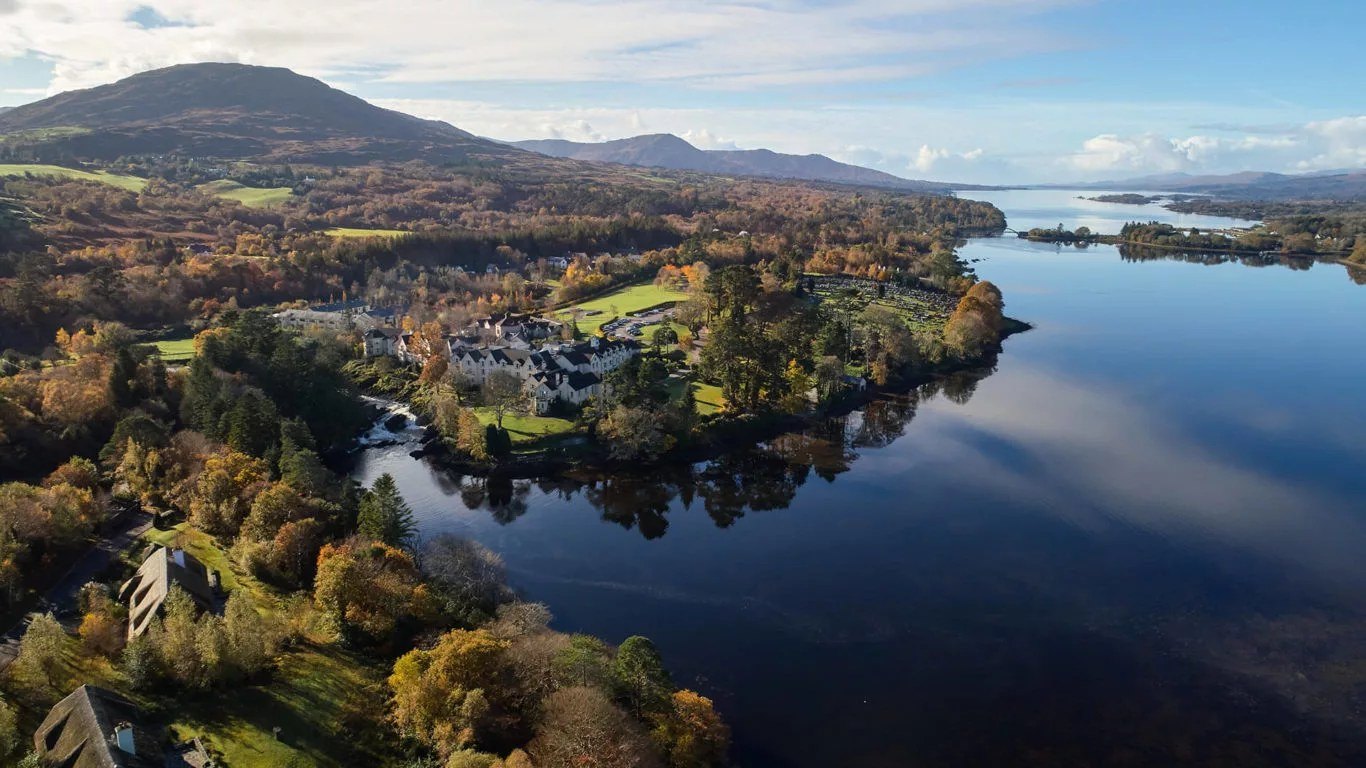
Kenmare, Co. Kerry
Sheen Falls Lodge
Relais & Châteaux on Kenmare Bay. Salmon fishing and wine cellar dinners.
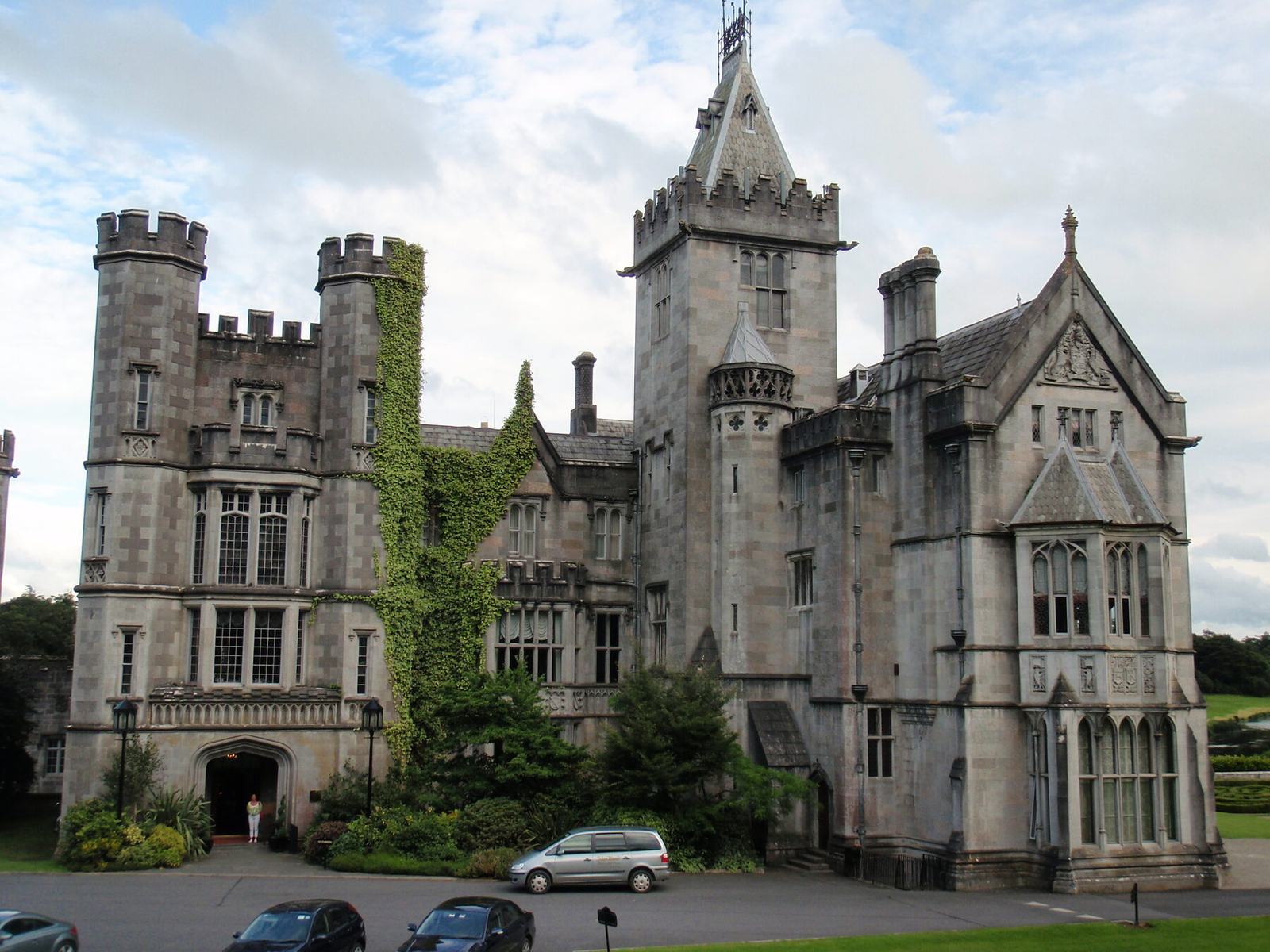
Co. Limerick
Adare Manor
The most complete luxury estate in Ireland. Tom Fazio golf, La Mer spa, and the Oak Room.
Booking through these links supports the Notebook at no cost to you.
Questions we get asked
- Which holes at Ballybunion do people remember?
- The seventh, the eleventh, and the stretch along the cliffs where the Atlantic is on your right and the wind is doing whatever it wants. The eleventh in particular is the hole people describe on the flight home.
- How difficult is the Old Course at Ballybunion?
- Demanding without being cruel. The fairways are more generous than County Down and the greens are the defence. Into a west wind on the cliff holes it becomes a different course entirely.
- Should I play the Cashen course as well?
- If you have the legs. The Cashen is wilder, tighter and more exhausting than the Old Course, and it divides opinion. We would play it as a second round rather than a first impression.
- Do I need a caddie at Ballybunion?
- It helps more with the greens than the tee shots. The lines are visible, the borrows are not. If you are playing once and want a score, take one.
- What is the wind usually doing at Ballybunion?
- Coming off the Atlantic, which means the cliff holes on the back nine are typically the hard half. Take an extra club on anything exposed and keep the ball under the gusts.
How we checked this
Further reading from the Notebook