
Played March 2026, on the championship tees north of Dublin
Portmarnock Golf Club, the Old course on the Sutton peninsula fifteen minutes north of Dublin, is the flattest of the great Irish links and, we would argue, the most honest test on the island. There are no blind shots. There is no signature hole on a cliff. The photographs never do it justice because the defence is invisible until you are standing in it. Portmarnock is the round we know best on this coast, the one we come back to when we have three free hours and a set of clubs in the boot, and we can tell you exactly why it beats visitors who arrive expecting a softer version of Royal County Down. It is not softer. It is subtler, and subtler is worse for your card.
Portmarnock, Plainly
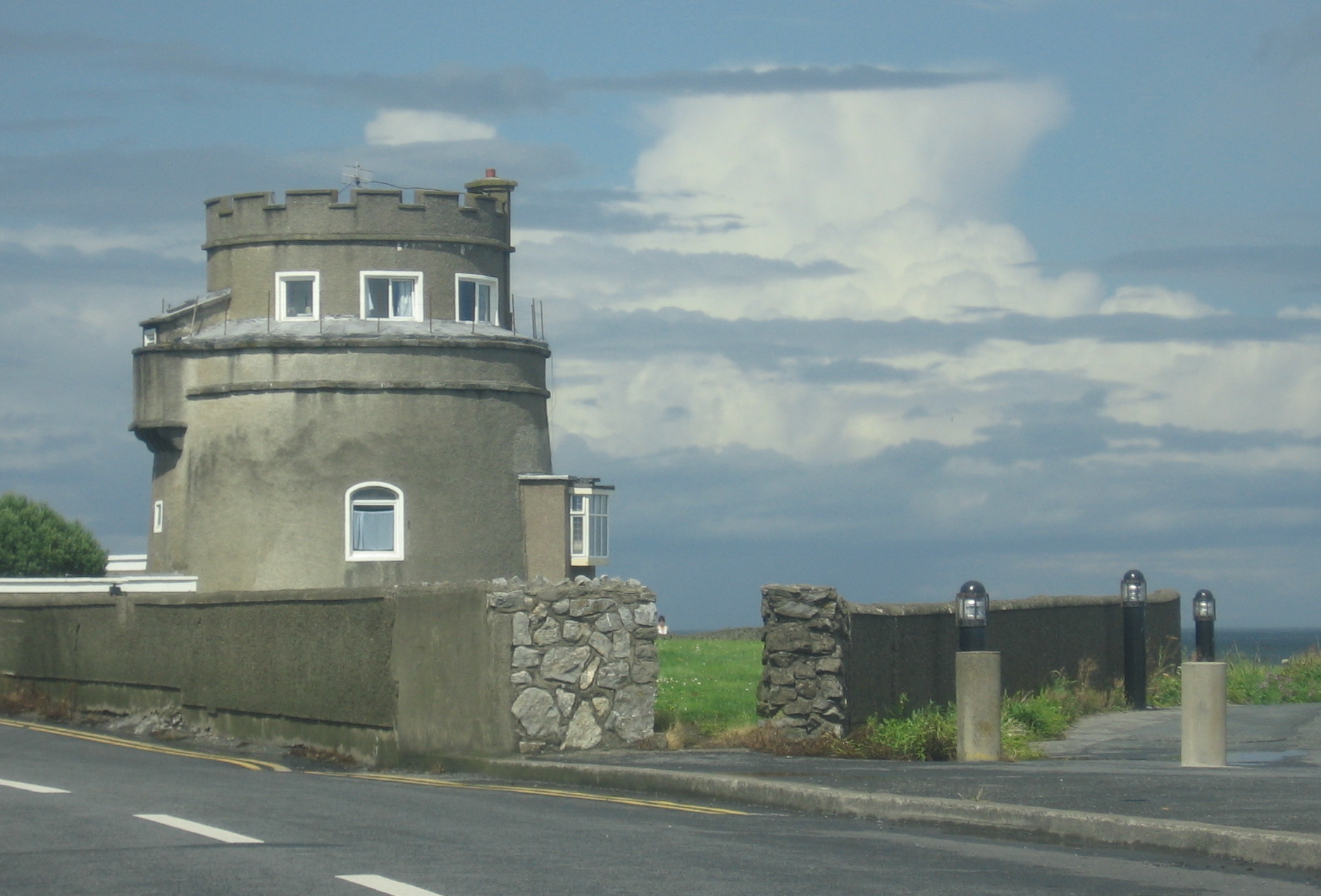
Portmarnock is a private members club on a peninsula surrounded by water on three sides. The Old course, laid down in 1894 by W. C. Pickeman and George Ross, refined by Fred Hawtree in the 1970s and again by Tom Watson before the 2003 Walker Cup, is a par 72 that stretches to 7,466 yards from the Championship tees. It has hosted the Irish Open nineteen times, more than any other course on the island, and it is on the shortlist to host an Open Championship. The defence of the course is two things and two things only: the wind, which comes off the sea from every direction depending on where you stand on the peninsula, and the bunkering, well over a hundred pot bunkers, most of them chest-high and revetted, placed exactly where a well-struck ball wants to end up.
The greens are firm year round. They are not tiered in the American sense, and the borrows are quieter than you expect from a great links, but the run-outs off the sides are severe. You do not lose Portmarnock on any one hole. You lose it in three-putt bogeys stacked across four holes on the back nine, or in a single visit to one of the pot bunkers on the 14th, where the face is chest-high and the only shot is sideways to the fairway you already left. What the course punishes is loose contact, not bad decisions.
The Opening Four
The 1st (417 yards, par four) plays into or across whatever wind is doing that day, and the fairway is generous. It is the one hole where you can afford to warm up in real time. The 2nd (411 yards) is where the course begins in earnest, with a fairway that pinches between two bunker complexes and a green protected front-left. The 3rd (398 yards) is a mild dogleg, and if you are going to make three, this is where. The green sits at grade, receptive to a running approach, and the front bunker is deeper than it looks from the fairway.
The 4th (474 yards, par four) is the first hole that shows you what Portmarnock actually is, and it is the longest par four on the card. It plays into the prevailing south-westerly, and the second shot is a long-iron or hybrid into a green with bunkers short-right and a false front. The mistake we watch visitors make is trying to fly the ball to the flag. You cannot. The green rejects a landing beyond about pin-high, and the smart shot is a punch that lands twenty yards short and skips on. If you make four here in any wind above 15 knots, you are ahead of every 10-handicap who has played the hole this week. What follows is the toughest stretch of the front nine: the 5th (442 yards, par four), then the 6th (603 yards, par five), which is the longest hole on the property, then the 7th (184 yards, par three), the first short hole of the round and the first one the wind takes off you.
The Three That Decide It: 14, 15, And 17
The 14th (411 yards, par four) is the hole Arnold Palmer, who won the Canada Cup here in 1960, called one of the great par fours in golf, and he was not being polite. It doglegs around a bunker complex that catches every drive shaped to the shape of the hole. The green is angled from front-left to back-right, and the pin on Sunday is usually back-right, protected by the deepest pot bunker on the property. Play it as a lay-up drive to the safe side of the fairway and a longer approach in.
The 15th (204 yards, par three) is the short hole every visiting American architect writes home about, and we would not argue with them. It plays a genuine two hundred yards with the Irish Sea running along the entire right side, to a green surrounded by bunkering, and the wind is almost always off the water. Short-right is dead. We play a smooth long iron and aim at the left edge of the green and let the wind do the rest. The mistake we see repeatedly is a hard mid-iron, which lands short and leaves a chip you cannot get up and down. Take enough club and swing at 80 percent. That is the whole hole. Then the 17th (472 yards, par four) is where the round is either sealed or unravelled: back into the wind, uphill on the second shot, and the green is small and firm.
The Wind At Portmarnock
The prevailing wind is south-westerly to westerly, but because the routing sends you out and back and sideways across a peninsula, no two consecutive holes play the same wind. That is the single most important thing to understand about scoring here. Royal County Down gives you a downwind nine and an upwind nine. Portmarnock gives you eighteen individual wind puzzles, and if you are not resetting your read on every tee you will find yourself over-clubbed on one hole and under-clubbed on the next inside the same five minutes.
The flag on the clubhouse is a lie. The flag on the green in front of you tells you what the wind is doing at ground level in one part of the property. What we do now, before every shot, is take a pinch of dune grass, throw it up, and read what it does at ten feet, not at flag height. The wind at ten feet is what your ball flies through for the first two thirds of its flight. If you are used to Bandon, where the wind is one direction all day, Portmarnock will feel arbitrary. It is not. It is just being honest about the fact that a peninsula has more coastline than a linear links does.
The Closing Four
The 15th we have covered. The 16th (577 yards, par five) is the one clear scoring hole on the back nine, and calling it scoreable is relative, because it is nearly six hundred yards. Downwind it is reachable in two if you have kept anything in the tank. The trap here is greed. The green is defended by pot bunkers and a fall-off, and the smart play is a lay-up to 100 yards and a full wedge. We have made more birdies here from 100 than we have from 30 yards on the front edge.
The 18th (452 yards, par four) is a real par four in front of the clubhouse, and a long one. The second shot has to carry a bunker complex fronting the green, and the pin on the day of your round will almost certainly be tucked behind the deepest of that front bunkering. We play the second shot to the middle of the green, take our two putts, and shake hands. The mistake here is trying to end on a birdie. You will not. The hole is set up to give you a hard four and to punish anything more ambitious than that with a five you will remember for the rest of the trip.
The Mistake That Ruins The Portmarnock Round
Portmarnock is flat, and visitors treat flat as forgiving. It is not. Because there is no elevation change on the peninsula, the wind is doing 100 percent of the shaping on every shot. A 155-yard number into a 15-knot breeze is a full 175-yard club. We add a full club-and-a-half in anything above 12 knots and take a club off in a tailwind, and the arithmetic is uncomfortable until it becomes automatic. Doing the math badly is what leaves approaches in the front bunkering, and the front bunkering here is the deep kind you play sideways from.
The other two mistakes are the caddie and the tee box. The Portmarnock caddies loop this course as often as any caddies on the island, and they will tell you where the miss is before the day starts. Ask them that question. Do not ask them what to hit. And the Championship card at 7,466 is for the Irish Open, not for you. Ask the starter which set of member tees suits your handicap and play those. Every good American we have watched push the tee back has unravelled by the 6th, and the flat routing offers nowhere on the property to hide it.
Booking, And The Question Of Where To Sleep
Portmarnock accepts visitor play on weekdays outside member competitions, and morning tee times are easier to hold than afternoon ones. Book five to six months out directly through the club office. The green fee is at the top end of the market and includes the range and short-game area for the day. Caddies are separate through the caddie master, and we recommend one on every round here regardless of handicap. This is the Republic, so currency is euros. If you are pairing Portmarnock with Royal County Down on the same trip, remember you change currencies at the border and you will need cash for both caddies.
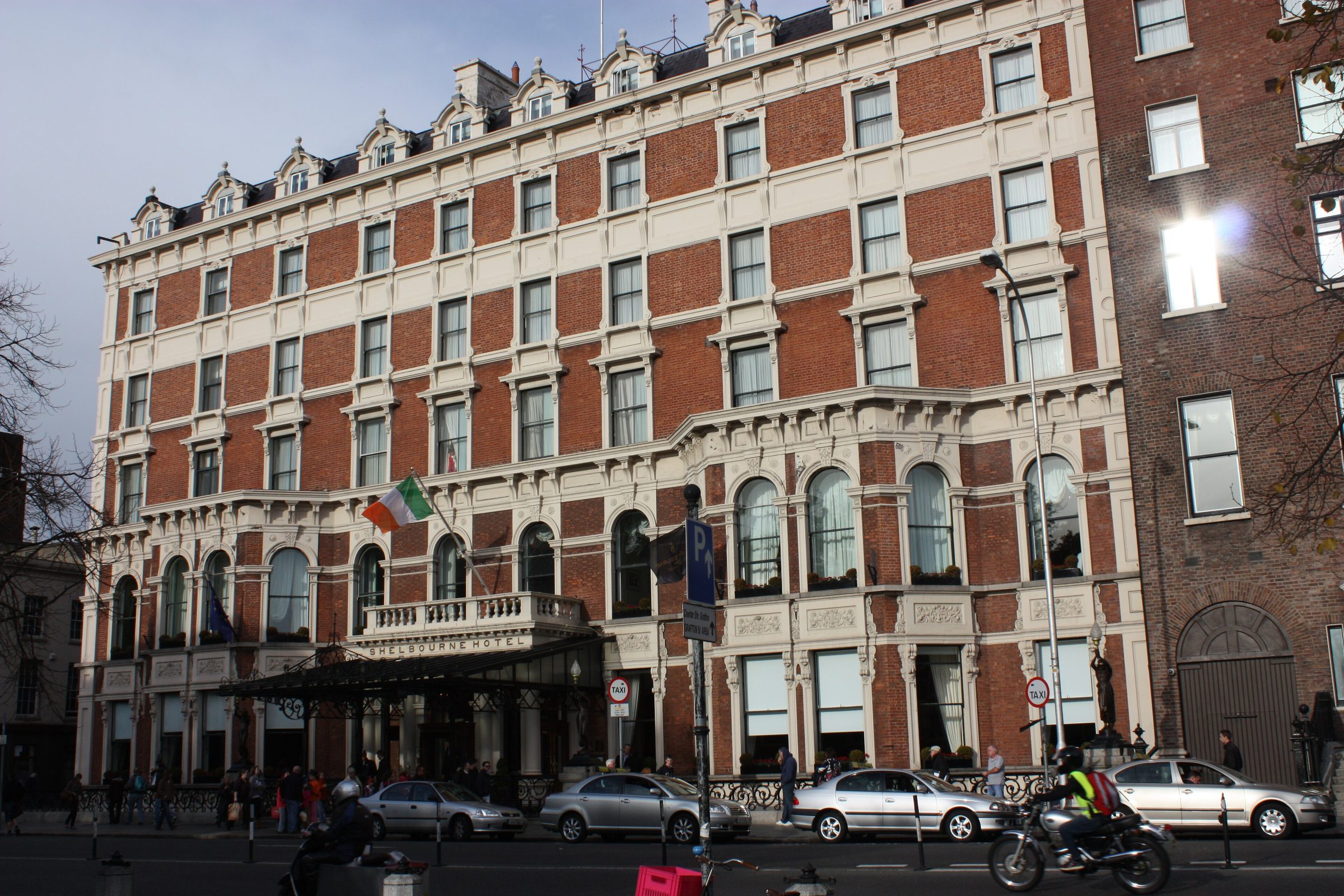
Sleep in Dublin. Portmarnock is a city round, not a stay-and-play. We put visitors at the Shelbourne or the Merrion in the centre and drive out in the morning: twenty-five minutes on the M1, twenty back if you leave before evening traffic. The Portmarnock Hotel is fine, but it is a separate property from the Old course club, and dinner is better in the city than in the hotel restaurant. For the fuller trip, our stay collection and our seven-day golf itinerary route Portmarnock as the Dublin round in a wider North-and-South loop.
The Last Honest Thing
The R&A does not put Portmarnock on the Open Championship shortlist because it is dramatic. It puts it there because it is the truest genuine links test in Ireland, and because when the wind gets up on the peninsula the course defends itself without the theatre of blind shots and dune valleys. That is a specific compliment. What it tells you is that the people who judge golf courses professionally think Portmarnock is closer to the platonic ideal of a links than any other course on the island. After years of returning to the same eighteen holes, we agree with them.
If you can only play one round in the Dublin area, play this one. If you can play two rounds on your trip, play this one twice on two different days so the wind has a chance to reset the course for you. It is the course we return to when we have three free hours and a set of clubs in the boot, and it teaches us something new almost every visit. That is the highest compliment we know how to pay a piece of ground.
Questions we get asked
- What kind of links is Portmarnock?
- A flat, honest one. There are no blind shots and no tricks. Everything is in front of you, which is why good players rate it above courses that photograph better.
- Which is the famous hole at Portmarnock?
- The fifteenth, a par three along the shore that has been called the best short hole in Ireland. Into the wind it is a mid iron that has to hold a green with nothing behind it.
- How does the wind affect Portmarnock?
- It reverses the course. The holes that played downwind on the front nine turn into the teeth of it coming home, and the closing four are where rounds are decided.
- Is Portmarnock a good first round of an Ireland trip?
- It is the best one. Twenty five minutes from Dublin Airport, no jet lagged drive, and a course that gives you a fair introduction to links golf before the west asks harder questions.
- Do I need a caddie at Portmarnock?
- Less than at Lahinch or County Down, because nothing is hidden. Take one for the green reading and the wind calls rather than for the lines off the tee.
How we checked this
Further reading from the Notebook