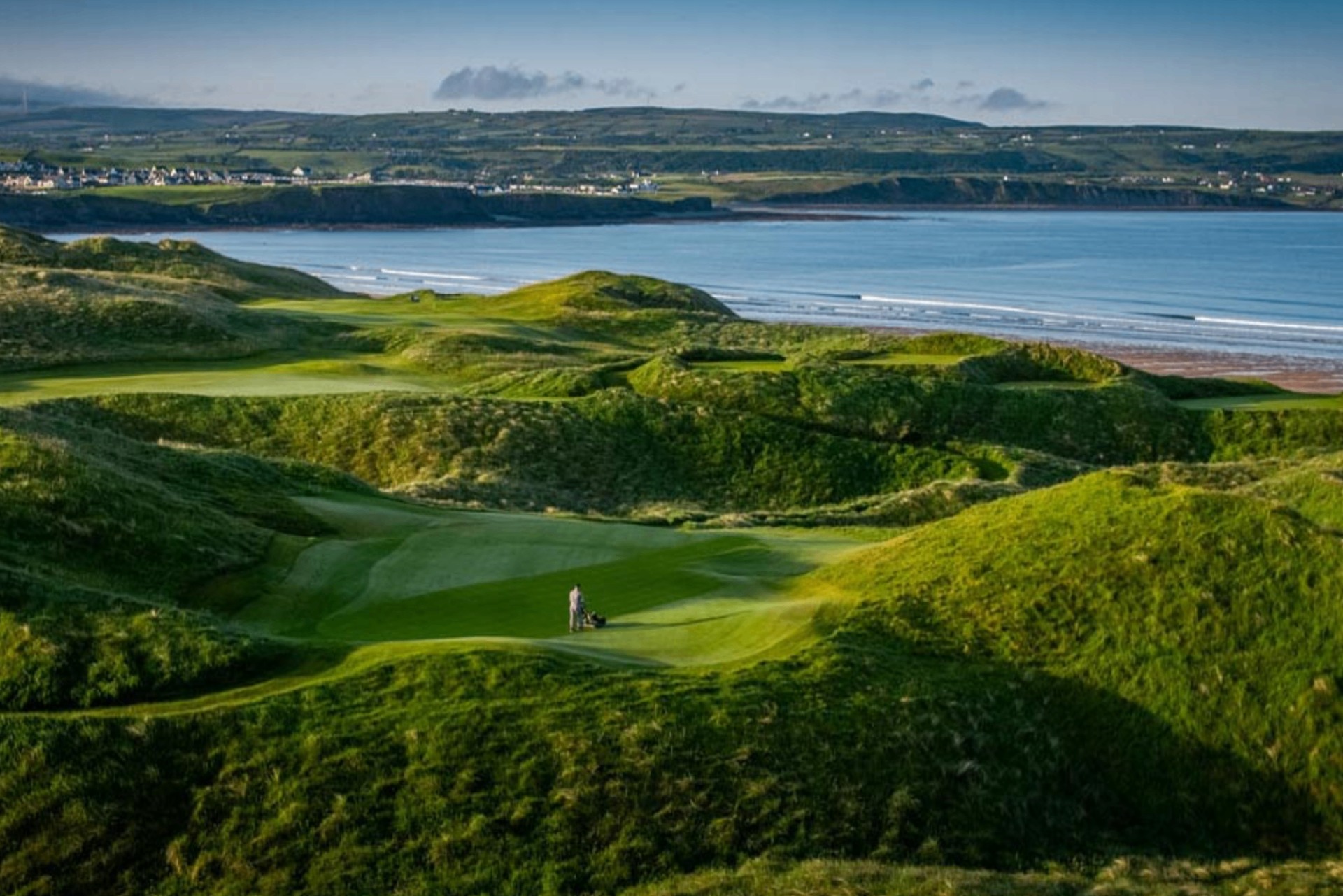
Played April 2026, into a Clare westerly off the Cliffs
Lahinch is the round most American visitors misread on the first tee, and the round they want to play again before they have finished the beer at the bar. It sits on a strip of true links ground on the west coast of Clare, an hour and a half south of Galway and twenty minutes north of the Cliffs of Moher, and it has been played continuously since 1892. Three architects shaped what you walk today. Old Tom Morris laid the original routing. Charles Gibson rebuilt much of it in 1907. Alister Mackenzie, before he ever saw Augusta or Cypress Point, produced the plan in 1927 that gave the course most of its current character. What that lineage produced is a links that behaves nothing like Portmarnock and very little like Royal County Down. It rewards a specific kind of imagination, punishes another kind of confidence, and every American we bring here has the same conversation about it in the car on the way home. Here is what the course actually asks, and what we now do differently after many rounds on it.
Lahinch, In Its Own Words
Lahinch has two courses, but only one is what everyone means. The Old is a par 72 that stretches to 7,066 yards from the blue tees and drops to 6,613 from the whites, which are the tees a visitor should actually score from. It runs between the village and the Atlantic on a strip of dune ground that never quite behaves the same way twice. The routing walks you out through those dunes and then back through a different set of them, and the two nines share very little. The front is older and quieter, played on ground closer to what Old Tom Morris left. The back is where Mackenzie moved in, and where the course stops being polite.
Lahinch defends itself with three things, in ascending order of trouble. It has two blind shots at the 4th and the 5th, which are gimmicks to the visitor and the whole point to the local. It has an Atlantic wind that reroutes itself between the two nines and never quite matches the yardage plate. And it has greens that are small, canted, and unimpressed by any approach landed pin-high or long. What Lahinch is not is a course you can bomb. The fairways are wide by links standards, the rough is honest, and the trouble is almost never off the tee. The trouble is the approach, played through a wind that has changed since you left the previous green, into a green that has already made up its mind.
The Three Architects, And Why It Matters
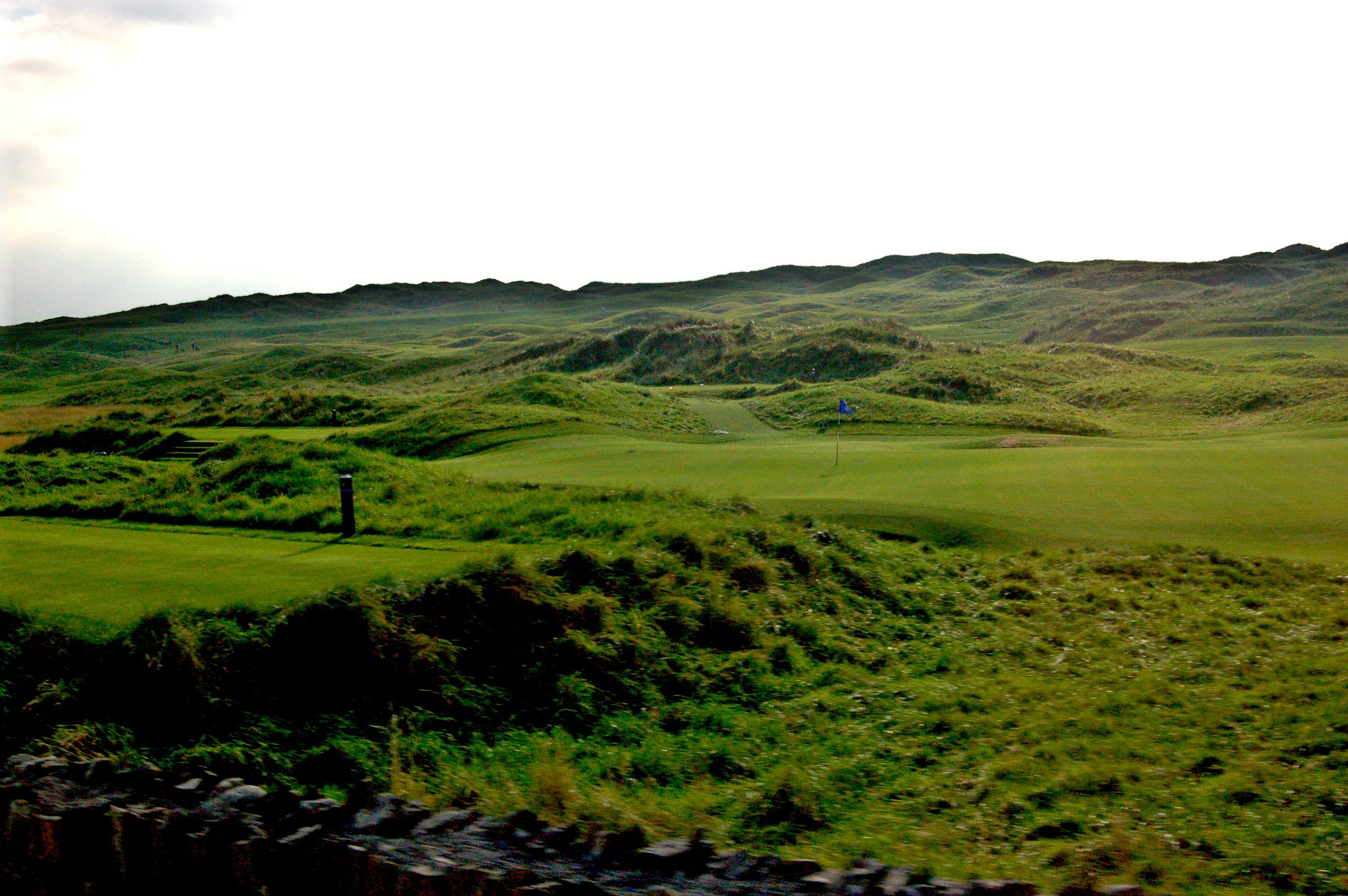
Old Tom Morris walked the ground in 1892 and gave Lahinch its original nine, and later its second nine, laid across the dunes the way he laid out Prestwick and Muirfield, with the routing following the natural corridors between the ridges rather than moving earth to force a line. What survives from Old Tom at Lahinch is the shape of the walk, the way the holes rise and fall with the ground rather than against it, and the presence of two of the strangest blind shots in championship golf. He did not invent the Klondyke or the Dell. He simply routed the course to include them, because they were there.
Charles Gibson, the Westward Ho professional, rebuilt Lahinch in 1907 and lengthened it into a course that could hold a professional event. Alister Mackenzie was brought in twenty years later, in 1927, and produced a plan that reshaped most of the greens, reshaped several of the fairways on the back nine, and gave the course the visual identity it still trades on. If you have played Cypress Point or Royal Melbourne, you will feel Mackenzie at Lahinch, especially at the 7th and the 11th, where the greens sit at grade with false fronts and shoulders that reject anything landed off centre. Reading the course as a Mackenzie course, not as an Old Tom Morris course, is the single most useful thing a visiting American can do on the first tee. It changes what you aim at, and it changes what you accept as a good miss.
The Klondyke And The Dell
The 4th at Lahinch is the Klondyke, a par five of 475 yards that plays uphill from the tee to a fairway that dead-ends at a wall of dune. The second shot, from the middle of the fairway, is blind over that dune to a fairway on the other side, and the green sits another 100 yards beyond it. There is a bell you ring after you have played through, so the group behind can hit. Visitors read this as a stunt. It is not a stunt. It is the most honest shot on the course, because the correct play is to commit to a target on the far side of the dune you cannot see, trust the line the caddie gives you, and swing. If you aim at the dune, you will hit the dune. If you aim at the sky beyond the marker post, you will land in the fairway and have a wedge in.
The 5th is the Dell, a par three of 154 yards from the members tees, playing to a green completely hidden behind another wall of dune. There is a white stone on top of the dune that marks the line, moved daily by the greenkeeper so that it sits on the direct line to the pin. You aim at the stone. You take one more club than the yardage says, because the green is set back and the miss short is dead in the front dune. You accept that you will not see where the ball finishes until you walk over the top of the dune. Both holes are Mackenzie in spirit even though they predate him, and both holes will destroy the round of any American who cannot commit to a line they cannot see. Trust the caddie, trust the stone, and swing. That is the whole game on those two holes.
The Wind Off The Atlantic
The prevailing wind at Lahinch is a south-westerly straight in off the Atlantic, and because the course routes out along the coast and back inland, the front nine is played almost entirely into and across it and the back nine is played almost entirely with it and down it. That is the opposite of what most Americans expect, and it is the reason so many first rounds at Lahinch produce a good front nine card and a bad back nine card. The temptation on the front is to grind out pars into the teeth of the wind, which visitors do well because they club up honestly. The trap on the back is that the wind is now helping, and the approach shots are shorter, and the greens are smaller, and the ball that lands pin-high runs off the back.
What we do now, after enough rounds to know better, is play the front nine as a scoring nine and the back nine as a survival nine. That is the reverse of the American instinct on a course they have not seen before. Into the wind, take the extra club and hit the smooth full swing. Down the wind, take the shorter club and hit the three-quarter shot that lands short of the pin. The Atlantic wind at Lahinch is not the Portmarnock wind, which shifts hole to hole on a peninsula. It is a single wind that turns the two nines into two different courses, and the sooner you accept that the sooner the back nine stops leaking bogeys from the 11th onward.
The Shots The Course Rewards
Four shots decide most rounds at Lahinch, and none of them are the blind shots you flew for. The first is the approach at the 6th, a 424-yard par four across the wind to a green sitting over a fall-off on the right. Aim at the fat left half, let the ball work back on the wind, and putt from below the pin. Aim at the flag on any competition day and you will chip from a slope you cannot get up and down. The second is the tee shot at the 7th, Blind Hookey, a par four of 411 yards with the fairway pinched at 240 between two dune ridges. Miss right and the second is blocked. Miss left and the second is blind. The line is the left edge of the right dune, exactly, and Mackenzie meant it exactly.
The third is the tee shot at 11, Liscannor, a 170-yard par three to a green that sits at grade with a false front and a run-off long. It is the shortest three on the card and it makes more sixes than any other hole. Take one extra club, land at the front edge, let it release. The fourth is the tee shot at 18, Shaw, a 564-yard par five back down to the clubhouse with the wind at your back. The fairway pinches at 260, the visible clubhouse is the wrong target, and the correct play is a three-wood to the middle, a lay-up to 100, and a full wedge in. We have made more birdies here from 100 than from 40. The wedge from 100 spins. The flip from 40 does not. Lahinch rewards the imaginative distance, not the aggressive one.
What Surprises Everyone About Lahinch
The first surprise is how honest Lahinch is about your ego. The championship tees are for the South of Ireland, not for a visiting foursome playing one round in a lifetime. Good amateurs belong on the whites at 6,500. Anyone above a 12 plays the yellows at 6,100. The second surprise is the caddie. Lahinch caddies loop the Old every day of the summer and know exactly what the stone on the Dell is lined up to that morning. They will give you a line on the blind shots that you cannot get from any device. Overrule them and the Klondyke will take one ball, the Dell will take another, and the round will be over by the turn.
The third surprise, and the one that costs the strokes visitors do not see coming, is the ball above the hole. The greens on the back nine are small and canted from back to front, and a ten-footer from above the pin is a genuine two-putt risk. The correct miss on every approach at Lahinch is short, below the pin, uphill. That is the reverse of the American parkland instinct, which is to fly the ball at the flag and stop it. Fly the ball short at Lahinch, let it release, and putt uphill. The last surprise is that the wind does not care what your rangefinder says. It has changed since you looked at it. Take the caddie's number, add or subtract the club they tell you to, and swing.
Getting On The Old Course, And Everything Around It
Booking Lahinch is simpler than booking most of the great Irish links. The club takes visitor play through the office, and the honest window is five to six months out for a summer round, three for the shoulder seasons. Green fees on the Old are high but reasonable for the ground you are walking, and the caddie master books separately through the club. Take a caddie every time, regardless of handicap. The blind shots need a local line and the wind needs a local read, and both are what you are actually paying the caddie for. The Old is walked, not carted, and you will finish the round pleasantly tired in the way West Clare intends.
The essays that turn Lahinch into a trip rather than a round are three. Our restaurant guide to Lahinch and West Clare covers where the seafood is honest, where the tourist trade has taken the room, and how to sequence dinners across Doolin, Liscannor, and Ballyvaughan. Our seven-day southern golf itinerary routes Lahinch alongside Ballybunion and Waterville in the order we would build for a first Ireland trip. Our full stay guide opens on Moy House in the village itself and moves north to Gregans Castle in Ballyvaughan when the Burren belongs on the itinerary. Book the round the month you plan the trip. Book the dinners the week you confirm the round.
Where to stay for this round
The rooms that make the round possible
Lahinch is a village course. Sleep close enough to walk to the first tee, or drive twenty minutes for the room that makes the trip.
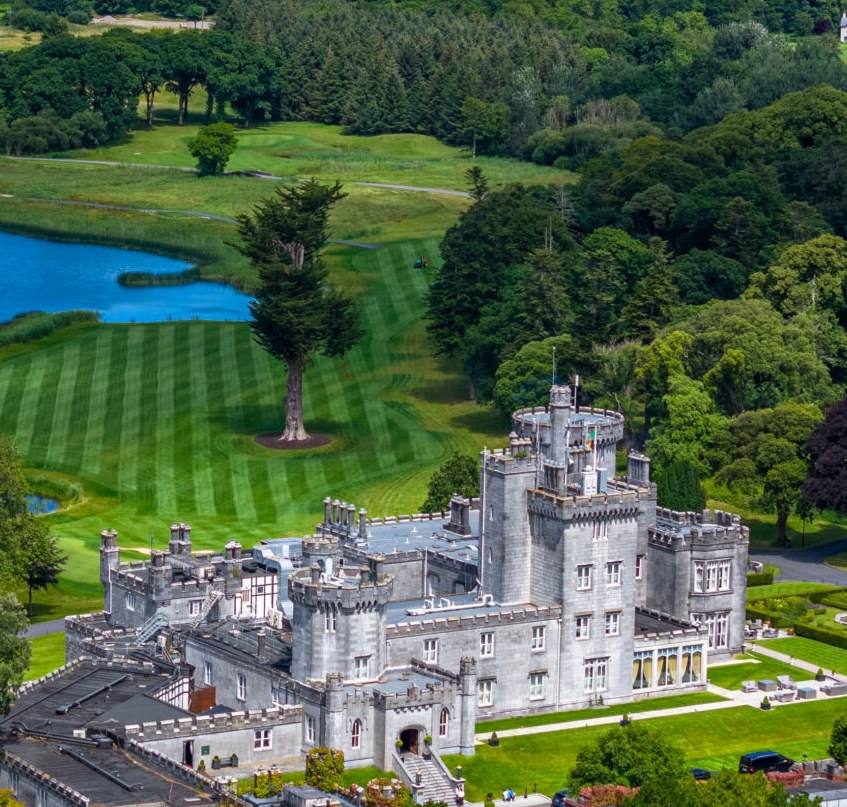
Co. Clare
Dromoland Castle
15 minutes from Shannon. Ideal first night. The warmth here is legendary.
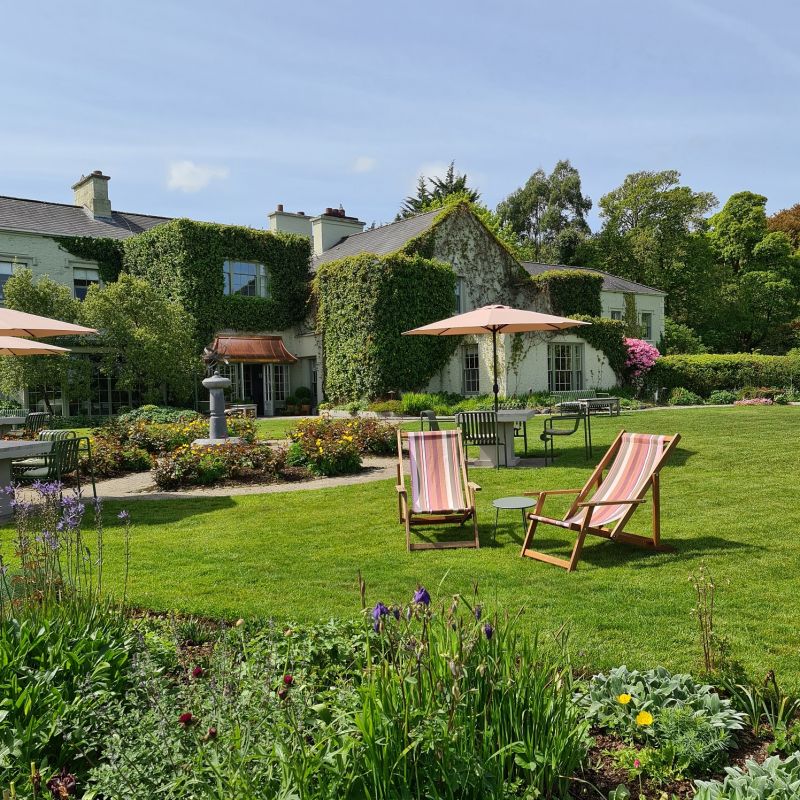
Ballyvaughan, Co. Clare
Gregans Castle Hotel
A boutique country house in the heart of the Burren with views across Galway Bay.
Co. Limerick
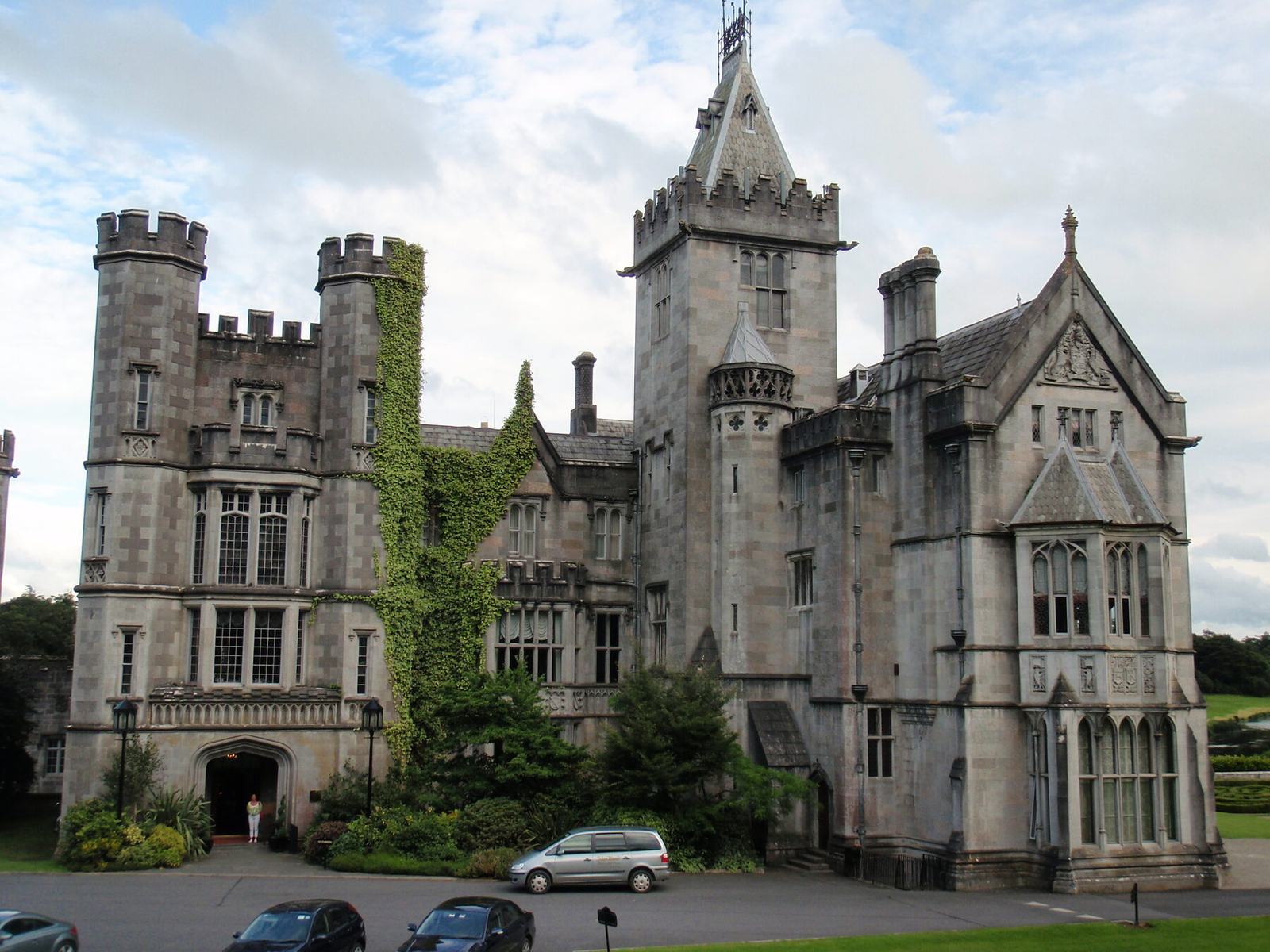
Adare Manor
The most complete luxury estate in Ireland. Tom Fazio golf, La Mer spa, and the Oak Room.

Booking through these links supports the Notebook at no cost to you.
Questions we get asked
- Are the Klondyke and the Dell fair holes?
- No, and that is the point. A blind second over a dune and a blind par three behind another would never be built today. They are the reason Lahinch is loved rather than merely respected.
- Do I need a caddie at Lahinch?
- On a first visit we would take one. The blind shots are guessable and the greens are not. A caddie saves four or five shots and removes the standing around that slows a first round here.
- Which is the hardest hole at Lahinch?
- Most cards say the eleventh, most golfers say the fifth. The fifth green rejects anything short and the wind is rarely helping. It is the truest test on the course.
- How windy does Lahinch get?
- Genuinely windy, often enough that the course plays several shots harder than the yardage. Play the ball low, take more club than feels right, and accept that the outward nine may be the harder half.
- Is the Castle course worth playing at Lahinch?
- As a second round in a two day stay, yes. It is shorter and gentler, and it is a good way to spend an afternoon without another full assault on the Old Course.
How we checked this
Further reading from the Notebook