
Played May 2025, in a two-club easterly off Dundrum Bay
Royal County Down is the course we return to in the North most often. We have played it in a July haze off the Irish Sea, in a February gale that shut the front nine to anyone with a sensible over-under, and in the kind of April afternoon when the gorse turns loud yellow and the Mournes look painted on. What we can tell you, after all those trips, is that Royal County Down does not reward the game you brought over from Florida. It rewards a very specific brand of decision-making, and most Americans we play with arrive without it. Here is what we have learned about how the course actually plays.
What The Course Actually Asks Of You
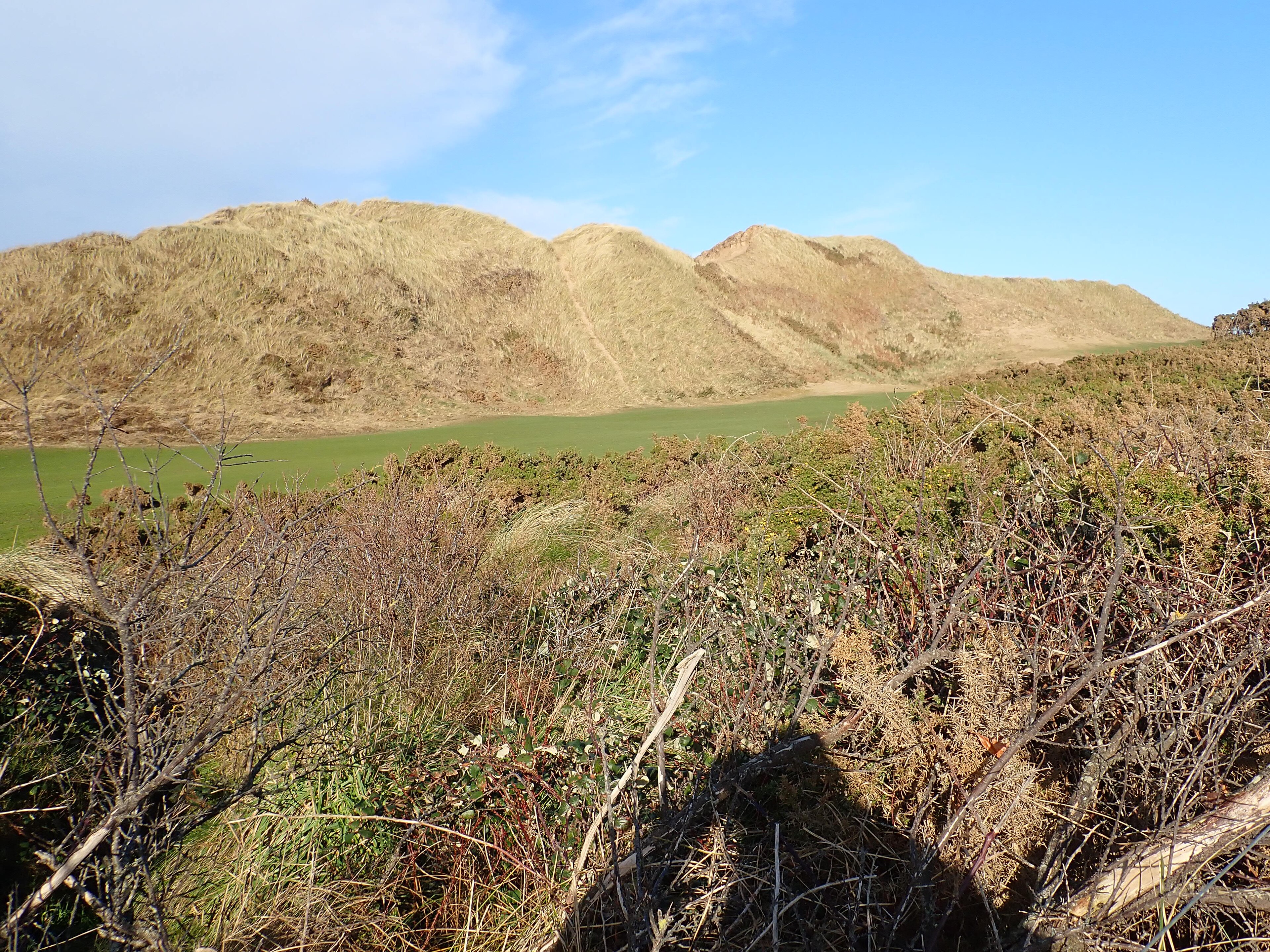
The Championship course at Royal County Down is a walking exam in shot selection. Off the tee it wants a ball you can shape, or at least a ball you can leave thirty yards short of your ego and still find. The fairways are narrower than the photographs suggest, and the rough is not rough in the American sense. It is marram grass over dune, gorse in low tunnels, and the occasional whin bush that has been eating Titleists since Eisenhower was president. You do not chop out of it. You look for your ball, take an unplayable, and move on to the next tee with your card intact.
The approach game is where scores are actually made or lost here. The greens are firm year round, they sit on plateaus more often than in bowls, and they have been mown at that height since the course was laid out at the end of the nineteenth century. You are asked to land the ball twelve to twenty yards short of the flag and let the ground bring it in. That is not a swing you make on a Bermuda parkland at home. If you can learn that one shot in your first three holes, you will save yourself six over the round. If you cannot, you will spend eighteen holes bouncing wedges over greens you thought you had covered.
The Opening Five, Where Scorecards Begin To Slip
The 1st is a 539-yard par five that plays with a helping crosswind on a normal day, and you would think that a scoring hole. It is not. The second shot has to thread between two dunes to a fairway that narrows at the exact yardage a good drive will land. We now play a three-wood off the tee and a five-iron up the right side, leaving 120 in. That is the whole opening move. You are being asked to give up distance for position from your very first swing of the day, and if you refuse the trade you will be re-teeing before you have finished your first coffee.
The 2nd (444 yards) and the 3rd (475 yards) are both par fours that will punish you for what you got away with at Bandon. The 3rd in particular hides its landing area behind a blind ridge, and your caddie will tell you to aim at the white marker on the far dune. Believe him. Then the 4th, the downhill 229-yard par three we will come back to below, and the 5th (440 yards), where the miss off the tee is right, into gorse, and the miss on the approach is short-left, into a pot bunker you will play sideways from. By the 6th tee, if you have not already put a nine on the card, you are playing well.
The Three Hinge Holes: 4, 9, And 13
The 4th is 229 yards, downhill, with the Mournes framed behind the green and the Irish Sea to your right. Every photograph you have ever seen of this course is of this tee. The mistake we watch Americans make here is clubbing to the number on the yardage book. It plays two clubs shorter than the number on a still day and three shorter with any tailwind. We have hit six-iron, seven-iron, and eight-iron off this same tee in one season. The miss short-right sits in a bunker you can advance from. The miss you will not recover from is long, over the back, in a hollow that requires a full lob wedge just to see the flag.
The 9th is the most photographed blind tee shot in the sport, uphill over a marker pole to a fairway that tilts hard left. You aim at the pole. You accept the possibility of a lost ball. And you play for the second shot, which is downhill, 165 or so, into a green that will not hold a full wedge. We now play a three-wood off the tee here instead of driver, because the fairway pinches at 285 and the second shot from 190 downhill is objectively easier than the same shot from 130 with an obscured lie. The 13th is a 446-yard par four that turns hard right around a dune. Everyone tries to cut the corner. Almost no one succeeds. Play it as a proper dogleg, hit the fairway at the elbow, and take the four you would not have taken by going over the top.
The Wind, Honestly
The prevailing wind at Royal County Down comes off the Irish Sea from the south-southwest. On a normal day it is 12 to 18 knots, which the course was designed around. What we tell first-time visitors is that the card changes character entirely at 22 knots and above. Anything over 25 and the front nine, which mostly plays downwind out and back, becomes a scoring nine, while the back nine, which plays into and across, becomes a survival exercise. The 15th, into a strong south-westerly, has been unreachable in two for us in wind that a round at Pebble Beach would consider ordinary weather.
The wind that catches people out, though, is the easterly. It comes off the sea, cold, straight into holes 1 through 4, and it flattens the ball flight of anyone used to warm-air parkland golf. Your seven-iron will fly like a five and land like a two. If the flag on the clubhouse is pointing at the Mournes when you walk out of the pro shop, take one more club than the yardage suggests, land the ball short of every green, and do not fight it. We have watched scratch handicaps shoot 88 in an east wind because they refused to accept that they were now playing a different course than the one they warmed up for.
The Closing Stretch, 15 Through 18
The 15th (468 yards, par four) is the hardest hole on the course and, on the wrong day, one of the hardest par fours in Ireland. It plays into the prevailing wind, uphill, to a green that sits above the fairway and rejects anything not landed on the front eight yards of putting surface. We play it as a bogey five and take the four when it turns up. The 16th is a 337-yard par four that looks like a breather on the card. It is not. The green is small, elevated, and the pin position on a Sunday is often front-left, where a slightly heavy wedge will spin back off the green and roll thirty yards down the hill you just walked up.
The 17th (433 yards) turns you back toward home and plays downwind again, and the 18th is a 548-yard par five, downhill, in front of the clubhouse. It is the one hole on the golf course that will give you a shot back. The mistake here is trying to make the four you feel the round owes you. Play it as the par it is, take the five, and walk off with the round you actually shot. We have watched more scorecards ruined at 18 than at 15, because ego picks up a driver when a three-wood is the honest club, and the fairway bunker at 290 is exactly where a pulled driver ends up on tired legs.
The Rule We Follow Here
The rule we follow at Royal County Down is a short one, and we came to it the way you come to any rule worth keeping, slowly. The first part is that the wedge you own at home does not travel. The ball around these greens sits on turf mown and rolled since the nineteenth century, and the 60-degree that lifts it cleanly on Bermuda will blade it across a plateau green here. We use a nine-iron or a putter inside twenty yards, and we suggest an hour on the practice chipping green before your round doing exactly the shot you are about to be asked for. It will feel wrong for fifteen minutes and correct for the rest of your life.
The second part of the rule is the caddie's line. The loopers at Royal County Down are, in most cases, better readers of this course than any tour player you have watched on television, and when yours tells you to aim at the second gorse bush from the left, that is the line. Do not adjust for your own read of the fairway. The third part is the tee box. The championship card at 7,206, par 71, is for professionals in an Open rota. Ask in the pro shop which set of member tees suits your handicap and play those. Playing the wrong set is the single most common reason a good American walks off Royal County Down demoralised rather than in love with it. Play the tees the course asks of you. Take the line your caddie gives you. Leave the wedge in the bag around the greens. That is all of it.
How We Book It, And What To Pair It With
Visitor tee times at Royal County Down are available on Monday, Tuesday, Thursday, and Friday, with a limited Sunday afternoon window in the shoulder seasons. We book seven months out through the club office directly, not through a golf-travel packager, because the club will hold your preferred window longer for a direct booking than a wholesaler ever will. The green fee is what you would expect for a top-five course in the world, and it includes practice facilities for the day. Caddies are booked separately and paid in cash. Bring pounds sterling, not euros. This is Northern Ireland, and the currency question catches more visitors than the wind does.
The only stay we recommend for a Royal County Down round is the Slieve Donard, three minutes walk from the first tee. It sits between the course and the Irish Sea, the rooms on the golf side look over the 18th green and the Mournes, and the bar downstairs is where you will end up after your round whether you meant to or not. If you want a fuller Ulster trip built around this round, we route people onto the Enterprise from Belfast to Dublin at dusk for the return leg, and we pair the round with a night at one of the country houses we have written up separately on the drive south.
One Last Honest Thing
Royal County Down is not the course you play to see if you can beat it. You will not beat it. The course record from the Championship tees has stood for years, and the players who have chased it are the reason the club keeps the plaque quiet. What you play Royal County Down for is a very specific kind of clarity: the understanding that a golf course can be older than your country and still be sharper at reading you than you are at reading it. That is worth the flight to Belfast on its own, and it is why we keep going back at least once a year.
Book it once, play it twice on the same trip if the tee sheet allows, and put the second round on a different day than the first so the wind has a chance to be honest with you. We think it is the best round of golf in Ireland, and after many trips around the property we are more certain of that today than we were the first afternoon we teed off. Play it. Then come back and play it again.
Where to stay for this round
The rooms that make the round possible
The Slieve Donard is the historic answer. Failing that, these are the rooms we send Americans to for a round at RCD.

Belfast
The Merchant Hotel
Belfast's most lavish hotel in a former bank building. The Great Room restaurant is extraordinary.
Bushmills, Co. Antrim
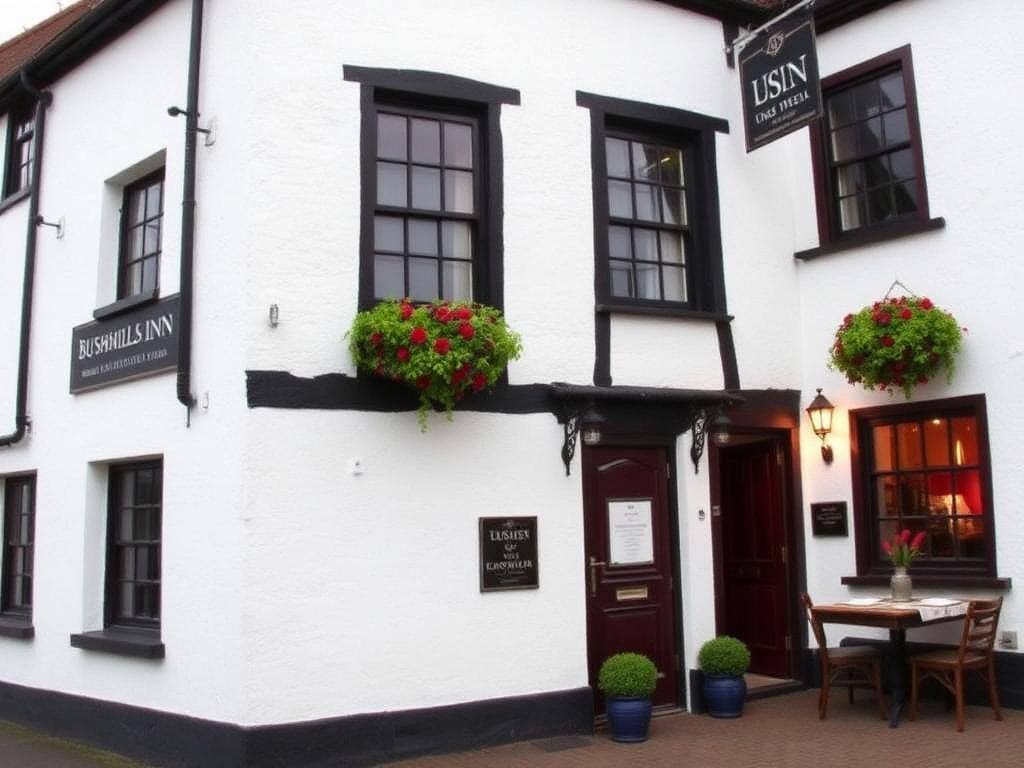
Bushmills Inn
A coaching inn beside the world's oldest licensed distillery, steps from the Giant's Causeway.
Ballygally, Co. Antrim
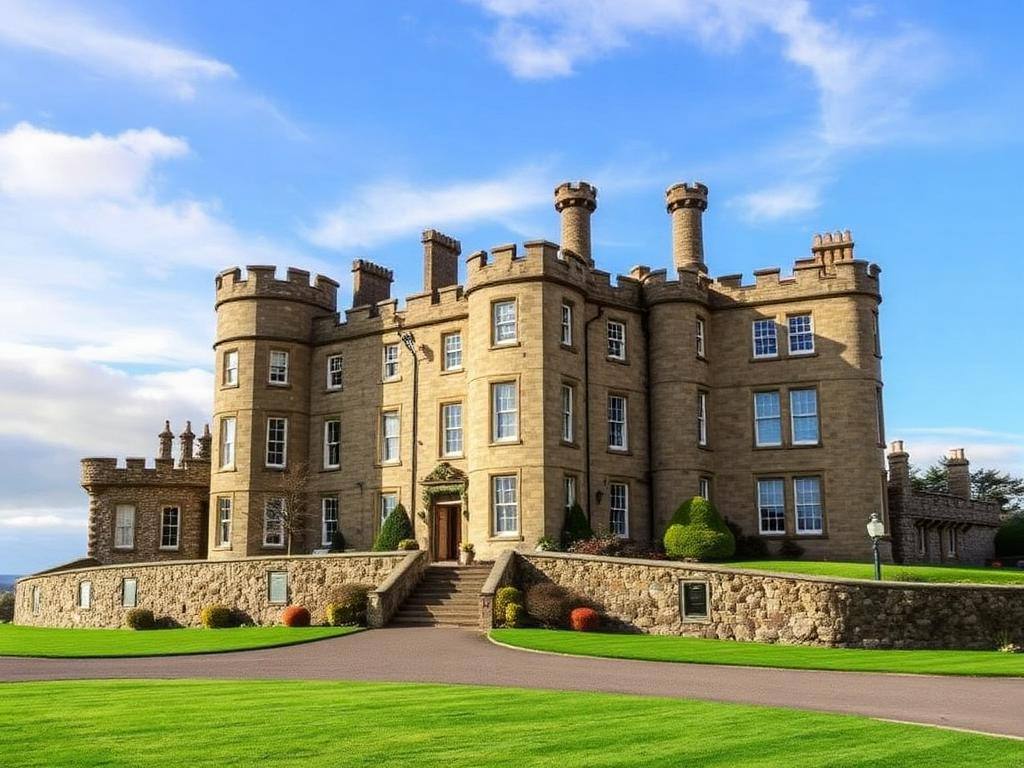
Ballygally Castle Hotel
A 17th-century Scottish Baronial castle on the Antrim Coast Road with its very own ghost room.


Booking through these links supports the Notebook at no cost to you.
Questions we get asked
- How hard is Royal County Down for a mid handicap golfer?
- Hard, and honest about it. The blind tee shots punish anyone trying to overpower the course, and the gorse does not give balls back. Play the forward tees, take a caddie, and treat bogey as a good score into the wind.
- Do I need a caddie at Royal County Down?
- We would not play it without one on a first visit. Several drives are blind, the run-offs around the greens are severe, and a caddie turns a confusing round into a readable one. Book the caddie when you book the tee time.
- Which nine is harder at Royal County Down?
- The front nine holds the famous holes and the prevailing wind, and most visitors leave it several shots behind their target. The back nine is flatter and quieter, but it is where scores are actually saved.
- Should I play the Annesley as well as the Championship links?
- If you have two days in Newcastle, yes. The Annesley is short, sharp, and far more fun than a second lap of the Championship for most visitors, and it costs a fraction of the green fee.
- What is the best month to play Royal County Down?
- May, June and September in our experience. The gorse is at its best in late spring, the light runs long into the evening, and the wind is typically less punishing than in the shoulder months either side.
How we checked this
Further reading from the Notebook