A note from Deborah. Read her editorial perspective
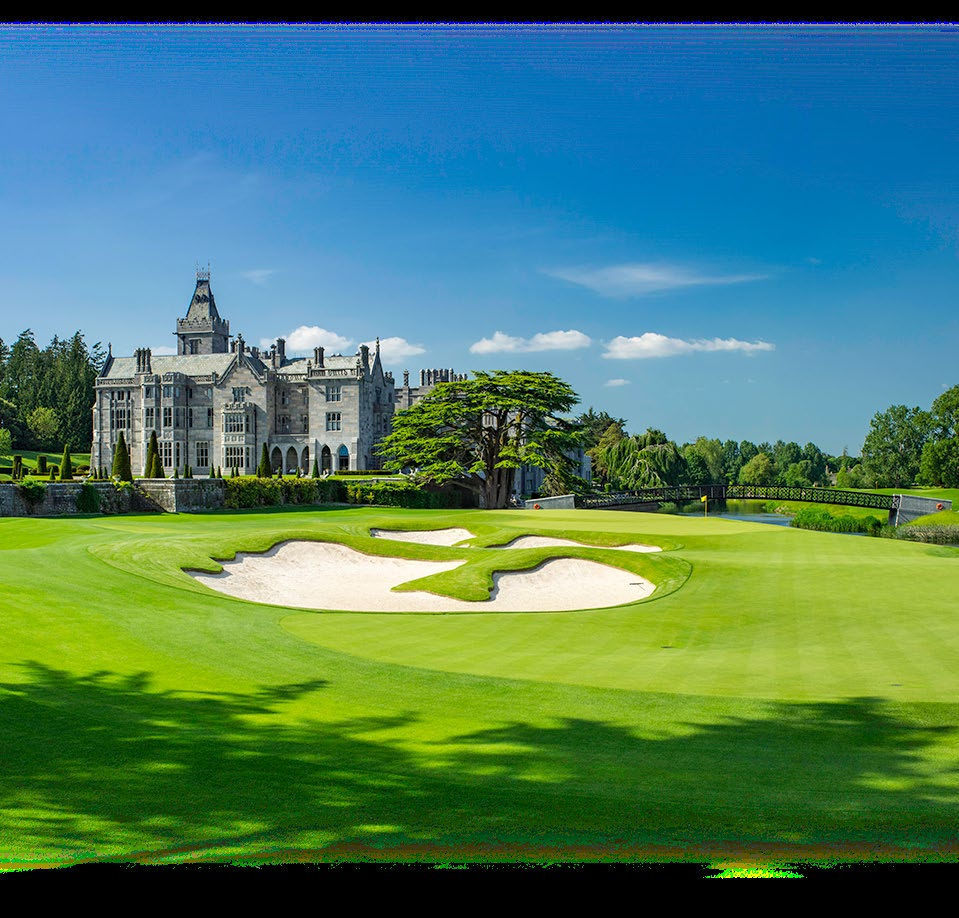
Adare Manor invites the wrong comparison. Its immaculate turf, broad scale and Tom Fazio signature make people reach for Augusta or an American stadium course. The more useful reading is local. This is a modern Irish parkland laid beside the River Maigue, with the Gothic Revival Manor kept in view and water made visible at the moments when a golfer most wants to attack. Adare Manor publishes the facts that matter: par 72, 7,509 yards from the back tees, fourteen elevated greens, Pure Distinction bentgrass and SubAir beneath every putting surface. It does not publish enough to justify a theatrical, shot-by-shot certainty from afar. So this guide does something rarer: it separates verified architecture from editorial strategy.
The Course In One Honest Read
Tom Fazio led the 2016-17 reconstruction of the earlier Robert Trent Jones Sr. course. The result is not an old Irish links and should not be played as one. The estate describes a par-72 course of 7,509 yards from the championship markers, with large landing areas, sharply presented hazards and elevated greens. The design's generosity is conditional: width from the tee is useful only when it leaves the correct angle into a raised target.
For a visiting group, tee selection is the first strategic decision. Do not choose by prestige. Choose the set from which most players can reach par fours with a mid-iron or less after a normal drive. The Ryder Cup yardage is theatre for the best players in the world; it is not an instruction to the guest. Adare is most revealing when the second shot remains a decision rather than a rescue.
For American players, the scale can make every line look wider than it really is. We would use the warm-up to establish your actual carry in Irish air, then choose one conservative reference point from each tee. The course's visual polish should not persuade you that hazards are ornamental. Fazio's large landing zones reward a committed line, while an indecisive ball can finish at the edge of the fairway with the least useful view. Your scoring goal is simple: arrive at the elevated greens from turf, with enough club to remove the front edge from the calculation. That principle survives changes in wind and pin position without pretending to know the day's setup.
We would use the practice facilities to decide the day's tees rather than arriving with that decision fixed. Hit several drivers, one fairway wood and the iron you expect to use most often. If your normal flight is being held up by wind or cold, move forward before the scorecard turns the day into work. You have travelled for the setting and the decisions, not to reproduce a championship number. A mixed-handicap group can use different tees without weakening the shared experience; everyone still meets on the same fairway, faces the same elevated targets and sees the same closing landscape.
Why The Greens Decide The Round
Fourteen greens are elevated, according to the estate. That single fact explains more than an invented list of preferred landing zones. An elevated target reduces the amount of putting surface visible from the fairway, makes front hazards feel closer and turns a short-sided miss into a demanding recovery. Your useful question is not simply the flag yardage. It is where the ball may finish if it does not carry or spin as expected.
The greens use Pure Distinction bentgrass and each has a SubAir system beneath it. That allows the maintenance team to manage moisture precisely; it does not justify predicting a daily speed. Green speed is NOT PUBLISHED as a standing visitor figure. Arrive early, use the practice green, and ask the caddie how the surfaces are behaving that morning. Favour the centre when the flag is close to an edge and keep the next shot uphill where the contour allows.
What we can verify is the construction, not a permanent Stimpmeter number. SubAir can pull moisture from below the surface or introduce air when required, helping the team maintain consistency after rain. It does not mean every putt will be fast, nor does it make a downhill line predictable from a webpage. Spend ten minutes putting across a slope as well as uphill and downhill. Ask your caddie which edge is gathering and whether the grain is relevant that day. On a large raised green, distance control is more useful than chasing a read to the final fraction. Your first putt should protect the next one.
The River Maigue And The Discipline Of Position
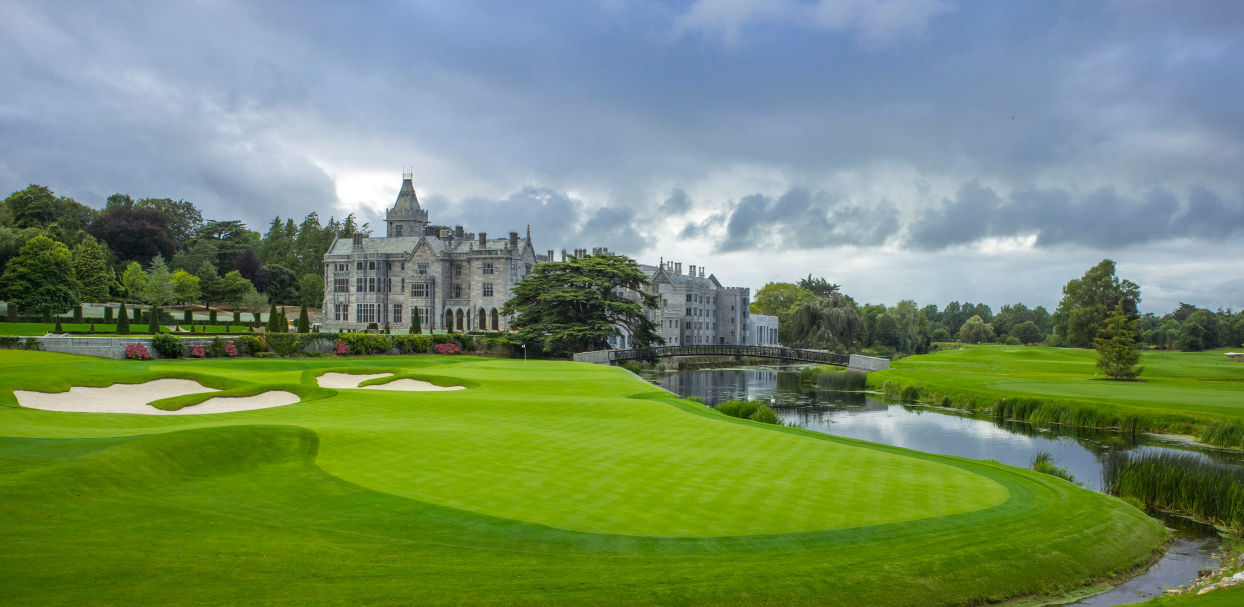
The River Maigue is part of the estate's identity and an essential visual element of the course. Water also appears through constructed features. The useful strategic principle is restraint: identify the side from which water narrows the approach, then choose a tee club and line that preserve a full view of the green. The longest drive is not automatically the best drive when it reduces the next angle.
Adare's official material celebrates dramatic risk and reward. For ordinary golfers, the reward is often a clean par chance rather than a heroic carry. Before each approach, ask the caddie for the front number, the safe side and the consequence of missing beyond the green. That three-part conversation is more valuable than memorising somebody else's alleged shot from a different tee in different weather.
Water changes behaviour before it catches a ball. You may steer the driver away from it, choose too much club to clear it, or attack a flag because the safer half looks unambitious. We would decide the acceptable miss before choosing the club. If the safe miss leaves a straightforward chip or a long putt, take it. If a lay-up leaves your preferred wedge rather than an awkward half-shot, stop there. The River Maigue gives the course its Irish setting, but it does not require a romantic shot. Your caddie can identify the carry; you still decide whether that carry belongs in your round.
The Closing Stretch And The Ryder Cup Lens
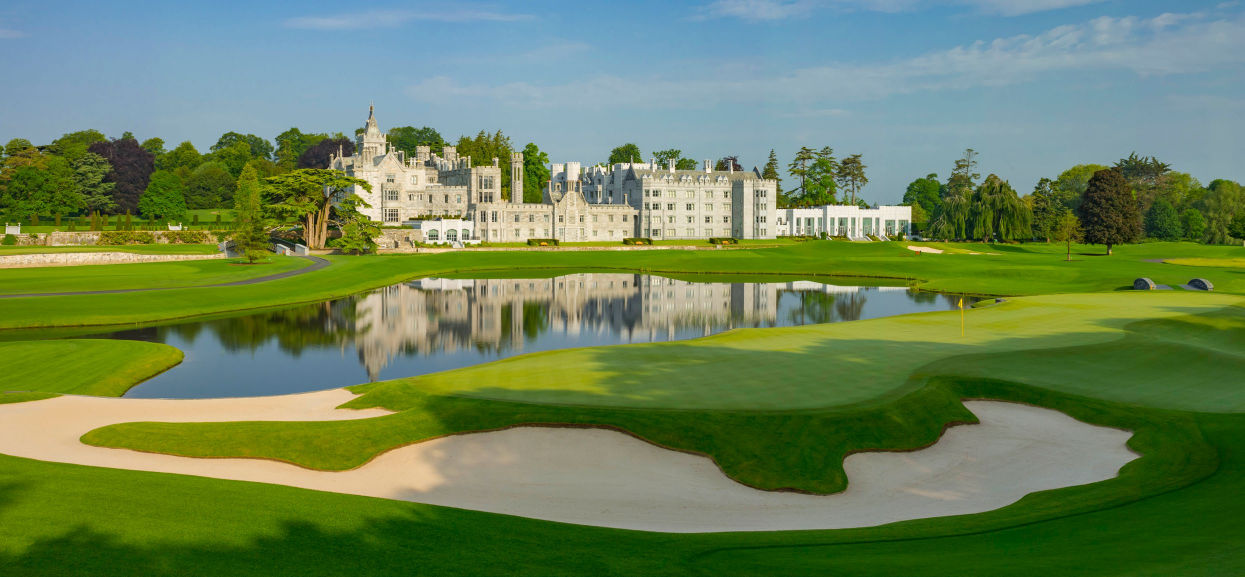
The closing holes bring golf, water and the Manor into one frame. The eighteenth is a par five finishing below the house, designed to offer match-play decisions when players still have the length to take them. That is why it will matter on television in September 2027. A resort guest should not copy the professionals' line merely because the grandstand sightlines make it look inevitable.
Decide before the round whether the eighteenth is a three-shot hole for you. If it is, choose the lay-up yardage backwards from a comfortable wedge and remove the temptation to improvise. Match play rewards volatility; a paid round in a fourball usually rewards one good decision after another. The Manor backdrop will remain impressive whether the card says five, six or seven.
The Ryder Cup will make the closing landscape familiar long before most readers arrive. Television compresses distance, hides elevation and follows players whose carry numbers bear little relation to yours. We recommend watching for decisions rather than copying clubs: which side a team protects, where a player accepts twenty feet, and when match position justifies risk. In your own round, the scoreboard is the card and the partner waiting beside you. If the eighteenth remains reachable only with a career shot, it is not genuinely reachable. Build the hole from the green backwards and let the architecture, rather than television memory, set the terms.
The Caddie Is Mandatory - Use The Advantage
For the published 2026 season, every golfer must take a caddie. Adare lists the fee at €120 and does not permit double-bag caddies. A forecaddie may serve two golfers sharing a cart. This is not an optional luxury to add later; it is part of the current terms and should sit in the first version of the budget.
Use the caddie for decisions the scorecard cannot make: tee selection, carry numbers, the safe miss and the day's surface conditions. Be direct about your normal carry rather than your best carry. Gratuity guidance is not published by the estate, so ask the golf team for current custom rather than treating an online number as a rule.
A strong caddie relationship begins with useful honesty. Tell them your normal driver carry, your common miss, the club you trust from 150 yards and whether you want detailed reads or a lighter conversation. Your caddie is not there to admire optimistic arithmetic. They can make the round calmer by choosing targets that suit the shot you actually own. The estate requires the service because the course and its presentation benefit from local management as well as advice. Confirm payment method and gratuity custom with the golf office before arrival, then carry enough flexibility to follow the current instruction rather than an old forum post.
2026 Access And What Remains Unpublished
Adare's current public rate card is specifically for resident guests. It lists €550 per person from 26 May to 18 October 2026, with the course closed on Mondays except bank holidays. Rental clubs are €75, a cart €70, range balls €15, an electric trolley €25 and a pull trolley €15. Those are dated 2026 prices, not promises for another season.
A standard 2027 green fee is NOT PUBLISHED. A general non-resident 2026 rate is also NOT PUBLISHED on the current official table. Do not let an operator turn either absence into certainty. Ask Adare Manor directly for eligibility, availability and the terms attached to your room before arranging flights. For the full decision sequence, continue to our booking chapter.
If you are building a southwest golf week, Adare works best as contrast. Place it between or after links rounds rather than asking it to imitate them. The aerial game, managed turf and elevated targets reward a different set of decisions from Ballybunion's dunes or Lahinch's movement. We would also protect the estate time around the round. A rushed arrival, immediate tee time and same-day departure pays the premium while discarding much of the reason for it. Confirm the room, golf, caddie and rental equipment directly, preserve the email, and review the cancellation terms before paying for flights that depend on the tee time.
Where to stay for this round
The rooms that make the round possible
Play Adare properly and you stay on the estate. If the Manor is full, these are the two we book instead.
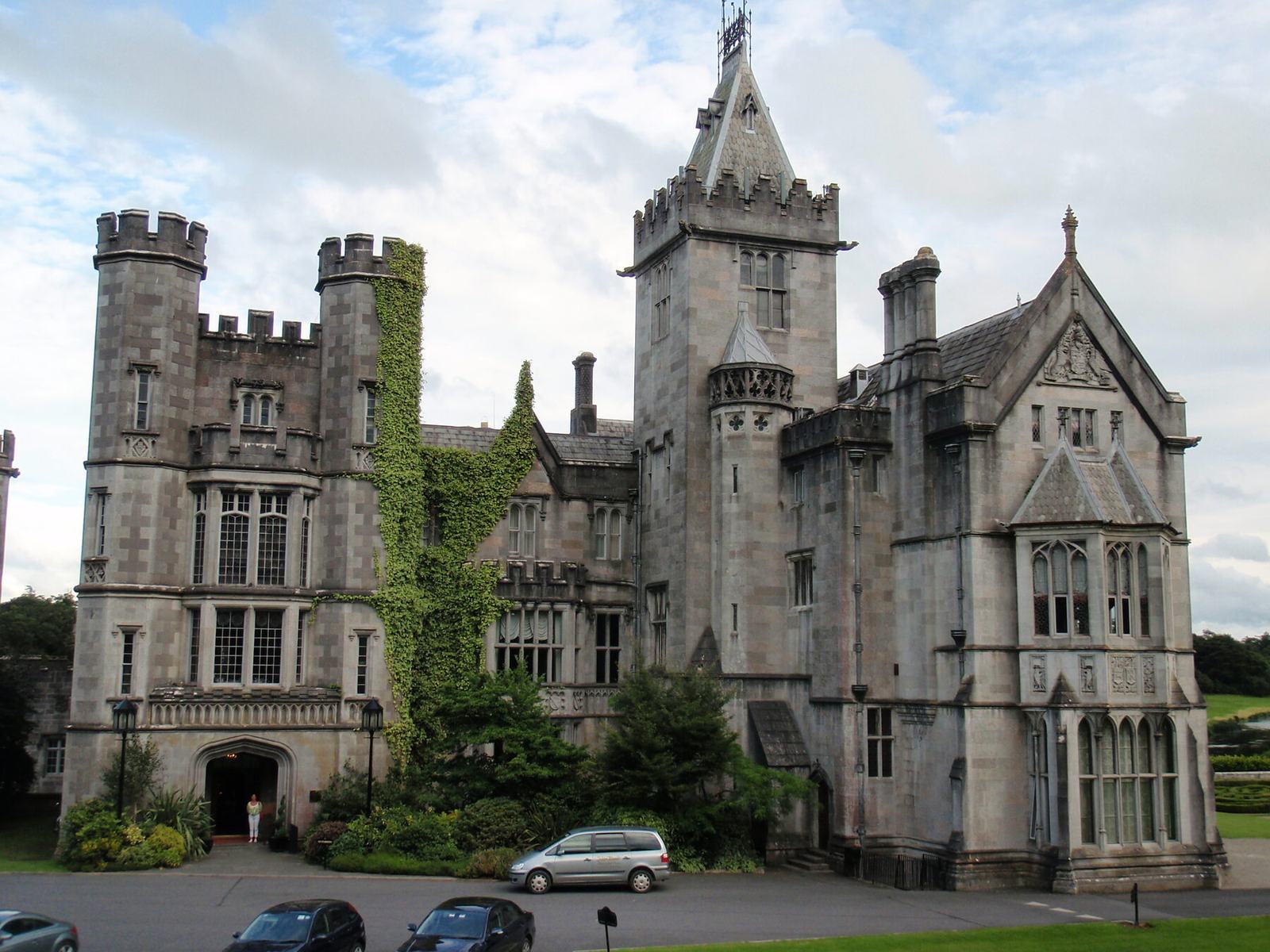
Co. Limerick
Adare Manor
The most complete luxury estate in Ireland. Tom Fazio golf, La Mer spa, and the Oak Room.
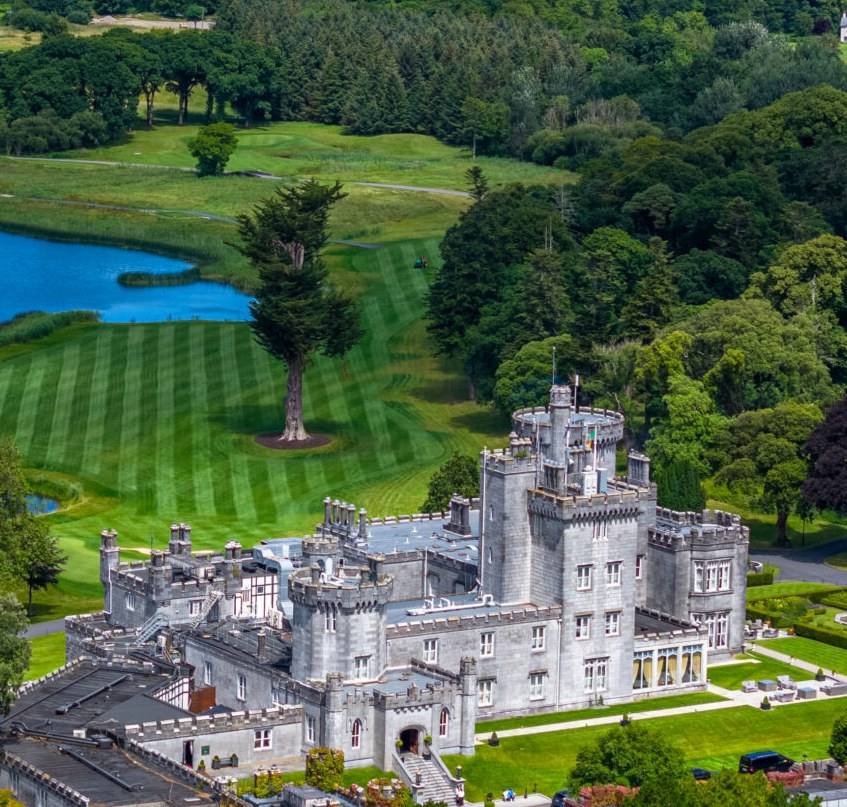
Co. Clare
Dromoland Castle
15 minutes from Shannon. Ideal first night. The warmth here is legendary.
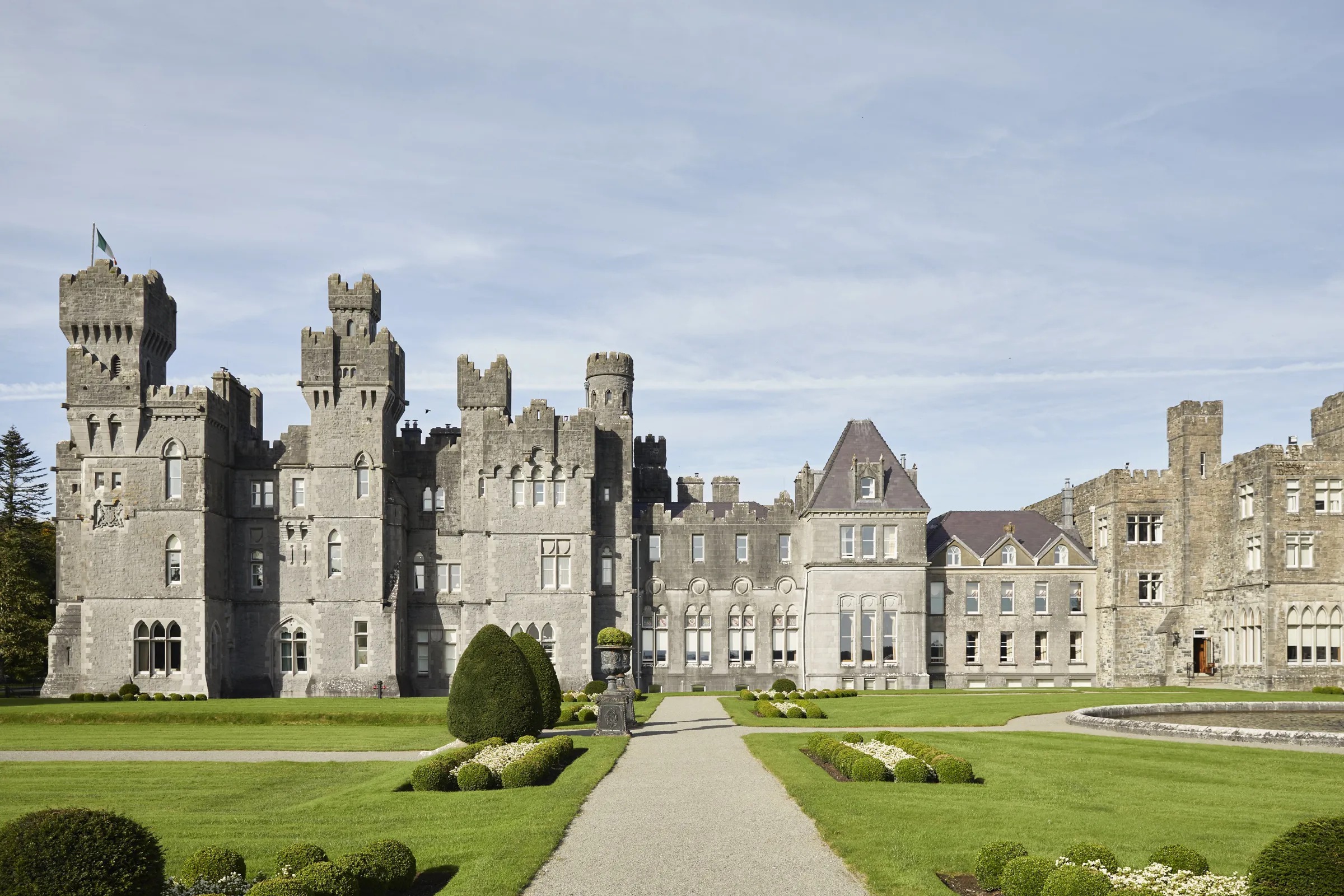
Co. Mayo
Ashford Castle
800 years of history. Falconry, lake cruises, and the George V dining room.

Booking through these links supports the Notebook at no cost to you.
Questions we get asked
- How long is Adare Manor golf course?
- Adare Manor publishes 7,509 yards and par 72 from the championship tees.
- Who designed the course at Adare Manor?
- Tom Fazio led the complete 2016-17 reconstruction of the earlier Robert Trent Jones Sr. course.
- Do I need a caddie at Adare Manor?
- Yes under the published 2026 policy. The fee is €120 and double-bag caddies are not permitted.
- How much is Adare Manor golf in 2026?
- The published resident-guest green fee is €550 per person for the 2026 season, 26 May to 18 October.
- Are 2027 green fees published?
- No. A standard 2027 playing rate was NOT PUBLISHED when this guide was checked on 26 September 2026.
How we checked this
Further reading from the Notebook