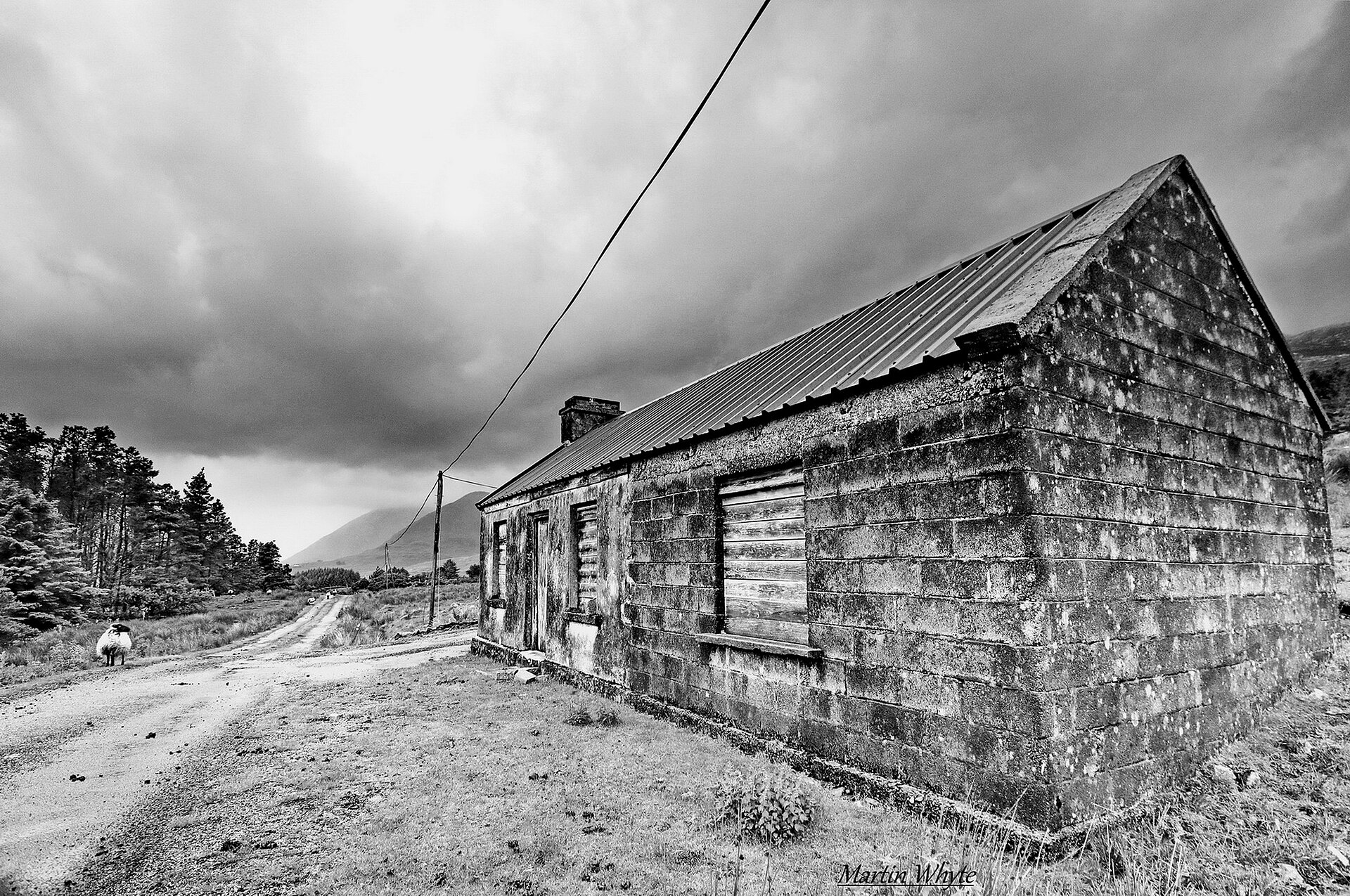
The first trap is the forecast. Most visitors we know check weather apps with a frequency that borders on compulsion. They refresh the forecast before breakfast, after breakfast, in the car, at lunch. They plan entire days around predicted sunshine and reorganise entire itineraries around predicted rain. The weather forecast becomes a second itinerary, running parallel to the real one, dictating mood before the day even begins. This is exhausting. It is also ineffective. Irish weather changes quickly, and the forecast you checked at eight is often wrong by noon. The energy spent worrying about weather is energy not spent noticing where you actually are. The visitor who spends the morning watching radar maps on a phone has already missed the morning.
Irish people have a different relationship with weather, and understanding this difference is one of the fastest ways to understand the country. The Irish do not expect perfect weather. They expect changing weather. That single shift in expectation changes everything. An Irish person leaving the house in the morning checks the sky, carries a waterproof, and goes anyway. They do not wait for the conditions to align. They do not postpone the walk. They do not cancel the plan. The Irish do not wait for good weather. They go anyway. This is not stoicism. It is simply a realistic relationship with a place where the weather has been changing its mind for several thousand years. The acceptance is practical, not philosophical. And the visitor who adopts it finds the trip becomes significantly easier.
We remember a particular day in Connemara that illustrates this perfectly. A couple we were travelling with had planned a long walk before lunch. The rain started at nine and showed no sign of stopping by eleven. Their faces said what their voices would not. The day was ruined. We suggested a pub in a nearby village, not as a consolation prize but as an actual plan. They went reluctantly. By noon the fire was lit, the barman had asked where they were from, and another visitor had joined the conversation with a story about a similar day in Kerry. By two they had forgotten the walk. By four the rain had slowed to a drizzle and they walked back to the car through a landscape that was quieter and greener than it would have been in sunshine. The rain changed the day. It did not ruin it. It simply replaced one good day with a different good day.
Much of what visitors complain about in Irish weather is precisely what creates the country's most memorable visual moments. The Atlantic light is famous among photographers and painters for a reason. It is dramatic, shifting, unpredictable. The same clouds people fear are often the ones creating the view. A sky that is entirely blue is pleasant but flat. A sky that is breaking apart after rain, with light pouring through gaps onto wet stone and green fields, is something else entirely. The light in Ireland is not consistent. It is theatrical. It changes every few minutes. The landscape that looked grey and closed at ten o'clock can look extraordinary at eleven. The visitor who stays inside during uncertain weather often misses the exact moments that make Irish scenery distinctive. The rain is not the enemy of the view. It is often the condition that makes the view possible.
The turning point for most visitors comes when they stop fighting the weather and start carrying the right equipment. A proper waterproof jacket, worn without resentment, changes everything. An acceptance that the day might shift, that the walk might become a pub afternoon, that the coastal drive might become a hotel lunch by the fire, creates more freedom than control. The itinerary is no longer a contract. It becomes a suggestion. And the suggestion, in Ireland, is almost always improved by the interruption. The visitors we see enjoying themselves most are not the ones with perfect weather. They are the ones who stopped expecting it.
Some of the best moments we have had in Ireland happened because the weather redirected the day. The pub session that started at four because the planned hike was impossible. The fireside afternoon that stretched into evening because nobody wanted to go back out. The long lunch that became longer because the rain made leaving feel foolish. The unexpected conversation with a stranger because both of you were sheltering in the same doorway. The weather closes one door and quietly opens another. Most visitors never discover these doors because they are too busy mourning the original plan. The plan was fine. The replacement was often better.
There is a deeper lesson here, and it is the emotional centre of what we want to say. The weather in Ireland is not really about weather. It is about expectations. It is about the belief that a day must go according to plan to be worthwhile. It is about the assumption that the best experiences arrive in perfect conditions, on schedule, as promised. Ireland teaches something different. Not everything meaningful can be planned. Not everything worthwhile arrives in perfect conditions. Some things only happen when the plan breaks. Some conversations only happen when the walk is cancelled. Some meals only become memorable when they stretch because nobody has anywhere else to be. The weather is one of Ireland's gentlest teachers, and the lesson is about surrender.
The rain asks something of visitors that modern travel rarely asks. It asks for patience. It asks for flexibility. It asks for attention to what is actually happening instead of what was supposed to happen. The visitor who accepts these requests finds the trip opens in unexpected ways. They notice things they would have missed. They talk to people they would have passed. They sit still long enough for a place to reveal itself. The trip begins when reality replaces expectation. The visitor who insists on the original plan, who treats every shower as an affront, who checks the forecast every hour hoping for improvement, is not really in Ireland. They are in their own idea of what Ireland should be. And their idea is drier, but it is also thinner.
We have watched Americans transform over the course of a single rainy week. Day one is resistance. Day three is accommodation. Day five is something close to appreciation. By day seven they are walking in light rain without mentioning it, sitting in pubs without checking the window, and planning the afternoon based on what the sky is doing rather than what the app predicted. They have stopped fighting. And in stopping, they have started to see. The weather was never standing between them and Ireland. The weather was one of the ways Ireland introduced itself. It introduced itself as a place that does not perform on demand. It introduced itself as a place that rewards patience more than control. It introduced itself as a place where the day is not a problem to be solved but an experience to be inhabited, whatever the sky happens to be doing.
This connects directly to everything else we believe about travelling Ireland well. The same philosophy that tells you to cut the itinerary in half, to stay two nights instead of one, to sit by the fire and order the second pint, also tells you how to understand the weather. The instructions are the same. Slow down. Stop controlling. Let the day become what it wants to become. The best day of your trip will probably not be on the itinerary. The best conversation will probably not be planned. The best light will probably arrive after rain. All of this requires one thing. The willingness to let Ireland be Ireland, rather than demanding that it behave like California.
We are not saying the weather is always pleasant. There are days in Ireland when the rain is relentless, when the wind makes walking genuinely difficult, when the clouds sit low and grey for forty-eight hours without a break. These days exist. They are real. They are not the majority of days, but they happen. The point is not to romanticise discomfort. The point is to separate discomfort from disappointment. A wet day is not necessarily a bad day. A changed plan is not necessarily a lesser plan. The visitor who understands this distinction will have more good days than the visitor who does not, regardless of what the sky is doing.
The weather is not interrupting Ireland. The weather is Ireland. It is part of the texture of the place, part of its character, part of what makes the country feel like itself. The soft light, the changing skies, the sudden breaks of sun through cloud, the rain that turns stone walls dark and makes grass impossibly green, the fireside afternoons that only happen because going outside is temporarily foolish. All of it belongs. The visitor who tries to edit out the rain is editing out part of the country. They are asking Ireland to be something else, somewhere else, some other version of itself that happens to have better weather. That version does not exist. And if it did, it would not be Ireland.
Somewhere between the first shower and the second rainbow, the country starts to make sense. Not because the weather improves. Because the visitor improves. They stop looking at forecasts and start looking at the sky. They stop treating rain as failure and start treating it as information. They stop fighting the day and start inhabiting it. The rain rarely ruins the trip. The fight against the rain usually does. The visitor who learns to walk anyway, drive anyway, sit by the fire anyway, and continue the day anyway, eventually discovers something surprising. The weather was never the problem. The problem was the expectation that it should have been something else. And once that expectation is gone, Ireland opens completely. The same rain that looked like an obstacle becomes part of the story. And the story, told later, back in dry American air, is always better than the version where nothing unexpected happened.