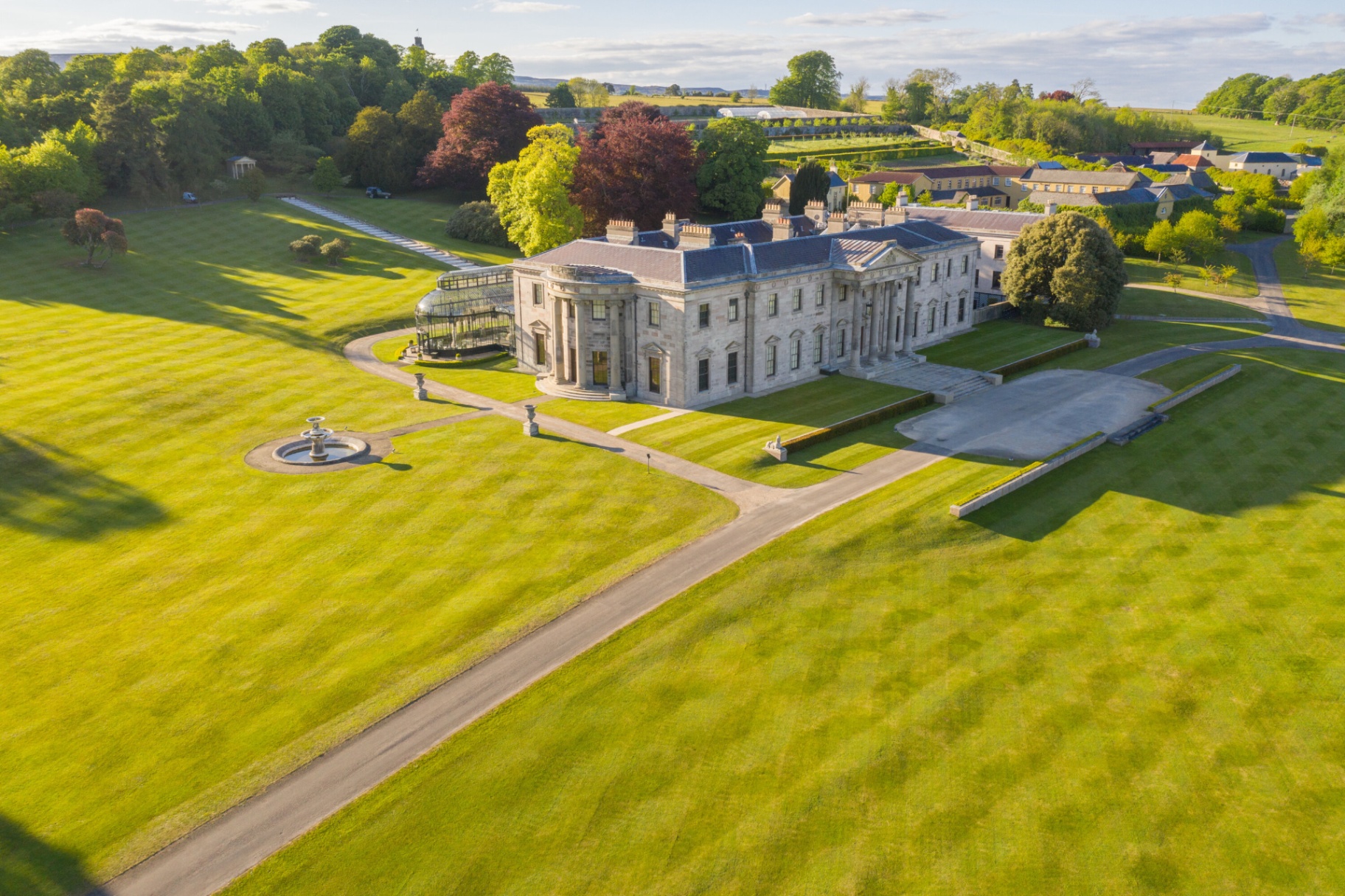
The greatest luxury in Ireland is rarely the castle suite, the Michelin star, or the private driver waiting in the courtyard with a bottle of water and the day's itinerary printed on card stock. All of these things exist here. We have stayed in the suites and eaten in the restaurants and been driven along the coast by professionals who know every bend. But the deepest luxury is something much harder to price. It is time. It is attention. It is the feeling that nobody, anywhere in the building, is trying to optimize the day. The greatest luxury in Ireland is that nobody seems to be in a hurry.
American luxury tends to arrive in familiar packaging. Speed. Convenience. Exclusivity. Access. The room upgrade. The priority pass. The table nobody else can get. The experience that confirms you have arrived somewhere above the ordinary. This is an entirely valid definition, and it works well in Manhattan, in Miami, in Aspen. Ireland has some of this too. There are castles with butlers and restaurants with tasting menus and drivers who will take you anywhere you ask. But the Irish version of luxury runs on a different currency. It is measured in space, in attention, in ease, in the radical permission to stop achieving the day and start living inside it.
We noticed this first at Gregans Castle, years ago, when we arrived from Dublin in the early evening and Deborah realised she had left her good coat in the car. The staff member who helped her did not hand her the keys and wish her luck. He walked her to the car park in the fading light and talked about the Burren while they walked. He was not providing a service. He was being present. The conversation lasted around eight minutes. It cost the hotel nothing. It is the thing we still mention when someone asks us about Gregans. Not the room. Not the dinner. The walk to the car park.
Time operates differently in Ireland. Long breakfasts are not a special occasion. They are simply breakfast. Slow dinners are not an event. They are dinner. Afternoons with no agenda are not a waste. They are the point. We have watched American friends arrive with schedules so tight that a fifteen-minute delay feels like a moral failure. Then something happens. The barman starts a conversation. The rain makes the planned walk impossible. The second pot of tea arrives. And slowly, over two or three days, the guilt dissolves. In Ireland, doing nothing is often the point. The country teaches this not by instruction but by example. Nobody is rushing, so you stop rushing too.
The American condition is the optimized day. Every hour has a job. Every experience has a metric. Did we see enough. Did we eat well enough. Was the room worth the rate. We have felt this ourselves, in the early years, when we treated a trip to the west as a project to be executed. Then we stayed at Ballynahinch for three nights instead of two, and on the second morning we walked down to the river after breakfast with no plan beyond returning at some point for lunch. We were back at half past two. Nobody had missed us. Nothing had been lost. And we realised that the walk had been the most important part of the day, precisely because it had not been on the list.
There is a particular quality to Irish attention that Americans often do not recognise as luxury because it does not come with a price tag. The pub barman who remembers your second pint without asking. The hotel staff member who asks about your drive not because it is on a checklist but because they actually want to know. The farmer on a walking trail who stops to point out the better view. These are not services. They are people being present with you, in real time, without multitasking through you. The person speaking to you is usually speaking to you. That sounds obvious, but in much of modern American life it is not. The Irish gift of attention is the gift of being the only thing in the room that matters for the length of a conversation.
This is the thread that connects the small hotel in Connemara to the pub in Kenmare to the shop in Dingle. The same unhurried attention. The same willingness to let a conversation find its own length. We have sat at bars in Ireland where ten minutes passed without a word, and those silences were not awkward. They were comfortable. They were proof that nobody needed to perform. The American reflex is to fill silence with efficiency. The Irish reflex is to let silence be. That difference, applied across a week, is the difference between a trip that feels managed and a trip that feels lived. We wrote about the mistake Americans make in Irish pubs because it is exactly this same confusion: treating the room as an attraction instead of a living room, and treating the people inside it as performers instead of simply people.
Rain in Ireland is not an obstacle. It is a character in the story. Americans often arrive with a plan for the weather, which is to defeat it. The rain jacket, the umbrella, the determination to proceed with the schedule regardless. Ireland quietly teaches the opposite lesson. The rain changes plans, and the changed plan is often better than the original. We have had some of our best afternoons in Ireland because the rain made the planned hike impossible and we ended up in a pub we would never have found otherwise. The rain is not interrupting the trip. The rain is often creating it.
There is a luxury in surrender that American travel does not often value. The ability to say, today we will not achieve anything. Today we will sit by the fire and read and walk to the village for a sandwich and come back. The weather enforces this. The Irish do not fight the rain. They accommodate it. They have been accommodating it for generations. And the visitor who stops fighting it discovers a different kind of day. One without objectives. One without photographs to take. One where the only plan is to be where you are, dry or wet, and let the afternoon settle around you like a blanket.
One of the things that quietly disarms Americans in Ireland is the sense that many places are not trying to become anything other than what they already are. The village pub is not trying to be a cocktail bar. The country house is not trying to be a design hotel. The restaurant is not trying to earn a third star. There is a quiet confidence in places that are not trying to become something else. They have enough. They are enough. And that sufficiency, that acceptance of their own identity, creates an atmosphere of ease that no amount of money can manufacture.
We have stayed in rooms in Ireland that cost less than a standard hotel in Chicago and felt more luxurious than any suite we have booked in London. The luxury was not the thread count. It was the absence of anxiety. The feeling that the building had been here for two hundred years and would be here for two hundred more, and that our one night inside it was simply a moment in its long life, not a performance it had to put on for us. That is the luxury of enough. The room is good. The fire is on. The rain is against the window. There is nowhere else anyone needs to be. What more could you want.
Ask a traveller what they remember six months after an Irish trip and the answer is rarely about the upgrade. They do not remember the thread count or the suite size or the concierge arrangement that took three emails to confirm. They remember the conversation in the pub that lasted until closing. They remember the meal that stretched into a second bottle of wine. They remember the walk that had no destination. They remember the weather, always the weather, because the weather is what made them stop. We arrive looking for luxury and leave remembering attention. We arrive looking for rooms and leave remembering people.
This is the central truth of Ireland, and it is the one we return to in every essay we write about this country. The same philosophy that tells you to stay two nights instead of one, to sit by the fire and order the second pint, to cut the itinerary in half and actually see the place you are in, also tells you how to find the real luxury. Stop moving. The room is already good enough. The day is already full enough. The person across from you is already interesting enough. You do not need to optimize this. You need to notice it. This connects to everything we believe about traveling Ireland well, from the hotel test we use before booking to the simple rule that we never stay anywhere for only one night. The luxury is not in the booking. It is in the staying.
The most luxurious trip we can imagine in Ireland is not the most expensive one. It is the one where, for a little while, you forget to look at the time. It is the trip where you stop trying to make the day happen and start letting the day happen to you. It is the breakfast that lasts two hours because the rain has set in and the coffee is still hot. It is the walk with no destination. It is the conversation that nobody needed to rush. Ireland rewards attention more than movement. The greatest luxury in Ireland is not found by upgrading the room. It is found by slowing down enough to notice what is already there.