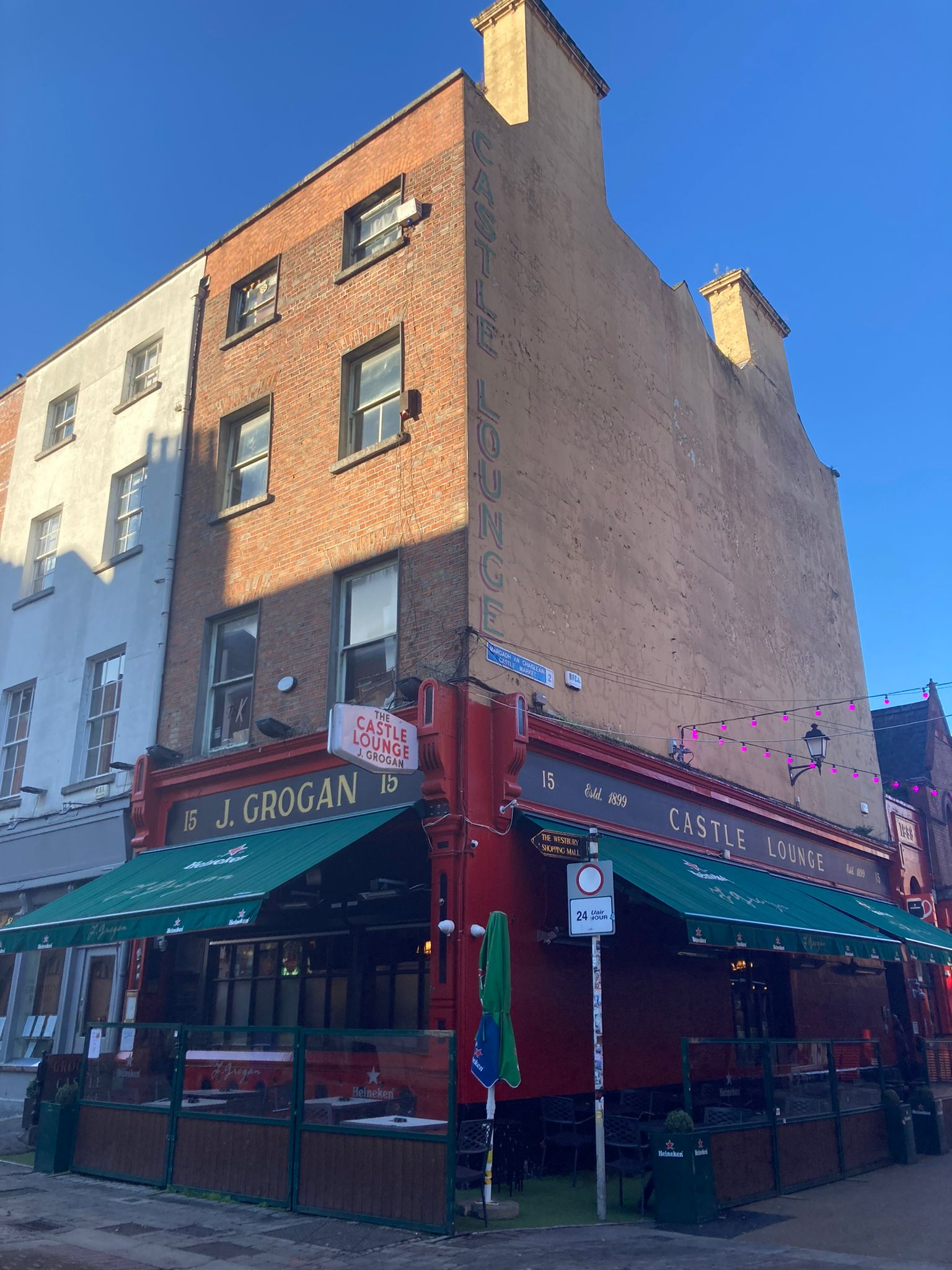
The reason this is the most common American mistake is that it is the most natural one. We are taught, growing up, that a city is a list of places, and that an evening out is an itinerary you execute. The pub crawl is the same instinct as the nine-hotel itinerary and the eleven-county road trip. It is the conviction that more places equals more trip. The Irish do not think this way about pubs. A pub, for the people who actually drink in one, is not a destination. It is a living room with a tap. You go to the pub the way you would go to a friend's kitchen. You sit down. You take your coat off. You order one drink, slowly, and you stay long enough for the room to notice you are there. The room takes its time. So should you.
Here is the rule we use, and the one I send before every trip. The best pub experience is almost never the first pint. The first pint is paperwork. The first pint is the bartender clocking you, the regulars deciding whether to look up, your own eyes adjusting to the low light, the warmth of the room arriving in your shoulders, the realisation that nobody is going to perform for you. The first pint is an arrival. The second pint is the visit. Most great pub stories begin with the second pint. The third is where they get told. If you have given a pub twenty minutes and walked out because nothing happened, you have not had a pub experience. You have had a lobby experience. The room had not started yet.
It helps to be honest about what an Irish pub is, and what it is not. It is not a museum, even when the snug is two hundred years old and the brass on the bar is older than the country you flew in from. It is not a stage. Nobody behind the bar is going to break into song for you. Nobody at the end of the counter is waiting to tell you the story of the Famine. Irish people are friendly, sometimes very friendly, but they are rarely intrusive, and they almost never perform. You will not walk into a pub in Doolin or Dingle or Stoneybatter and be instantly absorbed into the story of the room. The room has to settle around you. That settling takes time, and it cannot be forced, and the more obviously you are looking for it, the longer it will take.
Where you sit decides most of the evening, and almost nobody tells you this. The fire is for slowness. Take the chair nearest the fire and you are signalling that you are staying. The barman will register it. The regulars will register it. The book in your bag becomes plausible. The second pint becomes inevitable. The bar itself, the long stretch of timber with the stools, is for conversation. Sit at the bar and you are putting yourself in the path of whatever the room wants to offer. The barman will talk if there is time. The person on the next stool will eventually turn. A snug, if the pub has one, is for private evenings, for two or three people who want to talk and not be heard. The door is for transit. Sitting near the door is sitting in a draught, sitting in everyone's coats, sitting with one foot already on the street. The people who sit near the door are the people who leave first. That is not a coincidence. Where you sit is where the evening can reach you. Choose the fire if you can. Choose the bar if you cannot. Never the door.
Conversation, when it comes, comes the way weather comes. It arrives, briefly, and then it passes, and you cannot summon it back. An older man at the next stool will ask, in a glancing way, where you are from. You will answer. He will say something about a brother in Boston, or a daughter who did a year in San Francisco, and that will either become a half-hour or it will become a polite nod and a return to his own pint. Both are fine. Neither is a failure. The mistake Americans make is reading the nod as rejection and the half-hour as friendship. It is neither. It is a room doing what rooms do. The person next to you is not auditioning to be your local guide. They are a person having a Tuesday. If something opens between you, stay in it. If it does not, that is also the evening working as intended.
An hour with one person in a pub in Kenmare is worth a week of brief exchanges with bartenders in famous Dublin pubs you walked into and out of in twenty minutes. We have learned this the slow way, by being the people in a hurry and noticing, eventually, how little we came home with. The evenings we still talk about, years on, are the ones where we ordered a second pint we did not strictly want, sat down properly, and let an hour pass. The man in Roundstone who turned out to have fished with my grandfather's cousin. The woman in Westport who, after forty minutes of silence, asked what we were reading and then talked for an hour about her son's wedding. None of these moments would have survived a pub crawl. All of them required us to be in one room long enough to be noticed.
Then there is the question of Guinness, and the very American hunt for the best pint in Ireland. We understand the impulse. We have been on that hunt ourselves, and we have written about it, slowly, one pub at a time, in our Notebook series on the pint. The irony, after all of it, is that some of the most memorable pints we have had in this country were not poured in famous Guinness pubs at all. They were poured at the Hi-B in Cork on a wet Thursday, at a counter in Dingle where the room was full of locals and the rain was sideways outside, at a small bar in Galway where nobody had told the barman he was supposed to be famous. The best pint, more often than not, is the second one you order in a room you have decided to stay in. The pursuit of the perfect pint is, in our experience, the surest way to miss it.
The same applies to famous pubs. People arrive in Dublin with a list of five legendary names, and they spend an evening rushing between them, taking a photograph at each, drinking a quarter pint, and leaving. Our favourite pubs in Ireland are not necessarily the ones we recommend most often in print. They are simply the ones we have stayed in longer than intended, the ones where we sat down at seven and looked up at eleven. The famous pubs have their place, and a handful of them deserve every line written about them, but they are not better than the unfamous pub you stumble into in Kinsale or Westport and remain in for the rest of the evening. A guide to the best pubs in Ireland is a starting point, not an itinerary. The point is not to visit ten. The point is to find one and stay.
Stay long enough for the room to change around you. Stay long enough for somebody to speak to you, or not. Stay long enough to stop looking at your phone. Stay long enough that the second pint is poured before you ask. Stay until the bar staff change shifts and the new one nods at you because you are now part of the furniture for the night. Stay until the conversation at the next table is no longer background but, briefly, your own. Stay long enough that leaving feels like a small wrench. That is the unit of measurement for an Irish pub evening, and it is not a number of pubs. It is the depth of the one you are in.
The best evenings we have had in pubs in this country are almost always the ones that never became a plan. We went out for a quick drink and stayed for four. We meant to walk on to the next place and decided, halfway through the second pint, that we would not. We sat down for the warmth, ordered something to be polite, and discovered an hour later that we had become attached to the room. None of these evenings would have appeared on an itinerary. None of them could have been booked. They are the residue of a kind of attention the country requires and the pub crawl actively prevents. If you arrive in a pub with a plan to leave, the plan will hold, and you will leave on time, and you will not remember the room. If you arrive in a pub with nowhere else to be, the room will quietly start to give you something.
All of this is really the same lesson we keep coming back to about Ireland, applied to the smallest unit of the trip. Ireland rewards attention more than movement. The country opens for people who slow down and closes politely around the people who do not. The pub is simply the clearest example of that truth, because it operates on a timescale most American evenings are not built for. The people who enjoy Irish pubs most are not the ones who have read the list. They are the people who have given up on the list, ordered the second pint, taken the seat by the fire, and stopped trying to consume the evening. The best pub in Ireland is usually the one you stay in. Go and stay in one.