
Played October 2024, on the Mayo dunes at Belmullet
Carne is the course at the end of the road. Belmullet, on the tip of the Mullet Peninsula in north Mayo, is three hours from Shannon, four from Dublin, and two from Knock Airport if you can find a flight. There is one grocery shop, two pubs, and a golf course that most Americans have never heard of and that most serious links players consider one of the greatest routings in Ireland. Eddie Hackett laid down the original eighteen in 1992, on land the community owned and would not sell, and it is the last of his major courses. The Kilmore nine was added later by Jim Engh and Ally McIntosh. What the two together produce is the most authentically wild links in Ireland, on the most exposed dune system on the Atlantic coast. It is not a country club. It is not a resort. It is a course that you drive four hours to play, and the drive is part of the point.
Carne, Plainly
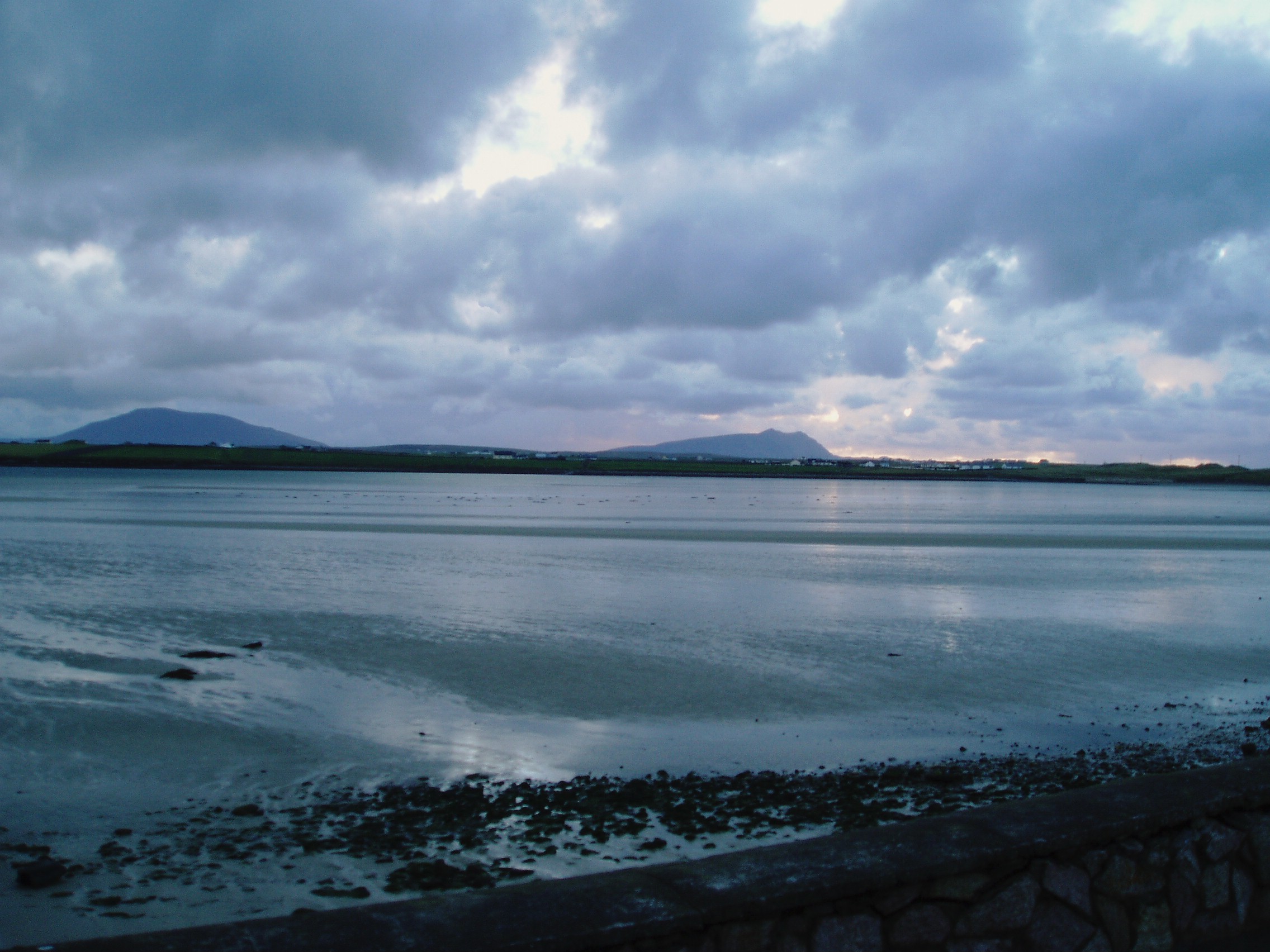
Carne Golf Links is owned by the community of Belmullet. It is a Gaeltacht course, and the signs at the clubhouse are in Irish first and English second. There are two championship routings here, and this is the thing most American visitors do not know before they arrive. The Hackett eighteen plays 6,702 yards, par 72, from the blue tees. Wild Atlantic Dunes, launched in 2020, takes the newer holes Ally McIntosh and Jim Engh built from Hackett's own sketches and plays them with part of the original course, 6,685 yards, par 72. The club promotes both equally and asks you to play both, on consecutive days, and the club is right. Everything described below is the Hackett eighteen. If your tee sheet says Wild Atlantic Dunes, the card in your hand will not match these hole numbers.
The dune system at Carne is taller than any other dune system on an Irish links course. The dunes at Ballybunion are marram-grass dunes on a gentle rise. The dunes at Lahinch are broken and rolling. The dunes at Carne are mountains. Fairways sit inside dune valleys thirty feet below the surrounding ridges, and greens are perched on shelves that catch every crosswind coming off the Atlantic. The course does not feel manicured because it is not. It feels found. Hackett walked the ground and put the routing where the land wanted it, and forty years of ownership by the community has kept it that way.
The Opening Six
Carne opens with a par five. The 1st (510 yards, par five) is not the gentle handshake an American expects, but it is the kindest hole on the card, because the fairway sits in a valley and the dunes on either side gather a loose drive back toward the middle. The 2nd (360 yards, par four) and the 3rd (362 yards, par four) are two short par fours in a row, and this is where the routing tips its hand. Both are drivable-looking and neither should be driven. A hybrid to the flat part of the fairway leaves a wedge, and a wedge is the only club that holds these greens in a crosswind.
The 4th (523 yards, par five) is the second par five inside the first four holes, and downwind it is the one genuine birdie on the front. The 5th (159 yards, par three) is a short iron to a green sitting on a natural shelf, and the wind here is stronger than the yardage suggests, always, and short is dead. The 6th (401 yards, par four) is the first serious par four, playing down a long dune valley with the wind at ground level often crossing, and the fairway is narrower than it looks from the tee. If you have played these six holes at two over, you have played them well. Carne is the course where par is a good number on every hole, and where the birdies come to you rather than being hunted.
The Seventh Through The Tenth
The 7th (171 yards, par three) is a short iron played from a high tee, and it is the first shot of the round where the wind is unarguably in charge. The 8th (431 yards, par four) is the hardest hole on the front nine and one of the great pieces of ground in Irish golf: a drive down a valley, then a mid-iron up to a green on high ground, with the view stretching across the Mullet Peninsula to the Inishkea Islands offshore. Hackett found this ground and used it rather than moving it.
The 9th (539 yards, par five) walks you back through the dunes to the turn, the third par five on an outward nine of 37. The 10th (375 yards, par four) begins the back nine with a drive to a fairway that pinches at the landing zone, and a second to a green that repels anything hit long. The rhythm of the round at Carne is climb, drop, cross. The routing walks you up the ridge, drops you into a valley, and crosses you diagonally to the next ridge. It is physically the most demanding walking round in Ireland, and it is the reason a caddie here earns the fee twice over.
The Eleventh Through The Fourteenth
The 11th (202 yards, par three) is the longest short hole on the property and the one that decides more back nines than any other. Two hundred yards across dune ground, exposed at tee height, with a green that will not accept a shot flighted high into a crosswind. The play is a low-flighted long iron or hybrid at the front edge and two putts. Bogey here is not a bad hole. The 12th (411 yards, par four) follows it, a drive into a valley and a mid-iron back up, the shot Carne asks you for over and over.
This is the philosophy of Carne. The course is not designed to reward the visiting American who plays only their good shots. It is designed to teach the visiting American what to do with their bad ones. Commit to the line the caddie gives you, take the four, and move on. The 13th (517 yards, par five) is the last real scoring hole of the round, and the 14th (413 yards, par four) is a long par four back across the ridge. These are holes where the wind and the terrain are doing more work than the routing, and where the round starts to feel less like a game and more like a walk on a piece of land that would be there whether or not the course was.
The Fifteenth Through The Eighteenth
The 15th (390 yards, par four) plays into the prevailing westerly, with an approach that is one club more than the yardage says on almost every day we have played it. The 16th (177 yards, par three) is a short iron to a green on high dune ground, and the wind here is different from the wind on the fifteenth green because you have crossed the ridge. Ask the caddie what the wind is doing at the green, not at the tee. That question, asked honestly, is worth two shots a round here.
The 17th (403 yards, par four) is the strongest of the closing holes and the one that takes the good round away. Then the 18th (358 yards, par four) walks you back to the clubhouse, short on the card and not short in practice, because the tee shot has to find a level lie and the green does not gather. The finish is not dramatic in the way of Ballybunion or Lahinch. Carne ends quietly, which is the right way for it to end. The last shot into the eighteenth green is your last shot on the ground Hackett laid down at the start of the nineties, and the round settles.
Why The Drive Is The Point
The road to Belmullet is the last thing to say about Carne. From Shannon it is three hours north through Ennis, Galway, and the Mayo coast. From Dublin it is four hours west across the country. From Knock Airport, if you can get a flight from Manchester or Birmingham, it is ninety minutes. The road narrows once you cross the bridge onto the Mullet Peninsula, and the peninsula itself is a stretch of low bog and scattered houses that opens out to the Atlantic on both sides. You will not pass another golfer on the way here. You will pass sheep. You will pass one pub in Bangor Erris that is worth stopping at for a pint on the drive up. And you will arrive at a car park that holds forty cars, most of them from the west of Ireland, none of them there to be seen.
This is the point of Carne. It is the course that visiting Americans who have already played Ballybunion, Lahinch, Portrush and Portmarnock come to next, because it is the round that does not feel like it was designed for them. It was designed for Hackett, for the community that owns it, and for the piece of land it sits on. The fact that it is now one of the great destination links in world golf is a compliment the club treats lightly. If you make the drive, treat the drive lightly too. It is a piece of the trip that the course cannot give you back.
How To Fold Carne Into A Trip
Carne is a standalone pilgrimage or a Connacht round on a wider west-coast trip. If it is a standalone, fly into Knock, stay two nights at the Broadhaven Bay Hotel in Belmullet or the Talbot in Belmullet town, play the Hackett eighteen on the first day and the Kilmore nine on the second morning, and drive out the second afternoon. If it is folded into a wider trip, Carne sits at the north end of a Connacht arc that includes Enniscrone forty-five minutes east and Rosses Point another hour further. Three courses in three days along the Mayo and Sligo coast is one of the great regional trips in Irish golf, and Carne is the piece that anchors it.
If you are the kind of American traveller planning a wider Ireland trip and asking whether Carne belongs on the list, the honest answer is that it belongs on the list only if you have already played the courses at the top of the standard itinerary. Carne is the round the second-time visitor makes. It is the round the golfer who has been to Ireland three times and wants to see the piece of the country most tourists will never see makes. Our seven-day golf itinerary does not route through Belmullet, because seven days is not enough to fold in the drive, but a nine-day or ten-day trip should include it, and the stay guide has the Broadhaven Bay listed for the golfers who ask.
The Last Honest Thing
Carne is the last course Eddie Hackett routed before he died in 1996, and it is the course that most closely reflects what he thought Irish links golf should be. Hackett was not a well-funded architect. He worked with the land he was given, on the budgets communities could afford, and he laid down courses that grew into their landscapes rather than being imposed on them. Carne is his masterpiece by that standard, and it is his masterpiece because the community of Belmullet has resisted every offer to modernise, expand, or commercialise the property for thirty years.
If you are the golfer who wants to see the piece of Ireland that has not been remade for you, drive north. Play the round. Have a pint in the clubhouse afterwards, in the room that overlooks the eighteenth green and the Inishkea Islands on the horizon. And on the way back down the peninsula, understand what the drive was for. Carne is the course that reminds you that golf in Ireland is a piece of a country, not a product, and the country you drove through to get here is the country you played the round inside.
How we checked this
Further reading from the Notebook